
If you are searching for a simple, effective, and practical morning routine to lower blood sugar, you’re about to discover something powerful. Many people believe controlling blood sugar requires strict diets, long workouts, or expensive treatments. But the truth is, small daily habits—especially in the morning—can make a massive difference.
Today, we’ll walk you through a 5 minute morning routine to lower blood sugar naturally, based on simple lifestyle changes you can start immediately. Whether you are managing diabetes, prediabetes, or just want to maintain stable energy levels, this guide is designed for you.
Table of Contents
Let’s explore how just five minutes every morning can transform your health.

Why Morning is the Most Important Time for Blood Sugar Control
The morning is not just the start of your day—it’s the foundation of your metabolic health.
After a night of fasting:
- Your body’s blood sugar levels are naturally fluctuating
- Hormones like cortisol are elevated, which can raise glucose
- Your body becomes more responsive to insulin signals
This is why a proper morning routine to lower blood sugar can:
- Prevent sudden sugar spikes
- Improve insulin sensitivity
- Keep your energy stable throughout the day
On the other hand, poor morning habits—like skipping hydration or eating sugary foods—can lead to unstable glucose levels all day long.
The Science Behind a 5 Minute Morning Routine
You might wonder, “Can five minutes really make a difference?”
Yes, because this routine focuses on key biological triggers:
- Hydration improves glucose dilution in the bloodstream
- Natural ingredients like lemon and cinnamon support insulin function
- Light movement helps muscles absorb glucose without insulin
- Smart food choices prevent spikes and crashes
When combined, these steps create a synergistic effect that supports long-term blood sugar control.
Step 1: Start Your Day with Lemon Water (1 Minute)
Why Lemon Water Works

As soon as you wake up, your body is slightly dehydrated. Dehydration can lead to higher blood sugar levels because there is less fluid to balance glucose in your blood.
Drinking lukewarm lemon water:
- Rehydrates your body quickly
- Improves digestion
- Helps maintain balanced blood sugar levels
How to Prepare It
- Take 1 glass of lukewarm water
- Squeeze half a fresh lemon
- Optional:
- A pinch of salt
- A tiny amount of honey (use carefully if diabetic)
Key Benefits
- Supports liver detoxification
- Enhances metabolism
- Helps reduce glucose spikes
Pro Tip: Always drink this before tea or coffee for maximum benefit.
Step 2: Add Cinnamon for Natural Sugar Control (1 Minute)
Why Cinnamon is Powerful
Cinnamon is one of the most researched natural ingredients for blood sugar control. It helps:
- Improve insulin sensitivity
- Slow down carbohydrate digestion
- Reduce blood sugar spikes after meals
How to Use Cinnamon
You can:
- Add a pinch of cinnamon to warm water
- Mix it into milk
- Sprinkle it over your breakfast
Scientific Insight
Studies suggest that regular cinnamon intake can improve fasting blood sugar levels over time.
Benefits of Cinnamon in the Morning
- Stabilizes glucose levels
- Enhances insulin effectiveness
- Supports overall metabolic health
Step 3: Do Light Exercise or Movement (2 Minutes)
Why Movement is Essential

Physical activity—even for a few minutes—can significantly impact blood sugar levels. When you move your body:
- Muscles use glucose as fuel
- Blood circulation improves
- Insulin works more efficiently
What You Can Do in 2 Minutes
- Neck and shoulder rolls
- Arm circles
- Gentle squats
- Marching in place
- Light jumping
Benefits
- Reduces fasting blood sugar
- Boosts energy levels
- Improves mood and focus
Important Note: You don’t need a full workout. Even 2 minutes of movement can activate your metabolism.
Step 4: Quick Breathing or Relaxation (30–60 Seconds)
Why Stress Affects Blood Sugar
Stress triggers the release of cortisol, a hormone that can increase blood sugar levels.
Starting your day calmly helps prevent this.
Simple Breathing Exercise
- Inhale for 4 seconds
- Hold for 4 seconds
- Exhale for 6 seconds
Repeat for one minute.
Benefits
- Reduces stress hormones
- Improves mental clarity
- Prevents sugar spikes caused by anxiety
Step 5: Choose a Smart Breakfast (30 Seconds Planning)
Why Breakfast Matters
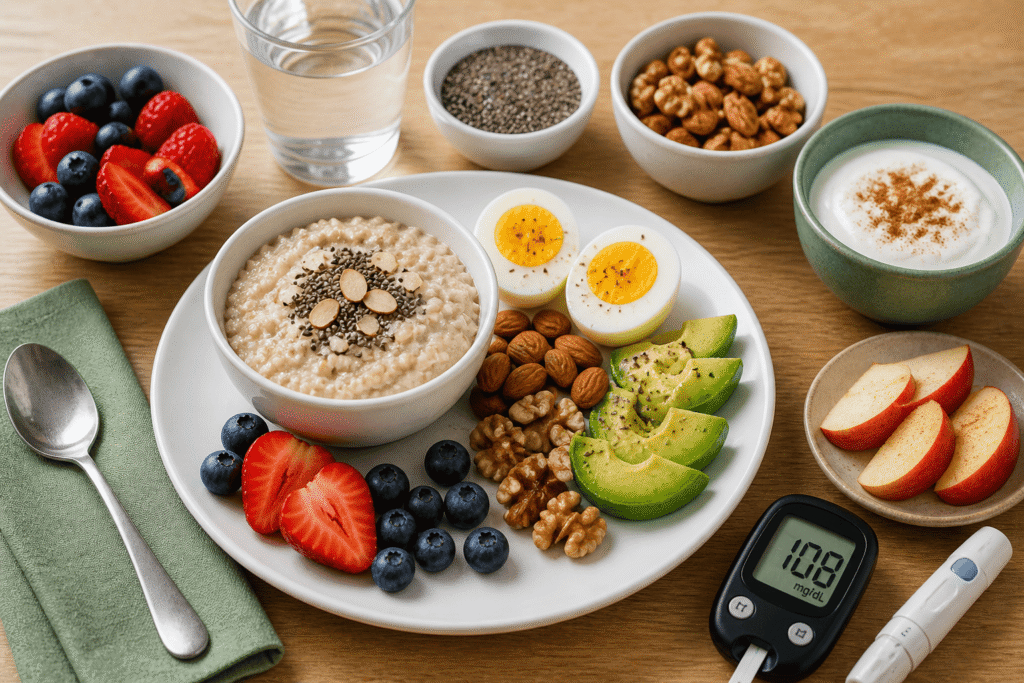
Your first meal can either:
- Stabilize your blood sugar
OR - Cause a sudden spike and crash
Best Breakfast Options
Choose foods that include:
- Protein: Eggs, yogurt, nuts
- Healthy fats: Almonds, walnuts
- Fiber: Oatmeal, fruits like apple
Example Healthy Breakfast
- Half an apple + almonds + walnuts
- Small bowl of oatmeal
- Boiled eggs with vegetables
What to Avoid
- Sugary cereals
- White bread
- Sweet drinks
Benefits
- Keeps you full longer
- Prevents sugar spikes
- Provides steady energy
Complete 5 Minute Routine Breakdown
Here’s your morning routine to lower blood sugar in real time:
- Drink lemon water – 1 minute
- Take cinnamon – 1 minute
- Do light exercise – 2 minutes
- Practice breathing – 1 minute
- Plan a healthy breakfast – 30 seconds
Total time: 5 minutes
Additional Habits to Support Blood Sugar Control
While following a 5-minute morning routine to lower blood sugar is a powerful start, the real transformation happens when you support it with smart daily habits. These small, consistent actions work quietly in the background to keep your glucose levels stable throughout the day.
Let’s expand on these habits so you can fully understand how to apply them effectively in your daily life.
1. Check Your Blood Sugar Regularly
Monitoring your blood sugar is one of the most important habits you can build. It gives you real-time feedback on how your body reacts to food, stress, sleep, and activity.
Why It Matters
When you regularly check your blood sugar:
- You can identify which foods cause spikes
- You understand how your routine is working
- You can make quick adjustments before problems arise
Best Times to Check
For better insights, consider checking your sugar:
- In the morning (fasting level)
- Before meals
- 1–2 hours after meals
- Before bedtime
Pro Tip
Keep a small log or use a mobile app to track your readings. Over time, you’ll start noticing patterns, which will help you make smarter lifestyle decisions.
2. Stay Hydrated Throughout the Day
Hydration is often overlooked, but it plays a critical role in blood sugar control.
How Water Helps
- Dilutes excess glucose in the bloodstream
- Supports kidney function to flush out sugar
- Prevents dehydration-related sugar spikes
How Much Water Do You Need?
While needs vary, a general guideline is:
- 8–10 glasses per day
- More if you are physically active or live in a hot climate
Smart Hydration Tips
- Start your day with lemon water (as discussed earlier)
- Carry a water bottle with you
- Drink water before meals to avoid overeating
- Limit sugary drinks and sodas
Remember: Even mild dehydration can lead to higher blood sugar levels.
3. Avoid Processed Foods
Processed foods are one of the biggest enemies of stable blood sugar.
Why Processed Foods Are Harmful
They are often:
- High in refined sugars
- Low in fiber
- Packed with unhealthy fats and additives
These factors cause rapid spikes in blood sugar, followed by sudden crashes, leaving you tired and hungry again.
Common Foods to Avoid
- Packaged snacks (chips, biscuits)
- Sugary cereals
- White bread and pastries
- Soft drinks and energy drinks
Healthier Alternatives
Instead of processed foods, choose:
- Fresh fruits (in controlled portions)
- Nuts and seeds
- Whole grains like oats
- Home-cooked meals
Key Benefit
By avoiding processed foods, you maintain steady glucose levels and reduce the risk of long-term complications.
4. Maintain Consistent Meal Times
Your body thrives on routine. Eating at irregular times can confuse your metabolism and lead to blood sugar imbalances.
Why Meal Timing Matters
When you eat at consistent times:
- Your body learns when to release insulin
- Digestion becomes more efficient
- Blood sugar fluctuations are minimized
Best Practice
- Eat meals at fixed times every day
- Avoid long gaps between meals
- Don’t skip breakfast
- Keep dinner light and early
Avoid This Common Mistake
Many people skip meals to control sugar, but this can backfire by causing overeating later and sudden glucose spikes.
5. Add More Fiber to Your Diet
Fiber is your best friend when it comes to blood sugar control.
How Fiber Works
- Slows down sugar absorption
- Prevents spikes after meals
- Keeps you full longer
High-Fiber Foods
- Vegetables (spinach, broccoli)
- Fruits (apple, berries)
- Whole grains (oats, brown rice)
- Legumes (lentils, beans)
Adding fiber to every meal helps maintain steady glucose levels throughout the day.
6. Include Protein in Every Meal
Protein helps balance blood sugar by slowing down digestion.
Benefits of Protein
- Reduces post-meal sugar spikes
- Keeps you full and satisfied
- Supports muscle health
Good Protein Sources
- Eggs
- Yogurt
- Chicken or fish
- Nuts and seeds
Pairing protein with carbohydrates creates a balanced meal that prevents sudden glucose increases.
7. Manage Stress Effectively
Stress is a hidden factor that can significantly raise blood sugar levels.
Why Stress Matters
When you’re stressed, your body releases cortisol, which:
- Increases blood sugar
- Reduces insulin efficiency
Simple Stress Management Techniques
- Deep breathing (as in your morning routine)
- Meditation
- Short walks
- Listening to calming music
Even a few minutes of relaxation daily can make a big difference.
8. Get Quality Sleep Every Night
Sleep is often ignored, but it plays a major role in metabolic health.
Effects of Poor Sleep
- Increases insulin resistance
- Raises hunger hormones
- Leads to higher blood sugar levels
Tips for Better Sleep
- Aim for 7–8 hours daily
- Avoid screens before bedtime
- Maintain a regular sleep schedule
Better sleep = better blood sugar control.
9. Stay Physically Active Throughout the Day
Exercise doesn’t have to be intense to be effective.
Why Activity Helps
- Burns glucose for energy
- Improves insulin sensitivity
- Reduces overall sugar levels
Simple Ways to Stay Active
- Walk after meals
- Take stairs instead of elevators
- Stretch during breaks
Even small movements can have a big impact over time.
10. Limit Sugar and Refined Carbohydrates
This might sound obvious, but it’s essential.
Why It Matters
Refined carbs quickly turn into glucose, causing:
- Sharp spikes
- Energy crashes
- Increased hunger
Better Choices
- Replace white bread with whole grains
- Choose natural sweeteners carefully
- Control portion sizes
Common Mistakes to Avoid in the Morning
Even small mistakes can disrupt your efforts:
Skipping Water
Starting with tea or coffee instead of water can worsen dehydration.
Eating Sugary Breakfast
Even “healthy-looking” foods can spike sugar.
Avoiding Movement
Sitting immediately after waking up slows metabolism.
Ignoring Stress
Mental health directly affects blood sugar.
How Fast Will You See Results?
If you follow this routine consistently:
- Within a few days: Better energy levels
- Within 1–2 weeks: More stable fasting sugar
- Long-term: Improved insulin sensitivity
Consistency is the key.
Who Should Follow This Routine?
This routine is ideal for:
- People with Type 2 diabetes
- Individuals with prediabetes
- Those with insulin resistance
- Anyone wanting better energy and health
The Role of Consistency in Blood Sugar Control
Doing this routine once won’t change much—but doing it daily will.
Why consistency matters:
- Builds healthy habits
- Trains your metabolism
- Prevents long-term complications
Think of this as a daily investment in your health.
Lifestyle Tips for Better Results
To maximize the benefits:
- Sleep for 7–8 hours daily
- Stay physically active
- Manage stress effectively
- Eat balanced meals
FAQs About Morning Routine to Lower Blood Sugar
Can I skip cinnamon?
Yes, but it adds extra benefits for glucose control.
Is lemon water safe daily?
Yes, but avoid excessive amounts if you have acidity issues.
Can I drink tea after this routine?
Yes, but drink water first.
Do I need to exercise longer?
Even short movement helps, but more activity brings more benefits.
Conclusion
A healthy life doesn’t always require big changes. Sometimes, small consistent habits create the biggest impact.
This 5 minute morning routine to lower blood sugar naturally is simple, practical, and effective. By combining hydration, natural ingredients, light movement, relaxation, and smart nutrition, you give your body the support it needs to maintain stable glucose levels.
If you follow this routine daily, you’ll notice:
- More stable blood sugar
- Increased energy
- Better overall health
Remember, your morning defines your day. Start with these five minutes, and you may completely transform your health journey.
Start tomorrow morning—and take control of your blood sugar naturally.