
Imagine if managing diabetes didn’t feel like a constant struggle…
Imagine if your everyday meals could quietly support your body the way insulin does—without stress, without extreme dieting, and without expensive supplements.
The truth is, your food choices can act like natural insulin when you understand one powerful concept: glycemic load.
In this comprehensive guide, we will explore low glycemic load foods for diabetics, explain how they work inside your body, and reveal nine powerful foods—easily available and affordable—that can help stabilize blood sugar levels naturally.
Let’s dive deep.
Table of Contents
What is Glycemic Load and Why It Matters for Diabetics
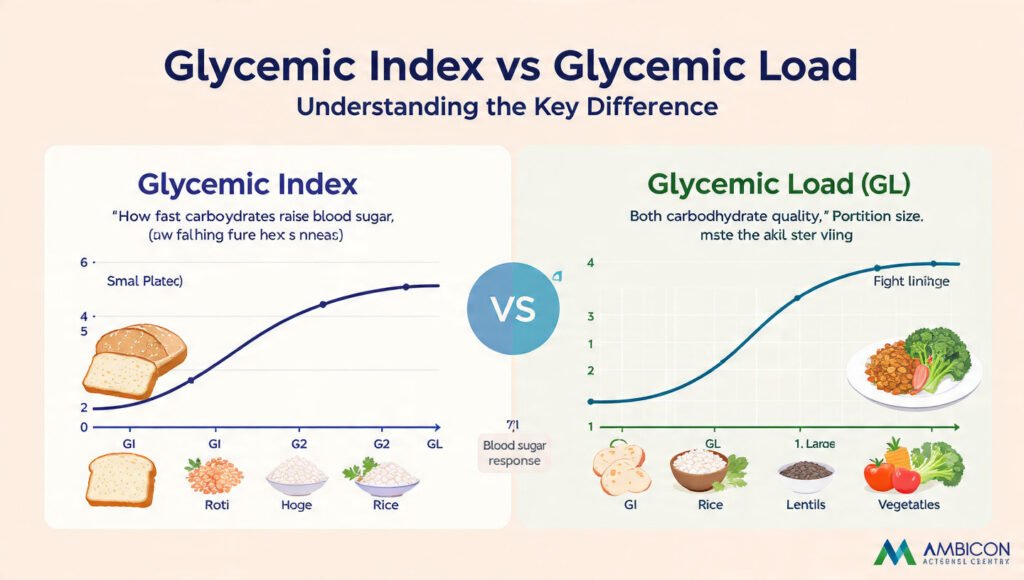
Most people have heard about the Glycemic Index (GI), but Glycemic Load (GL) is far more practical and accurate.
👉 Glycemic Load measures both:
- How fast a food raises blood sugar (GI)
- How much carbohydrate is in a serving
Simple Formula:
GL = (GI × Carbohydrates per serving) ÷ 100
Why Glycemic Load is Important
A food may have a high GI but low carbohydrates—making its actual impact on blood sugar small.
👉 That’s why diabetics should focus on:
- Low GL foods (0–10) → Best choice
- Medium GL (11–19) → Moderate
- High GL (20+) → Avoid or limit
The Secret: Foods That Act Like Insulin
Here’s something powerful:
👉 Certain foods don’t just avoid sugar spikes—they:
- Improve insulin sensitivity
- Slow down glucose absorption
- Support pancreas function
- Reduce inflammation
When combined properly, these foods behave like natural insulin boosters.
Golden Rule for Blood Sugar Control
Before we jump into the food list, remember this:
👉 Always combine:
- Protein
- Fiber
- Healthy fats
Example:
- Lentils + vegetables + yogurt
- Chickpeas + salad + olive oil
This combination ensures:
- Slow sugar release
- Stable insulin response
- Long-lasting energy
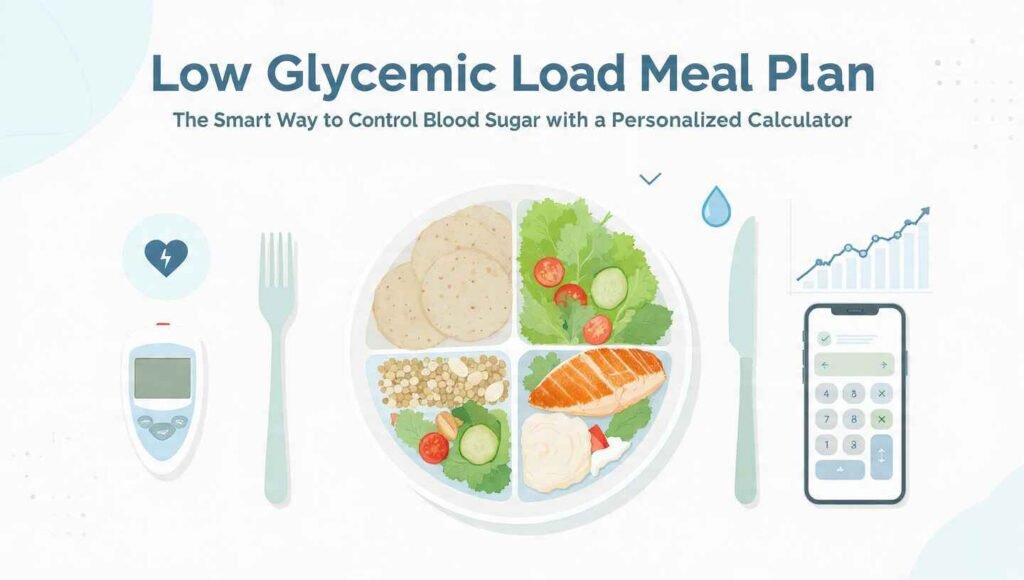
Table: Glycemic Load of 9 Powerful Foods for Diabetics (Low Glycemic Load Foods for Diabetics)
Below is a detailed table including serving size, glycemic load, and benefits.
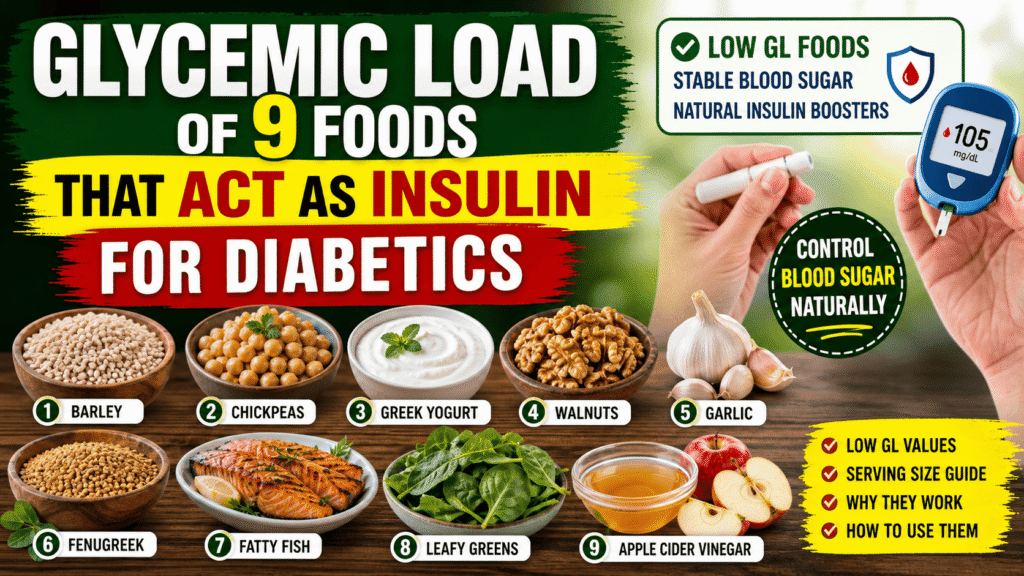
| Food | Serving Size | Glycemic Load (Approx.) | Why It’s Ideal for Diabetics |
| Barley (جو) | 1 cup cooked | 9 | Rich in beta-glucan fiber, slows glucose absorption |
| Chickpeas (چنا) | 1 cup boiled | 8 | High protein + fiber, improves insulin sensitivity |
| Greek Yogurt (گاڑھا دہی) | 1 cup | 3 | Low carb, high protein, reduces post-meal sugar spikes |
| Walnuts (اخروٹ) | 2–3 nuts | 1 | Healthy fats improve insulin signaling |
| Garlic (لہسن) | 2 cloves | 1 | Boosts insulin production and reduces fasting sugar |
| Fenugreek (میتھی) | 1 tbsp seeds | 0–1 | Slows carbohydrate digestion |
| Fatty Fish (مچھلی) | 100g | 0 | No carbs, improves insulin efficiency |
| Leafy Greens (سبز پتّے دار سبزیاں) | 1 cup | 1–2 | Extremely low GL, rich in magnesium |
| Apple Cider Vinegar (سیب کا سرکہ) | 1 tbsp | 0 | Reduces post-meal blood sugar spikes |
1. Barley (جو): The Fiber King for Blood Sugar Control
Barley is one of the most underrated grains.
Why it works:
- Contains beta-glucan fiber
- Slows digestion and glucose release
- Reduces insulin spikes
How to use:
- Barley roti
- Barley porridge
👉 Within 2–3 weeks, many people notice improved sugar levels.
2. Chickpeas (چنا): The Natural Energy Stabilizer
Chickpeas are a powerful combination of protein and soluble fiber.
Benefits:
- Keeps you full longer
- Reduces sudden hunger
- Improves insulin efficiency
Best ways to eat:
- Boiled chickpeas
- Roasted chana
- Chana dal
3. Greek Yogurt (گاڑھا دہی): Gut Health Meets Sugar Control
Not all yogurt is equal. Thick or Greek yogurt is ideal.
Why it helps:
- High protein slows sugar absorption
- Probiotics improve gut health
- Reduces post-meal glucose spikes
👉 A daily bowl can reduce sugar spikes by 20–30%.
4. Walnuts (اخروٹ): Small but Powerful
Don’t underestimate walnuts.
Key nutrients:
- Omega-3 fatty acids
- Magnesium
Impact:
- Reduces inflammation
- Improves insulin signaling
👉 Just 2–3 soaked walnuts daily can make a difference.
5. Garlic (لہسن): Nature’s Medicine
Garlic has been used for centuries—and for good reason.
Active compound:
- Allicin
Benefits:
- Boosts insulin production
- Lowers fasting blood sugar
👉 Best consumed:
- Raw (2 cloves)
- On empty stomach
6. Fenugreek (میتھی): The Blood Sugar Regulator
Fenugreek seeds are extremely powerful for diabetics.
Why it works:
- Slows carbohydrate absorption
- Improves insulin sensitivity
How to use:
- Soak overnight, drink in morning
- Eat methi saag
7. Fatty Fish (مچھلی): Zero Glycemic Load Powerhouse
Fish like salmon and mackerel contain zero carbohydrates.
Benefits:
- No blood sugar spike
- Reduces inflammation
- Improves insulin signaling
👉 Eat 2 times per week for best results.
8. Leafy Greens (سبز پتّے دار سبزیاں): The Ultimate Low GL Food
Spinach, saag, and other greens are essential.
Why they are powerful:
- Extremely low glycemic load
- Rich in magnesium
- High antioxidants
👉 Eat 3–4 times weekly.
9. Apple Cider Vinegar (سیب کا سرکہ): The Sugar Control Hack
A simple kitchen ingredient with powerful effects.
How it works:
- Slows carbohydrate breakdown
- Reduces sugar spikes after meals
Usage:
- 1–2 tbsp in water before meals
⚠️ Consult doctor if you have stomach issues.
How to Combine These Foods for Maximum Benefit
Here’s the real secret:
👉 Combine foods strategically.
Example Meal Plan:
- Barley roti + leafy vegetables + yogurt
- Chickpeas + salad + olive oil
- Fish + sautéed greens
This ensures:
- Slow digestion
- Stable blood sugar
- Improved insulin function
30-Day Challenge: Test It Yourself
If you’re serious about results:
👉 Pick any 3 foods from this list
Follow for 30 days:
- Monitor fasting sugar
- Check sugar after meals
- Observe energy levels
You will likely notice:
- Better control
- More stable energy
- Improved sleep
Common Mistakes Diabetics Make
Avoid these:
❌ Eating carbs alone
❌ Skipping protein
❌ Ignoring portion size
❌ Overeating “healthy” foods
👉 Even healthy foods can spike sugar if eaten incorrectly.
Lifestyle Tips to Enhance Results
Food alone is not enough.
Add these habits:
- Walk after meals
- Stay hydrated
- Sleep 7–8 hours
- Manage stress
Why Low Glycemic Load Foods Are the Future of Diabetes Control
For decades, diabetes management has focused on cutting sugar, reducing carbs, and relying heavily on medication. While these approaches can help, they often miss a deeper truth:
👉 It’s not just what you eat—it’s how your food behaves inside your body.
This is exactly where low glycemic load foods for diabetics are changing the game. They offer a smarter, more sustainable, and science-backed way to control blood sugar—without extreme restrictions.
Let’s explore why this approach is increasingly seen as the future of diabetes control.
1. They Focus on Real Blood Sugar Impact (Not Just Theory)
Traditional advice often revolves around the Glycemic Index (GI), which measures how fast a food raises blood sugar.
But here’s the problem:
👉 GI ignores portion size.
For example:
- Watermelon has a high GI—but a low glycemic load, meaning it doesn’t spike sugar much in real-life portions.
Why Glycemic Load Wins
Low glycemic load considers:
- Quality of carbohydrates
- Quantity of carbohydrates
👉 This makes it more practical and realistic for everyday eating.
2. They Prevent Dangerous Blood Sugar Spikes
One of the biggest challenges for diabetics is sudden spikes in blood sugar after meals.
These spikes:
- Damage blood vessels
- Increase risk of complications
- Cause fatigue and cravings
How Low GL Foods Help
- Release glucose slowly
- Maintain steady blood sugar levels
- Prevent highs and sudden crashes
👉 Instead of a “spike and crash” cycle, your body stays calm and balanced.
3. They Improve Insulin Sensitivity Naturally
Diabetes is not just about high sugar—it’s about how your body responds to insulin.
Low glycemic load foods:
- Reduce stress on the pancreas
- Improve how cells respond to insulin
- Help glucose enter cells more efficiently
👉 Over time, this can lead to better metabolic health.
4. They Reduce Dependence on Strict Dieting
Many diets fail because they are:
- Too restrictive
- Hard to maintain
- Emotionally exhausting
Low GL eating is different.
Why It’s Sustainable
- You don’t have to eliminate all carbs
- You can still enjoy traditional foods (with smart choices)
- Focus is on balance, not punishment
👉 This makes it easier to follow for life—not just a few weeks.
5. They Support Weight Management Without Starvation
Weight control is critical in diabetes management.
Low glycemic load foods help by:
- Increasing satiety (feeling full longer)
- Reducing cravings
- Preventing overeating
Example:
Compare:
- White bread → quick hunger
- Chickpeas or barley → long-lasting fullness
👉 This naturally supports healthy weight loss.
6. They Reduce Inflammation and Long-Term Complications
Chronic high blood sugar leads to inflammation, which damages:
- Blood vessels
- Nerves
- Organs
Low GL foods often contain:
- Antioxidants
- Healthy fats
- Anti-inflammatory compounds
👉 This helps protect against:
- Heart disease
- Kidney damage
- Nerve issues
7. They Work With Traditional and Local Diets
One of the biggest advantages—especially in countries like Pakistan—is that:
👉 Low glycemic load foods are already part of your culture.
Examples:
- Barley (جو)
- Chickpeas (چنا)
- Saag (leafy greens)
- Yogurt (دہی)
You don’t need imported “superfoods.”
👉 You just need better combinations and timing.
8. They Encourage Smart Food Combinations
Low GL eating teaches a powerful habit:
👉 Don’t eat carbs alone—balance your plate.
When you combine:
- Carbs + Protein + Healthy fats
You:
- Slow digestion
- Reduce sugar spikes
- Improve energy levels
This approach is far more effective than simply avoiding certain foods.
9. They Improve Energy and Daily Performance
People with unstable blood sugar often feel:
- Tired
- Irritable
- Mentally foggy
Low glycemic load foods provide:
- Steady energy throughout the day
- Better focus
- Improved mood
👉 You don’t just control diabetes—you feel better living your life.
10. They Align with Modern Nutritional Science
Recent research and nutrition trends are shifting toward:
- Personalized nutrition
- Blood sugar stability
- Metabolic health
Low glycemic load eating fits perfectly into this modern approach.
👉 It’s not a trend—it’s a scientifically supported evolution in how we understand food.
Conclusion: Control Diabetes with Wisdom, Not Fear
Diabetes is not about starvation or fear—it is about smart choices.
When you choose low glycemic load foods for diabetics, you:
- Stabilize your blood sugar
- Support your insulin naturally
- Improve your quality of life
Remember:
👉 It’s not about eating less—it’s about eating right.
Start small.
Choose wisely.
Stay consistent.
And most importantly—take control of your health before diabetes controls you.
Frequently Asked Questions (FAQs) About Low Glycemic Load Foods for Diabetics
1. What are low glycemic load foods for diabetics?
Low glycemic load foods for diabetics are foods that release glucose slowly into the bloodstream and do not cause sudden spikes in blood sugar levels. These foods consider both the quality and quantity of carbohydrates, making them more effective than just focusing on glycemic index alone.
2. How is glycemic load different from glycemic index?The glycemic index (GI) measures how quickly a food raises blood sugar, while glycemic load (GL) also considers the portion size.
👉 In simple terms:
- GI = Speed
- GL = Speed + Quantity
That’s why glycemic load gives a more accurate picture of how food affects blood sugar.
3. Which foods have the lowest glycemic load?Some of the best low glycemic load foods for diabetics include:
- Barley
- Chickpeas
- Greek yogurt
- Leafy green vegetables
- Walnuts
- Fatty fish
- Fenugreek seeds
- Garlic
- Apple cider vinegar
These foods either contain very low carbohydrates or slow down sugar absorption.
4. Can low glycemic load foods reverse diabetes?
Low glycemic load foods can help manage and control diabetes effectively, but they are not a guaranteed cure. However, when combined with:
- Healthy lifestyle
- Regular exercise
- Weight management
They can significantly improve blood sugar levels and overall health.
5. How quickly can I see results with low GL foods?
Many people start noticing improvements in:
- Fasting blood sugar
- Post-meal sugar levels
- Energy levels
👉 Within 2 to 4 weeks of consistent use.
6. Is apple cider vinegar safe for diabetics daily?
Yes, apple cider vinegar can be safe when used in moderation (1–2 tablespoons diluted in water). It helps reduce post-meal sugar spikes. However:
⚠️ People with stomach issues or on medication should consult a doctor before regular use.
7. Can I eat carbohydrates if I follow a low glycemic load diet?
Yes—you don’t need to eliminate carbohydrates completely.
The key is to:
- Choose low GL carbs
- Control portion size
- Combine them with protein and healthy fats
👉 This keeps your blood sugar stable.
8. What is the best meal combination for blood sugar control?
The best approach is:
👉 Protein + Fiber + Healthy Fat
Example:
- Chickpeas + salad + olive oil
- Barley roti + yogurt + vegetables
This combination slows down sugar absorption and prevents spikes.
9. Are low glycemic load foods suitable for weight loss?
Yes, they are excellent for weight management because they:
- Keep you full longer
- Reduce cravings
- Prevent overeating
👉 This naturally supports healthy weight loss.
10. How often should I include these foods in my diet?
For best results:
- Include 2–3 low GL foods daily
- Rotate different foods throughout the week
- Maintain consistency
👉 Long-term consistency is the key to success.