
Have you ever wondered why eating a whole boiled potato may affect your blood sugar differently from eating mashed potatoes? Or why a bowl of whole chickpeas might produce a different blood sugar response than a meal prepared with finely ground chickpea flour?
The answer lies partly in the physical structure of food, the way it is processed, and how easily your digestive system can access its carbohydrates.
For people with diabetes, prediabetes, or anyone trying to maintain healthy blood glucose levels, understanding these differences can help make everyday food choices easier. The good news is that you do not necessarily need to stop eating wheat, rice, potatoes, bananas, or other carbohydrate-containing foods. Instead, learning how preparation methods influence digestion can help you build more balanced meals.
So, does grinding food increase blood sugar?
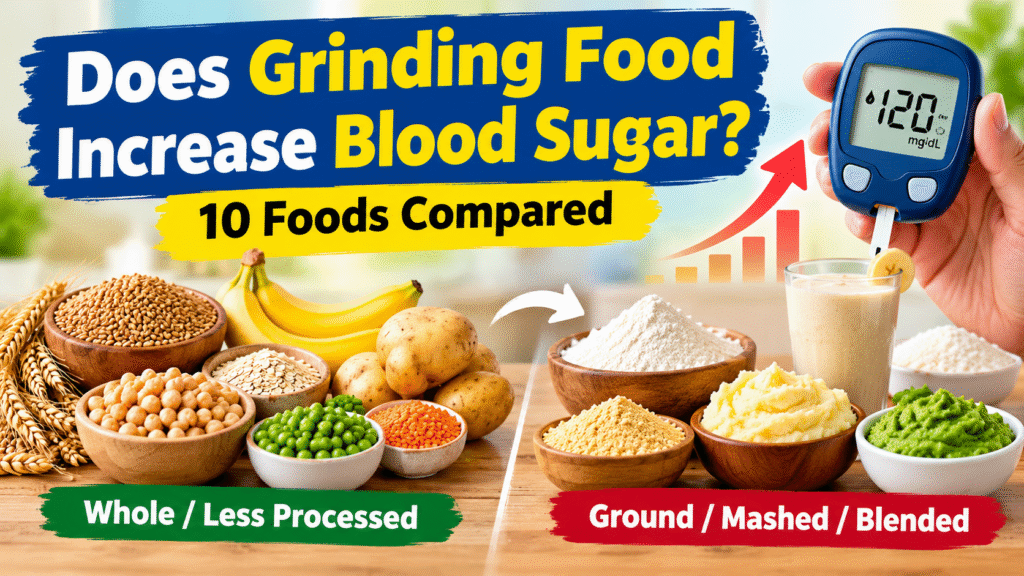
In some cases, grinding, mashing, or blending food can make its carbohydrates easier to digest and may lead to a faster blood glucose response. However, the effect is not the same for every food. The variety, cooking method, ripeness, portion size, and other foods eaten alongside it also matter.
Table of Contents
In this guide, we will compare 10 familiar foods, explain the science behind food structure and the glycemic index, and share practical tips for people managing diabetes.
Does Grinding Food Increase Blood Sugar?
Yes, grinding food can increase the speed at which some carbohydrates are digested, potentially affecting blood sugar. However, grinding does not automatically make every food worse for blood glucose control.
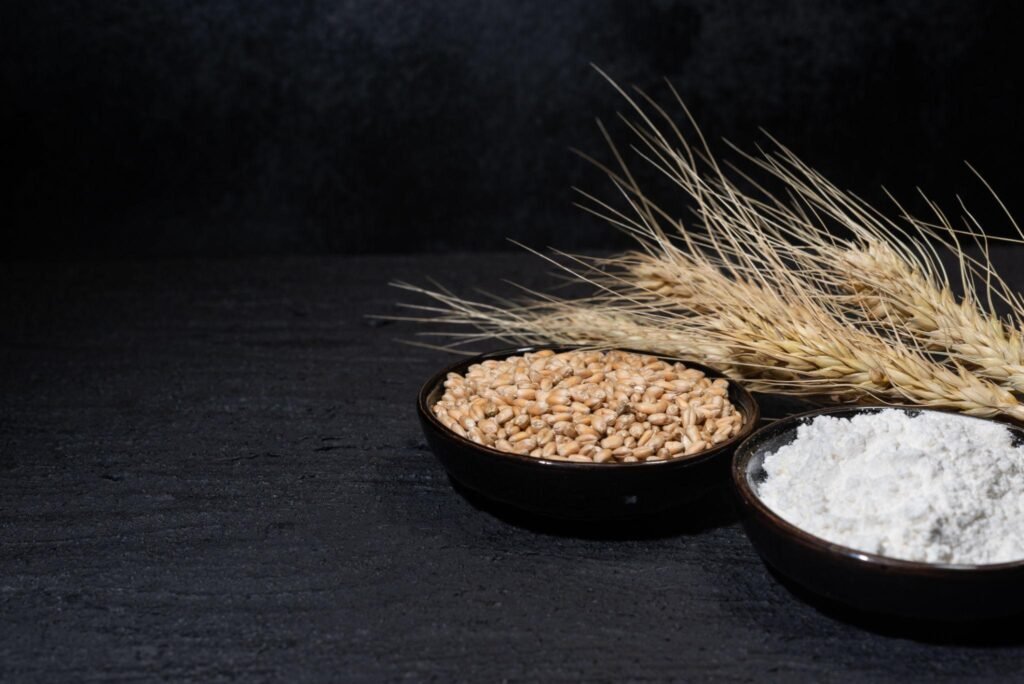
To understand why, imagine eating a whole grain of wheat. Its internal starch is enclosed within a physical structure that digestive enzymes must break down or penetrate. When the grain is finely ground into flour, much of that structure is disrupted. This can make the starch more accessible to digestive enzymes.
The same principle may apply when certain foods are mashed or blended. Breaking food into smaller particles can increase the surface area available for digestion.
However, particle size is only one part of the picture. Different foods contain different types of starch, fiber, protein, and other components that influence digestion. Cooking can also change starch structure, sometimes making it easier to digest and sometimes creating starch that is less readily digested after cooling.
For example, finely ground wheat flour used to prepare soft bread or chapati may behave differently from intact wheat kernels. Likewise, mashed potatoes may produce a different blood glucose response from less thoroughly broken-down potatoes.
It is important to remember that the form of a food is only one factor affecting blood sugar. The amount you eat and the total carbohydrates in your meal are equally important considerations.
Understanding the Glycemic Index and Its Role in Blood Sugar
The glycemic index (GI) is a system used to compare how carbohydrate-containing foods affect blood glucose levels after eating. Pure glucose is used as the reference food, with a GI value of 100.
Foods are commonly classified into three groups:
| Glycemic index | Classification | What it generally indicates |
| 55 or below | Low GI | A relatively lower blood glucose response |
| 56–69 | Medium GI | An intermediate blood glucose response |
| 70 or above | High GI | A relatively higher blood glucose response |
These categories can help you compare foods, but the glycemic index does not tell the whole story.
For example, a food with a high GI may contain relatively few carbohydrates in a typical serving. Conversely, a food with a low GI can still contribute a substantial amount of carbohydrates if you eat a large portion.
This is why the glycemic load (GL) is also useful. It considers both the glycemic index and the amount of available carbohydrate in a serving.
The formula is:

For people with diabetes, understanding both GI and portion size is more useful than judging a food by its GI alone.
Why Does Food Structure Matter for Blood Sugar?
Before comparing individual foods, it helps to understand what happens when food is ground, mashed, or blended.
1. Grinding breaks down physical structure
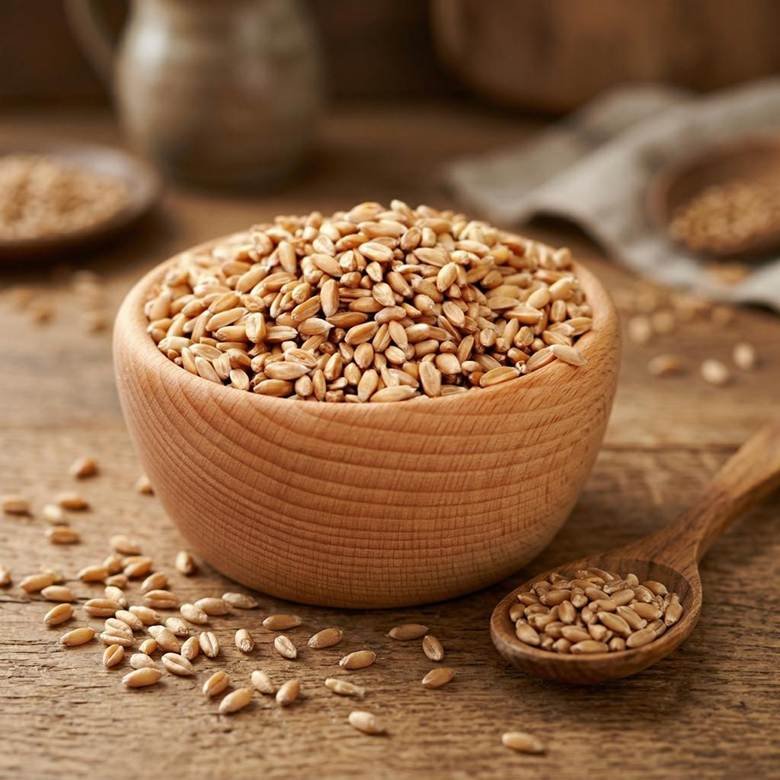
Whole grains contain starch within a complex physical structure. Grinding them into fine flour breaks that structure apart and increases the surface area available to digestive enzymes. Depending on the food and how it is prepared, this may accelerate starch digestion.
2. Mashing changes particle size
Mashing breaks food into smaller pieces. When combined with cooking, this can make some carbohydrates easier to digest. However, the effect depends on the food’s composition and preparation.
3. Blending changes texture, but does not remove all fiber
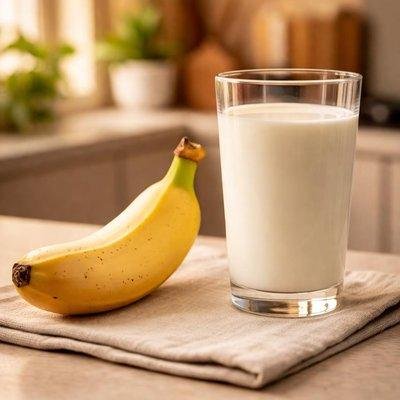
Blending fruit disrupts its physical structure, but the fiber generally remains in the drink unless it is strained out. A smoothie may still affect blood sugar differently from whole fruit because of its texture, serving size, ingredients, and the speed at which it is consumed.
Cooking is another important factor. Heating starch in the presence of water can make it easier to digest. Cooling certain cooked starchy foods may allow some starch to form resistant starch, which is less readily digested in the small intestine. Reheating does not necessarily eliminate all of this effect.
Therefore, food processing, cooking, cooling, and portion size should be considered together rather than assuming that one preparation method always produces the same result.
10 Foods Compared: Does Grinding Food Increase Blood Sugar?
The following table summarizes how food structure may influence blood sugar. The descriptions are general comparisons, not guarantees of a particular glucose response.
| Food | Less-processed form | Ground, mashed, or processed form | Important consideration |
| Wheat | Whole or coarsely broken kernels | Fine wheat flour | Particle size and how the flour is cooked matter |
| Oats | Less-processed oat groats or coarse oats | Fine oat flour | Oat type and processing affect digestion |
| Barley | Whole or intact barley kernels | Barley flour | Fiber and the degree of processing matter |
| Corn | Whole kernels or coarse cornmeal | Fine corn flour | Cooking and processing methods influence starch digestion |
| Rice | Intact rice grains | Rice flour | Rice variety, starch properties, and cooking affect the response |
| Chickpeas | Whole boiled chickpeas | Besan or chickpea flour | Grinding and the final recipe both matter |
| Lentils | Whole cooked lentils | Lentil flour | Fiber, particle size, and preparation affect digestion |
| Potatoes | Boiled potato pieces | Mashed potatoes | Cooking, texture, variety, and cooling matter |
| Bananas | Whole banana | Mashed or blended banana | Ripeness and serving size are especially important |
| Peas | Whole cooked peas | Mashed peas | Texture and cooking affect the response |
Important: GI values reported for individual foods can vary considerably between studies. There is no single reliable GI value for every version of wheat flour, rice flour, mashed potatoes, or blended fruit. Avoid treating estimated ranges as universal measurements.
1. Whole Wheat vs Fine Wheat Flour
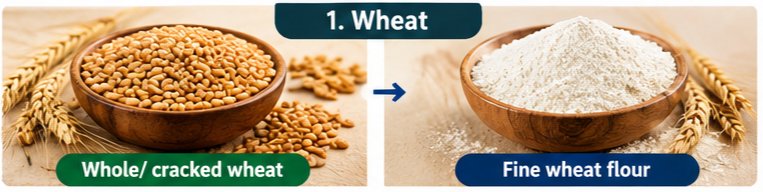
Wheat is a staple food in many households, particularly in Pakistan and India, where chapati and roti are common parts of daily meals.
Whole wheat kernels have an intact physical structure. When wheat is ground into fine flour, that structure is disrupted, allowing digestive enzymes to reach the starch more easily.
However, the final food also matters. A whole-wheat chapati, a finely milled wheat chapati, and a soft bread made from wheat flour may produce different blood glucose responses because their particle sizes, recipes, moisture content, and cooking methods differ.
Practical tip: Choose whole-grain flour where available, but do not assume that whole-wheat roti is carbohydrate-free or that you can eat unlimited portions. The number and size of rotis you consume remain important.
Pairing a moderate portion of roti with lentils, vegetables, and a suitable protein source can help create a more balanced meal.
2. Whole Oats vs Oat Flour
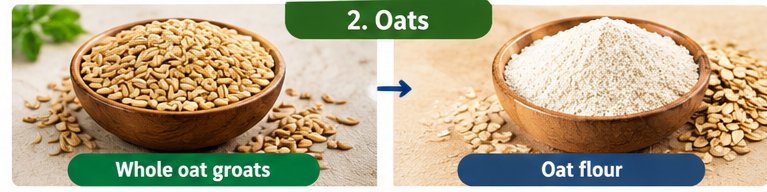
Oats are known for containing beta-glucan, a type of soluble fiber that can influence digestion and help moderate post-meal blood glucose responses.
Less-processed oat groats and coarse oats retain more of their original physical structure than finely milled oat flour. Fine grinding may make starch more accessible to digestive enzymes.
However, not all oat products behave the same way. Steel-cut oats, rolled oats, instant oats, and oat flour differ in processing and cooking time.
Practical tip: If your goal is to manage blood sugar, consider less-processed oats and avoid adding large quantities of sugar, honey, or sweetened syrups. Pay attention to your portion size and the ingredients in your bowl.
3. Whole Barley vs Barley Flour
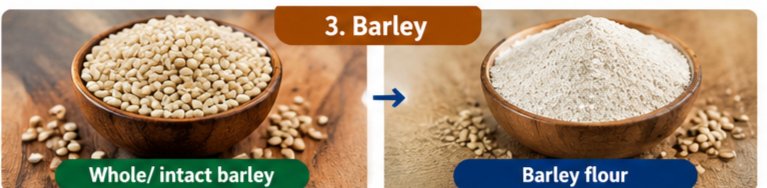
Barley contains beta-glucan and other fibers that can contribute to its nutritional benefits. Less-processed barley may retain a structure that slows the accessibility of its starch compared with finely milled flour.
Nevertheless, barley flour is not automatically an unhealthy choice. It can provide fiber and other nutrients, depending on how it is produced and used.
For example, a meal containing barley flour, vegetables, and protein may have a different overall effect from a meal made mainly of refined flour.
Practical tip: Consider incorporating barley into soups, grain dishes, or mixed-grain meals. If you use barley flour, focus on the complete recipe, the amount eaten, and what accompanies it.
4. Whole Corn vs Fine Corn Flour

Corn is consumed in many forms, including boiled corn on the cob, corn kernels, coarse cornmeal, and finely ground corn flour.
Grinding corn into fine flour can disrupt its structure and make starch more accessible. However, the response also depends on how the corn is cooked and whether the finished food is soft, dense, or highly processed.
For example, boiled corn kernels and a finely milled corn-based product are not nutritionally identical simply because both come from corn.
Practical tip: When eating corn, consider the portion size and the rest of the meal. Pairing it with vegetables and a protein source can make the meal more balanced.
5. Whole Rice vs Rice Flour
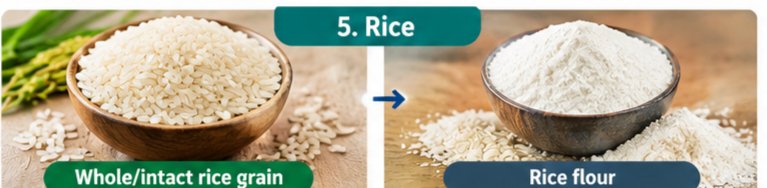
Rice is another major source of carbohydrates in South Asian diets. Its effect on blood sugar depends on several factors, including the rice variety, starch composition, cooking method, and serving size.
Grinding rice into flour changes the grain’s physical structure. In some products, this can contribute to faster starch digestion. However, rice flour does not have one universal glycemic index, and its effect cannot be predicted from particle size alone.
The distinction between different rice varieties is also important. Their starch characteristics can vary, so two rice dishes prepared in different ways may produce different responses.
Practical tip: Measure your rice portion rather than filling your plate without considering quantity. Add non-starchy vegetables and an appropriate source of protein. If you eat rice frequently, compare your individual blood glucose responses to different varieties and preparation methods when feasible.
6. Whole Chickpeas vs Besan
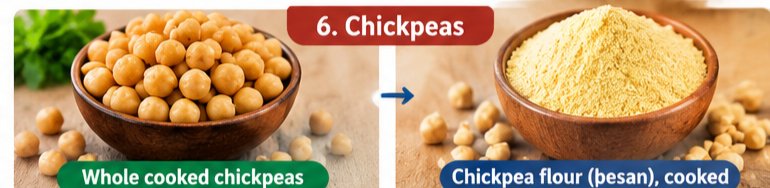
Chickpeas are especially relevant to people following South Asian diets. They are used in chana chaat, chickpea curry, roasted chickpeas, hummus, and many other dishes. Ground chickpeas are commonly used to make besan.
Whole chickpeas contain fiber, protein, and starch within their original physical structure. Grinding them into flour changes that structure, but the flour still retains nutrients from the chickpeas.
The final dish makes a difference, too. A besan pancake prepared with vegetables and modest amounts of oil is different from a deep-fried snack made with besan and refined starches.
Practical tip: Whole boiled chickpeas are a useful option for many balanced meals. You can also include besan-based foods, but consider the recipe, portion size, cooking method, and any added ingredients.
7. Whole Lentils vs Lentil Flour
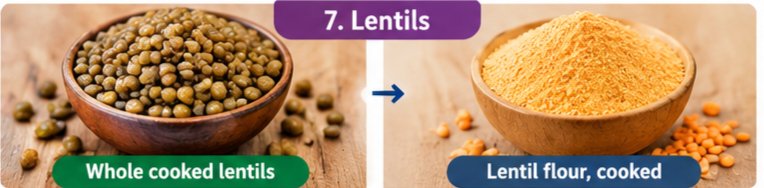
Lentils are another useful source of plant-based protein, fiber, and carbohydrates. In Pakistan and India, they are commonly eaten as dal, soups, and mixed vegetable dishes.
Whole cooked lentils retain more of their original structure than lentils ground into flour. Grinding may change how easily digestive enzymes reach the starch, although the effect depends on processing and preparation.
It is also important to distinguish between the glycemic response to a food and its overall nutritional value. Lentils can provide valuable nutrients regardless of whether they are consumed whole or incorporated into a flour-based recipe.
Practical tip: Include lentils in balanced meals, and consider how much rice, roti, or other carbohydrate-containing foods you eat alongside them. If you use lentil flour, pay attention to the complete recipe rather than judging it by the flour alone.
8. Boiled Potatoes vs Mashed Potatoes

Potatoes offer a particularly useful example of how cooking and texture can affect starch digestion.
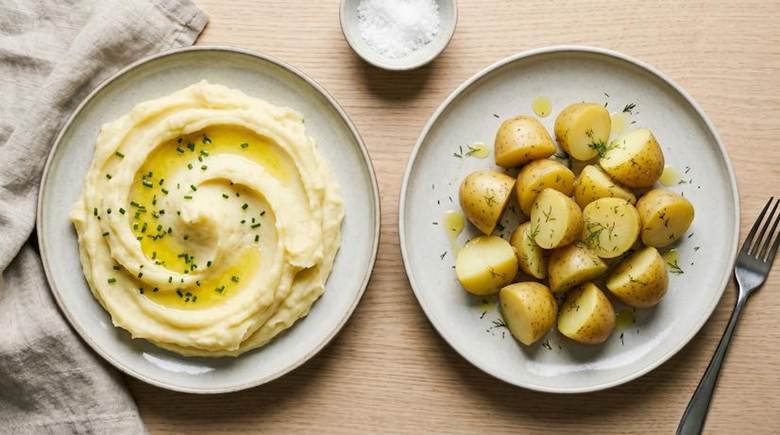
Boiled potato pieces retain some of their physical structure. Mashing breaks them into smaller particles, and cooking makes potato starch more digestible. Depending on the potato variety and preparation, mashed potatoes may produce a faster or higher blood glucose response than less thoroughly broken-down potatoes.
However, this is not a universal rule. Potato variety, cooking duration, serving temperature, and cooling can all influence the result.
Cooling cooked potatoes can increase their resistant starch content to some extent. The amount varies, and cooling does not make potatoes carbohydrate-free.
Practical tip: You do not need to eliminate potatoes from your diet. Try moderate portions, combine them with vegetables and protein, and avoid assuming that mashed, baked, boiled, and fried potatoes will all affect blood sugar in the same way.
9. Whole Bananas vs Mashed or Blended Bananas

Bananas are nutritious fruits that provide carbohydrates, potassium, and other nutrients. Their effect on blood sugar depends partly on ripeness.
Less-ripe bananas generally contain more resistant starch, while ripening converts some of that starch into sugars. As a result, a greenish banana and a very ripe banana may produce different blood glucose responses.
Mashing or blending a banana breaks down its physical structure. However, blending does not automatically remove its fiber, and it does not guarantee a large blood sugar spike.
A smoothie can become more carbohydrate-dense when several bananas, fruit juice, sweetened yogurt, honey, or other ingredients are added.
Practical tip: Eat a suitable portion of whole fruit or prepare a smoothie without unnecessary added sugars. Remember that a smoothie containing multiple servings of fruit can deliver substantially more carbohydrates than you might consume when eating a single piece of fruit.
10. Whole Peas vs Mashed Peas
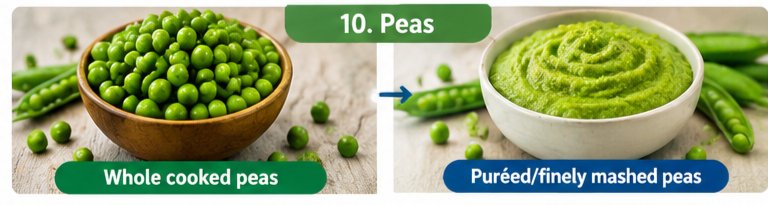
Peas contain carbohydrates, fiber, and plant protein. Their physical structure can influence how quickly their starch is digested.
Whole cooked peas generally retain more of their original structure than finely mashed peas. However, the actual glucose response depends on the type of peas, cooking method, portion size, and the rest of the meal.
Peas are not inherently unsuitable for people with diabetes. Their nutritional value and contribution to the meal should be considered alongside their carbohydrate content.
Practical tip: Include peas in soups, mixed vegetables, or balanced meals, and pay attention to portion size. If you prepare mashed peas, consider the other ingredients you add and the total carbohydrates in the serving.
How to Eat Carbohydrate Foods Without Unnecessary Blood Sugar Spikes
Understanding food processing is useful, but you do not need to avoid every ground, mashed, or blended food. Instead, focus on practical changes that fit your daily routine.
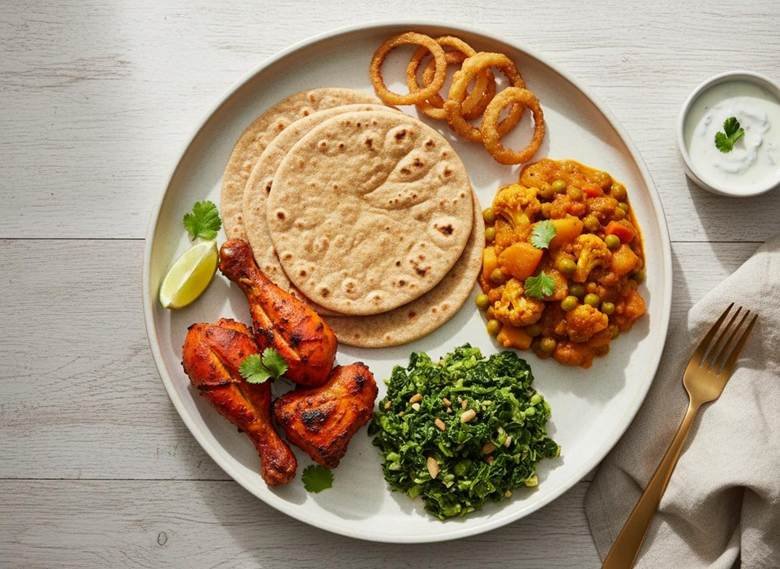
1. Build a balanced plate
Include non-starchy vegetables, a suitable protein source, and a measured portion of carbohydrate-containing food. For example, pair a roti with dal and vegetables rather than relying on several rotis alone.
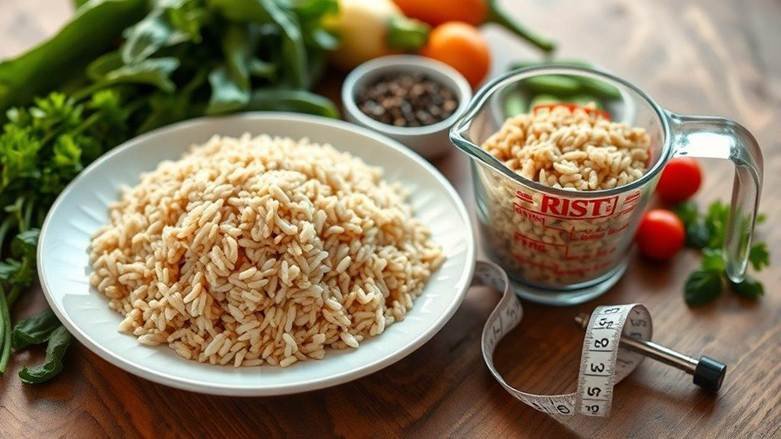
2. Choose less-processed options when practical
Whole grains, intact legumes, and whole fruit can be useful choices because their physical structures remain relatively intact. However, finely ground foods can still be part of a healthy diet.
3. Pay attention to portion size
Even foods with a low glycemic index contain carbohydrates. Eating a larger portion can increase the total carbohydrate load of your meal and affect your blood glucose.

4. Avoid unnecessary added sugars
When preparing smoothies, porridge, or flour-based dishes, limit added sugar and sweetened ingredients. Remember that a smoothie made with several servings of fruit can contain more carbohydrates than a single piece of fruit.
Does Scientific Research Support the Role of Food Structure?
Yes. Research supports the idea that the physical structure of starchy foods can influence digestion and post-meal blood glucose responses.
A 2021 systematic review and meta-analysis published in The American Journal of Clinical Nutrition examined 25 randomized crossover trials involving 369 participants. The researchers found that factors such as larger or more intact food particles, starch composition, and certain cooking-related structural changes could influence post-meal glucose and insulin responses. However, results varied with the structural feature being studied, and these findings should not be interpreted as proof that every whole food is better than every ground food.

PubMed
A separate review published in Comprehensive Reviews in Food Science and Food Safety discussed how starch structure and processing influence digestibility. It highlighted the roles of starch composition, heating, and changes that occur during cooling and storage.

PubMed
These findings support a practical principle: the nutritional effect of a carbohydrate food depends not only on how many carbohydrates it contains, but also on how those carbohydrates are structured and prepared.
For readers who want to explore the scientific evidence, the following resources are useful:
- Research on starchy food structure and post-meal glucose responses — PubMed
- Review of starch structure and digestibility — PubMed
- Research on food microstructure and starch digestion — PubMed
Frequently Asked Questions
1. Does grinding food increase blood sugar?
Grinding can make starch more accessible to digestive enzymes and may increase the speed of digestion in some foods. However, the effect depends on the food, particle size, cooking method, and other factors. Grinding does not automatically cause a higher blood glucose response in every case.
2. Is whole wheat better than wheat flour for diabetes?
Less-processed wheat may retain more of its original physical structure, which can influence starch digestion. However, whole-wheat flour is not inherently unsuitable for people with diabetes. Portion size, preparation, and the other foods in the meal also matter.
3. Does rice flour raise blood sugar more than whole rice?
Rice flour may allow faster starch digestion in some preparations because grinding disrupts the grain structure. Nevertheless, rice variety, starch characteristics, cooking, and serving size influence the response. There is no single GI value that applies to every rice flour or rice dish.
4. Are whole chickpeas better than besan for blood sugar?
Whole chickpeas retain their original structure and provide fiber and protein. Besan also contains nutrients from chickpeas, but grinding changes the physical structure. The effect of a besan-based dish depends on the recipe, cooking method, portion size, and other ingredients.
5. Do mashed potatoes cause a bigger blood sugar spike than boiled potatoes?
They can in some circumstances because mashing and cooking can make starch easier to digest. However, the difference depends on potato variety, cooking time, serving temperature, and other factors. Both foods can fit into a balanced eating pattern when portions are appropriate.
6. Is blending a banana bad for people with diabetes?
Not necessarily. Blending breaks down the fruit’s physical structure, but it generally does not remove its fiber. The number of bananas used, ripeness, serving size, and added ingredients can influence the total carbohydrate intake. A smoothie made with several bananas is different from one made with a small portion of fruit.
7. Does cooking food increase its glycemic index?
Cooking can make starch more accessible to digestive enzymes, potentially increasing its digestibility. The effect varies according to the food and cooking method. Cooling some cooked starchy foods can increase resistant starch, although this does not eliminate their carbohydrate content.
8. Should people with diabetes avoid flour completely?
No. Flour can be part of a balanced diet. Choosing whole-grain options where practical, controlling portions, and combining flour-based foods with vegetables and protein can help support better meal planning. Individual requirements vary.
9. Which is more important: glycemic index or portion size?
Both matter. The glycemic index describes the relative blood glucose response to a standardized amount of available carbohydrate. Portion size determines how much carbohydrate you actually consume. Glycemic load combines these two considerations, although it also cannot predict every individual’s glucose response.
10. How can I find out which food raises my blood sugar the most?
If you monitor your glucose, you can discuss a consistent monitoring approach with your healthcare professional and compare similar meals under similar conditions. Meal timing, medication, physical activity, sleep, and stress can affect results, so a single reading does not establish that one food is always better or worse.
Conclusion
So, does grinding food increase blood sugar? It can influence how quickly some foods are digested and how they affect blood glucose, but the answer depends on the food’s structure, composition, preparation, and portion size. Whole wheat, oats, barley, corn, rice, chickpeas, lentils, potatoes, bananas, and peas can all affect blood sugar differently when their forms change. Rather than completely avoiding flour, mashed foods, or smoothies, focus on balanced meals, appropriate portions, less-processed options where practical, and your individual glucose response. For people living with diabetes, understanding how food preparation affects digestion can support more informed food choices without unnecessarily eliminating nutritious foods from the diet.