
Managing diabetes is not about eating less—it is about eating smarter. Many people with diabetes struggle to find a healthy lunch that keeps them energized throughout the workday without causing blood sugar spikes. Office workers, in particular, often rely on convenient foods like white rice, refined flour products, fast food, or sugary beverages because they are quick and easy to access. Unfortunately, these choices can lead to rapid increases in blood glucose levels, followed by fatigue, hunger, and poor concentration.
This is where Low Glycemic Load Lunch Bowls become a game-changer. Unlike traditional lunches that rely heavily on refined carbohydrates, these bowls are carefully balanced with fiber-rich vegetables, high-quality protein, healthy fats, and moderate portions of complex carbohydrates. The result is a satisfying meal that nourishes your body, supports stable blood sugar levels, and keeps you productive throughout the day.
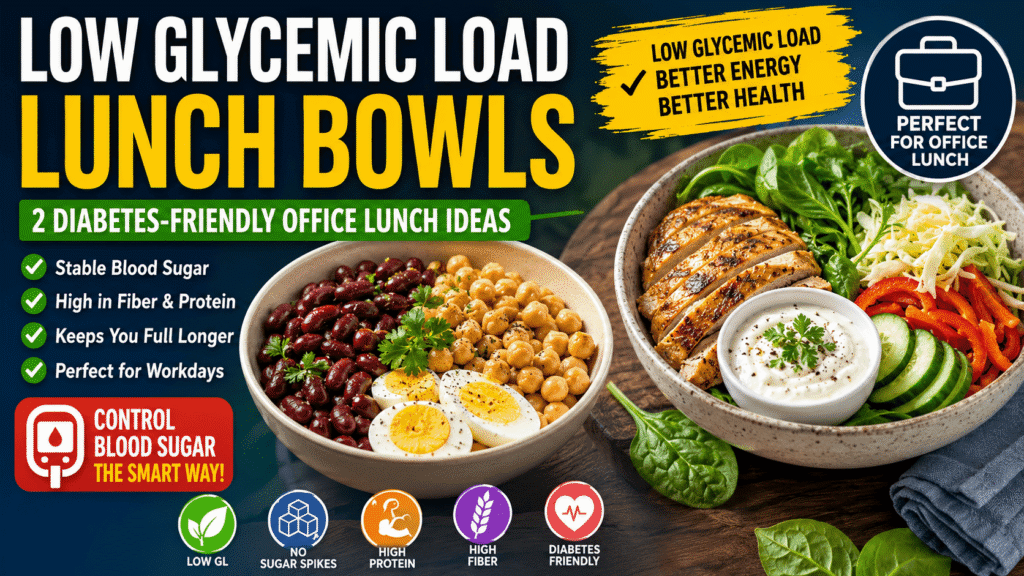
In this comprehensive guide, you will learn what glycemic load really means, why it matters more than glycemic index alone, how it affects blood sugar, and why choosing the right lunch is one of the most effective lifestyle changes people with diabetes can make.
Table of Contents
What Are Low Glycemic Load Lunch Bowls?
A Low Glycemic Load Lunch Bowl is a balanced meal designed to provide slow, steady energy instead of causing a sudden rise in blood glucose. It combines foods that digest gradually, allowing glucose to enter the bloodstream at a controlled rate.
Most healthy lunch bowls contain four important components:
- Lean protein such as eggs, chicken breast, fish, tofu, or legumes
- High-fiber vegetables like spinach, cucumber, cabbage, broccoli, bell peppers, and lettuce
- Complex carbohydrates in controlled portions, including beans, lentils, chickpeas, or whole grains
- Healthy fats from nuts, seeds, olive oil, or avocado
When these foods are combined, they create a meal that promotes fullness, supports healthy digestion, and minimizes blood sugar fluctuations.
Unlike traditional lunches that may be overloaded with refined carbohydrates, low glycemic load lunch bowls focus on balance rather than restriction.
Understanding Glycemic Load
Before discussing meal planning, it is important to understand what Glycemic Load (GL) actually means.
Many people have heard of the Glycemic Index (GI), but fewer understand why Glycemic Load is often a better measure when choosing foods for diabetes management.
The Glycemic Load considers two important factors:
- How quickly a food raises blood sugar (its Glycemic Index).
- How many digestible carbohydrates are actually present in a typical serving.
Because it combines both quality and quantity of carbohydrates, Glycemic Load provides a much more realistic picture of how a meal will affect blood sugar.
For example, watermelon has a relatively high Glycemic Index. However, because it contains a large amount of water and relatively few carbohydrates per serving, its Glycemic Load is actually low. This means eating a moderate portion is unlikely to produce the dramatic blood sugar spike that many people expect.
This example demonstrates why relying on Glycemic Index alone can sometimes be misleading.
Glycemic Index vs. Glycemic Load: What’s the Difference?
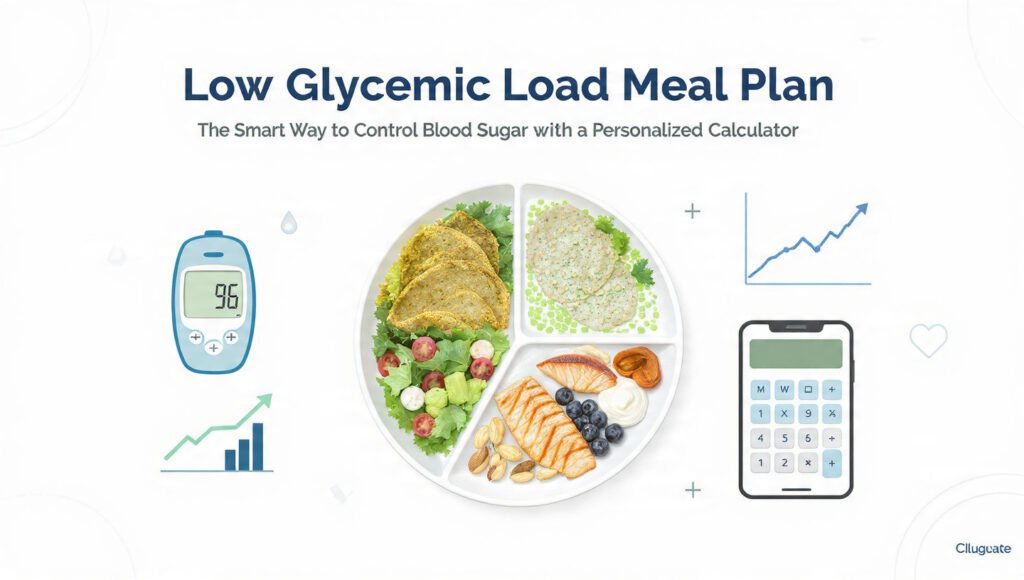
One of the biggest mistakes people make is confusing Glycemic Index with Glycemic Load.
The Glycemic Index (GI) measures how quickly 50 grams of available carbohydrates from a food raise blood glucose compared to pure glucose.
However, people rarely consume exactly 50 grams of carbohydrate from a single food in one sitting.
This is why Glycemic Load is more practical.
Consider these two foods:
- Carrots have a moderate Glycemic Index, but because they contain relatively little carbohydrate per serving, their Glycemic Load remains very low.
- White bread has both a high Glycemic Index and a high Glycemic Load, making it much more likely to produce rapid blood sugar spikes.
In everyday life, Glycemic Load reflects what actually happens after eating a normal portion of food.
For people with diabetes, Glycemic Load is often the more useful tool when planning meals.
How Glycemic Load Is Calculated
The formula for Glycemic Load is straightforward:
Glycemic Load = (Glycemic Index × Available Carbohydrates per Serving) ÷ 100
Let’s look at a simple example.
Suppose a serving of boiled chickpeas contains:
- Glycemic Index = 28
- Available carbohydrates = 18 grams
The Glycemic Load would be:
28 × 18 ÷ 100 = 5
A Glycemic Load of 5 is considered low.
This calculation explains why many legumes are excellent choices for people with diabetes. Although they contain carbohydrates, they also provide substantial fiber, which reduces the overall blood sugar impact.
How to Interpret Glycemic Load
Health professionals generally classify Glycemic Load into three categories:
| Glycemic Load | Category |
| 10 or less | Low |
| 11–19 | Moderate |
| 20 or above | High |
A meal with a Glycemic Load below 10 is generally considered blood sugar friendly.
However, it is important to remember that the total Glycemic Load of the entire meal matters more than the Glycemic Load of a single ingredient.
A bowl containing beans, vegetables, lean protein, and healthy fats may have a much lower overall Glycemic Load than a plate of white rice, even if some individual ingredients contain carbohydrates.
Why Office Workers Need Low Glycemic Load Lunches
Millions of office workers spend six to ten hours sitting at a desk every day.
Long periods of sitting naturally reduce calorie expenditure. When this sedentary lifestyle is combined with high-carbohydrate lunches, blood sugar can rise rapidly.
Many office lunches include foods such as:
- White rice
- White bread sandwiches
- Fried snacks
- Burgers
- Pizza
- Sugary drinks
- Sweet desserts
These foods are often high in refined carbohydrates and low in fiber. As a result, they digest quickly and cause sharp increases in blood glucose.
After the spike, blood sugar often falls rapidly, leaving people feeling tired, sleepy, hungry, and unable to concentrate.
This cycle repeats itself throughout the day and can make diabetes management much more difficult.
The Afternoon Energy Crash Explained
Have you ever noticed feeling sleepy around two or three o’clock in the afternoon?
Many people blame long working hours, but lunch is often the real reason.
When you eat a meal rich in refined carbohydrates, your blood sugar rises quickly.
Your pancreas responds by releasing insulin to move glucose into your body’s cells.
If this response is excessive, blood glucose may fall rapidly afterward.
This rapid change can lead to:
- Fatigue
- Brain fog
- Difficulty concentrating
- Increased hunger
- Cravings for sugary snacks
- Reduced productivity
On the other hand, a Low Glycemic Load Lunch Bowl releases glucose slowly, providing a steady supply of energy over several hours.
Instead of experiencing highs and lows, your body receives a more consistent source of fuel.
The Science Behind Blood Sugar Spikes
Every carbohydrate-containing food is eventually broken down into glucose.
However, not all carbohydrates behave the same way.
Refined carbohydrates have had much of their natural fiber removed.
Without fiber, digestion becomes much faster.
As a result:
- Glucose enters the bloodstream quickly.
- Blood sugar rises sharply.
- The pancreas releases larger amounts of insulin.
- Blood sugar then falls more rapidly.
Repeated blood sugar spikes may contribute to poorer long-term glucose control.
Foods naturally rich in fiber slow this entire process.
Fiber creates a thicker consistency in the digestive tract, delaying stomach emptying and slowing carbohydrate absorption.
This gradual digestion helps maintain more stable blood glucose levels after meals.
Why Protein Is Essential in a Diabetes-Friendly Lunch
Protein plays a vital role in blood sugar management.
Unlike refined carbohydrates, protein has very little direct effect on blood glucose.
More importantly, protein helps:
- Increase feelings of fullness
- Preserve muscle mass
- Slow stomach emptying
- Reduce hunger between meals
- Support healthier eating habits
Excellent protein choices include:
- Eggs
- Chicken breast
- Fish
- Greek yogurt
- Cottage cheese
- Tofu
- Lentils
- Beans
- Chickpeas
When protein is combined with high-fiber foods, the overall Glycemic Load of the meal becomes much lower than eating carbohydrates alone.
The Power of Fiber
Fiber is one of the most underrated nutrients in diabetes management.
There are two main types:
Soluble fiber absorbs water and forms a gel-like substance in the digestive system. This slows glucose absorption and may improve blood sugar control.
Insoluble fiber supports digestive health and promotes regular bowel movements.
Both types contribute to better metabolic health.
Foods naturally high in fiber include:
- Kidney beans
- Chickpeas
- Lentils
- Spinach
- Broccoli
- Cabbage
- Bell peppers
- Cucumbers
- Oats
- Flaxseeds
- Chia seeds
People who regularly consume fiber-rich meals often report feeling fuller for longer and experiencing fewer cravings throughout the day.
Common Lunch Mistakes That Raise Blood Sugar
Many people unknowingly make food choices that undermine their blood sugar goals.
Some of the most common mistakes include:
Skipping Lunch
Skipping meals may seem like a way to reduce calorie intake, but it can increase hunger later in the day, making overeating more likely.
Eating Large Portions of Refined Carbohydrates
Large servings of white rice, white bread, noodles, or fries provide a high carbohydrate load with little fiber.
Ignoring Protein
A lunch made up mostly of carbohydrates without adequate protein is less satisfying and more likely to cause rapid blood sugar fluctuations.
Not Eating Enough Vegetables
Vegetables add volume, fiber, vitamins, and minerals while contributing very few calories or digestible carbohydrates.
Sugary Drinks
Many people choose fruit juices, soft drinks, or sweetened tea with lunch. These beverages can significantly increase the meal’s Glycemic Load.
Ultra-Processed Snacks
Biscuits, chips, pastries, and packaged sweets may temporarily satisfy hunger but often lead to another blood sugar spike shortly afterward.
Replacing these habits with balanced, nutrient-dense meals can make a meaningful difference in daily blood sugar management.
Why Meal Balance Matters More Than Any Single Food
One of the biggest misconceptions about diabetes is that a single “superfood” can control blood sugar. In reality, no individual food has that power. What truly matters is the overall balance of your meal.
A lunch bowl that combines lean protein, fiber-rich legumes, colorful vegetables, and healthy fats works because each ingredient complements the others. Protein slows digestion, fiber reduces the absorption of carbohydrates, and healthy fats help increase satiety. Together, they create a meal that is both satisfying and blood sugar friendly.
Rather than focusing on eliminating foods completely, aim to build meals that provide a balanced mix of nutrients. This approach is more sustainable and enjoyable in the long term.
Lunch Bowl #1: Kidney Beans, Chickpeas, and Boiled Egg
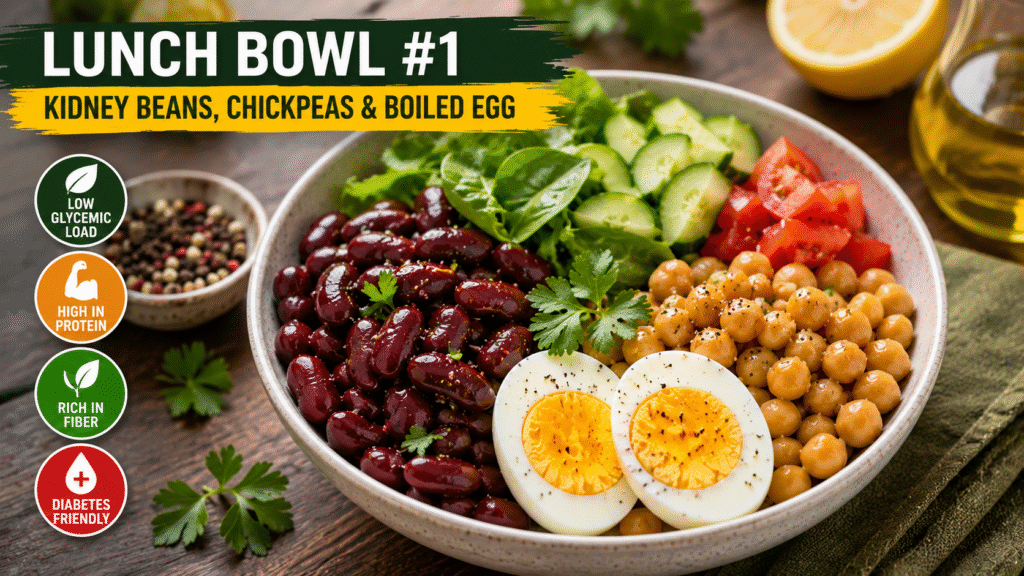
If you’re searching for a lunch that is filling, nutritious, and unlikely to cause a sharp increase in blood sugar, this bowl deserves a place in your weekly meal plan.
Ingredients (1 Serving)
- ½ cup boiled red kidney beans (approximately 95 g)
- ½ cup boiled white chickpeas (approximately 85 g)
- 1 large boiled egg
- 1 cup cucumber slices
- ½ cup chopped tomatoes
- ½ cup lettuce or spinach
- Fresh coriander or parsley
- 1 teaspoon extra virgin olive oil (optional)
- Lemon juice
- Black pepper
- A pinch of salt
- Roasted cumin powder (optional)
This bowl requires very little cooking if you prepare the beans and chickpeas in advance.
Why This Lunch Bowl Is Ideal for People with Diabetes
Many people think that beans and chickpeas should be avoided because they contain carbohydrates. However, this is a misunderstanding.
Legumes are unique because they contain complex carbohydrates, dietary fiber, plant protein, vitamins, and minerals all in one package.
Unlike refined carbohydrates, legumes digest slowly, leading to a gradual release of glucose into the bloodstream.
When combined with a boiled egg, which provides high-quality protein, the overall meal becomes even more balanced.
Instead of creating a rapid blood sugar spike, this lunch delivers steady energy for several hours.
Nutritional Breakdown of Lunch Bowl #1
The following values are approximate and may vary depending on the exact ingredients used.
| Ingredient | Calories | Protein | Carbohydrates | Fiber |
| ½ cup boiled kidney beans | 112 | 7.7 g | 20 g | 7 g |
| ½ cup boiled chickpeas | 135 | 7.3 g | 22 g | 6 g |
| 1 boiled egg | 78 | 6.3 g | 0.6 g | 0 g |
| Vegetables | 30 | 1.5 g | 6 g | 2 g |
| Olive oil (1 tsp) | 40 | 0 g | 0 g | 0 g |
Approximate Total Nutrition
- Calories: 395 kcal
- Protein: 22–23 g
- Carbohydrates: 48–49 g
- Dietary Fiber: 15 g
- Healthy Fats: 9–10 g
This nutrient profile makes the meal satisfying without being excessively high in calories.
Understanding the Glycemic Load of Each Ingredient
One reason this bowl performs so well is that each ingredient has a relatively low impact on blood sugar.
Red Kidney Beans
Approximate values:
- Glycemic Index (GI): 24
- Serving Size: ½ cup (95 g)
- Glycemic Load (GL): 4
Kidney beans are rich in resistant starch and soluble fiber. These nutrients slow carbohydrate digestion and reduce the rate at which glucose enters the bloodstream.
They are also an excellent source of:
- Iron
- Magnesium
- Potassium
- Folate
- Plant protein
Several studies have shown that regularly eating legumes is associated with improved blood sugar control and better overall diet quality.
White Chickpeas
Approximate values:
- Glycemic Index: 28
- Serving Size: ½ cup (85 g)
- Glycemic Load: 5
Chickpeas are another excellent carbohydrate choice for people with diabetes.
Unlike refined grains, chickpeas digest slowly due to their high fiber content.
They also provide:
- Plant protein
- Magnesium
- Zinc
- Iron
- Folate
- Potassium
Because they digest gradually, chickpeas help reduce the likelihood of sudden blood sugar spikes.
Boiled Egg
Approximate values:
- Glycemic Index: 0
- Glycemic Load: 0
Eggs contain virtually no carbohydrates.
Instead, they provide complete protein containing all nine essential amino acids.
Eggs are also rich in:
- Vitamin B12
- Vitamin D
- Choline
- Selenium
- High-quality protein
Adding an egg to a carbohydrate-containing meal slows digestion and improves satiety.
Total Glycemic Load of the Lunch Bowl
Let’s combine the numbers.
| Ingredient | Approximate GL |
| Kidney beans | 4 |
| Chickpeas | 5 |
| Egg | 0 |
| Vegetables | Less than 1 |
| Olive oil | 0 |
Total Meal Glycemic Load ≈ 9
A Glycemic Load of 9 falls within the Low Glycemic Load category.
This means the meal is expected to produce a slow and gradual rise in blood sugar rather than a dramatic spike.
Why Fiber Makes This Meal So Effective
One of the greatest strengths of this lunch bowl is its impressive fiber content.
With approximately 15 grams of dietary fiber, it provides nearly half of the daily fiber intake recommended for many adults.
Fiber supports diabetes management in several ways.
Slows Glucose Absorption
Fiber delays the digestion of carbohydrates, allowing glucose to enter the bloodstream gradually.
Improves Satiety
Meals rich in fiber help you stay full longer, reducing the temptation to snack on high-sugar foods during the afternoon.
Supports Gut Health
Fiber nourishes beneficial gut bacteria, which play an important role in overall metabolic health.
Promotes Heart Health
People with diabetes have an increased risk of cardiovascular disease. High-fiber diets are associated with healthier cholesterol levels and improved heart health.
The Role of Protein in Blood Sugar Control
Protein is equally important in this meal.
The combination of legumes and egg provides over 22 grams of protein, helping to:
- Maintain muscle mass
- Support tissue repair
- Slow digestion
- Increase fullness
- Reduce unnecessary snacking
Unlike sugary snacks or refined carbohydrates, protein contributes very little to blood sugar elevation.
Micronutrients That Make This Bowl Even Better
Beyond protein and fiber, this lunch bowl delivers a wide range of vitamins and minerals.
Magnesium
Magnesium supports hundreds of biochemical reactions within the body.
Research suggests that adequate magnesium intake is associated with improved insulin function.
Kidney beans and chickpeas are both good sources.
Potassium
Potassium helps regulate blood pressure and supports healthy muscle function.
Most adults fail to consume enough potassium each day.
Beans naturally contribute meaningful amounts.
Iron
Iron is essential for carrying oxygen throughout the body.
Both legumes and eggs contribute iron to the diet.
Pairing them with lemon juice or tomatoes, which contain vitamin C, can enhance iron absorption from plant foods.
Folate
Folate is important for healthy cell growth and red blood cell production.
Chickpeas are especially rich in this nutrient.
How This Lunch Bowl Keeps You Full Until Evening
One of the biggest challenges for office workers is afternoon hunger.
Many people eat lunch around 1:00 PM but become hungry again by 3:30 PM.
This often leads to unhealthy choices like:
- Cookies
- Chips
- Sweetened tea or coffee
- Candy
- Sugary drinks
This lunch bowl helps prevent that cycle because it combines three factors that promote fullness:
- High protein
- High fiber
- Moderate calorie density
These characteristics slow stomach emptying and provide steady energy for several hours.
Meal Prep Tips for Busy Professionals
This lunch bowl is perfect for meal preparation.
Cook Beans in Bulk
Prepare enough kidney beans and chickpeas for several days and store them in the refrigerator.
Alternatively, use low-sodium canned beans and rinse them well before use.
Boil Eggs Ahead of Time
Boiled eggs remain fresh in the refrigerator for several days when kept in their shells.
Prepare Vegetables in Advance
Wash and chop vegetables the night before.
Store them in airtight containers.
Pack Dressing Separately
Carry olive oil and lemon juice separately to keep vegetables crisp until lunchtime.
Meal prep can reduce reliance on fast food and make healthy eating much easier during busy workweeks.
Delicious Variations of This Lunch Bowl
One advantage of this recipe is its flexibility.
You can change the flavors while maintaining a low glycemic load.
Mediterranean Version
Add:
- Parsley
- Mint
- Cucumber
- Tomatoes
- Lemon juice
- Olive oil
South Asian Version
Season with:
- Roasted cumin
- Coriander powder
- Black pepper
- Fresh cilantro
- Green chilies (optional)
Middle Eastern Version
Add:
- Sumac
- Fresh parsley
- Lemon
- A spoonful of plain yogurt
Each variation offers different flavors without significantly increasing the Glycemic Load.
Who Should Eat This Lunch Bowl?
This meal is suitable for:
- People with Type 2 diabetes
- Individuals with prediabetes
- Office workers
- Students
- Busy professionals
- Individuals aiming for gradual weight loss
- People seeking sustained energy throughout the day
Even people without diabetes can benefit from balanced meals like this because stable blood sugar supports consistent energy levels and may help reduce overeating.
Practical Tips to Make This Bowl Even Healthier
Although this lunch bowl is already a nutritious option, a few small adjustments can enhance its overall quality:
- Add a handful of leafy greens such as spinach or arugula for extra vitamins and minerals.
- Include a squeeze of fresh lemon juice to brighten the flavor and improve iron absorption from the legumes.
- Use herbs and spices instead of heavy sauces to keep sodium intake under control.
- If you need additional healthy fats, sprinkle a teaspoon of flaxseeds or chia seeds on top for extra fiber and omega-3 fatty acids.
- Pair the meal with plain water or unsweetened tea instead of sugary beverages to keep the overall glycemic load low.
These simple additions can increase the meal’s nutritional value without significantly affecting blood sugar.
Lunch Bowl #2: Grilled Chicken Breast with Fresh Vegetables and Plain Yogurt
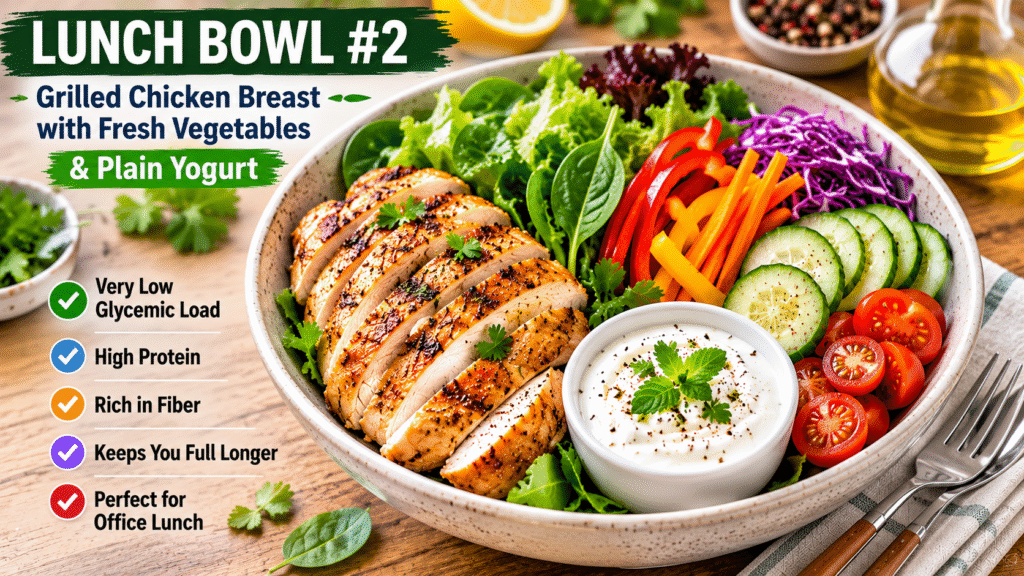
If your goal is to enjoy a filling lunch without experiencing post-meal sleepiness or sudden blood sugar spikes, this bowl is one of the best options you can prepare.
Unlike many restaurant lunches that rely on refined carbohydrates, this bowl emphasizes lean protein, non-starchy vegetables, and fermented dairy, creating a meal that is rich in nutrients but very low in glycemic load.
Ingredients (1 Serving)
- 100 g grilled skinless chicken breast
- ½ cup cucumber slices
- ½ cup shredded cabbage
- ½ cup sliced bell peppers
- 1 cup fresh spinach or mixed leafy greens
- ¼ cup plain unsweetened yogurt
- 1 teaspoon extra virgin olive oil
- Fresh lemon juice
- Black pepper
- Roasted cumin powder
- Fresh parsley or coriander
- A pinch of salt
This meal requires minimal preparation and is ideal for batch cooking during busy workweeks.
Why Chicken Breast Is an Excellent Choice for Diabetes
Chicken breast is widely recognized as one of the healthiest sources of lean protein.
Unlike processed meats, grilled skinless chicken breast contains very little saturated fat while providing a substantial amount of high-quality protein.
Most importantly for people with diabetes, chicken contains virtually no carbohydrates, meaning it has no direct impact on blood sugar levels.
Protein-rich meals also encourage satiety, helping reduce unnecessary snacking between lunch and dinner.
Complete Nutritional Breakdown
The following nutritional values are approximate for one serving.
| Ingredient | Calories | Protein | Carbohydrates | Fiber |
| 100 g grilled chicken breast | 165 | 31 g | 0 g | 0 g |
| ½ cup cucumber | 8 | 0.3 g | 2 g | 0.4 g |
| ½ cup cabbage | 11 | 0.6 g | 3 g | 1.2 g |
| ½ cup bell peppers | 20 | 0.7 g | 5 g | 1.7 g |
| 1 cup spinach | 7 | 0.9 g | 1 g | 0.7 g |
| ¼ cup plain yogurt | 38 | 3 g | 3 g | 0 g |
| 1 tsp olive oil | 40 | 0 g | 0 g | 0 g |
Approximate Total Nutrition
- Calories: 289 kcal
- Protein: 36–37 g
- Carbohydrates: 14 g
- Dietary Fiber: 4–5 g
- Healthy Fat: 8–9 g
Although this meal contains fewer carbohydrates than the first lunch bowl, it still provides enough nutrients to keep you satisfied for several hours.
Glycemic Load of Each Ingredient
Understanding the contribution of each ingredient helps explain why this bowl is exceptionally diabetes-friendly.
Grilled Chicken Breast
Approximate values:
- Glycemic Index (GI): 0
- Glycemic Load (GL): 0
Since chicken contains no digestible carbohydrates, it does not increase blood glucose directly.
Its high protein content slows gastric emptying, helping maintain stable energy levels after eating.
Cucumber
Approximate values:
- GI: 15
- GL: Less than 1
Cucumbers contain mostly water and very little carbohydrate.
They add crunch, freshness, hydration, and volume to the meal without significantly affecting blood sugar.
Cabbage
Approximate values:
- GI: 10
- GL: Less than 1
Cabbage is one of the most nutrient-dense vegetables available.
It contains:
- Vitamin C
- Vitamin K
- Folate
- Fiber
- Antioxidants
Because of its low carbohydrate content, cabbage contributes almost nothing to the overall glycemic load.
Bell Peppers
Approximate values:
- GI: 15
- GL: Less than 1
Bell peppers provide:
- Vitamin C
- Vitamin A
- Potassium
- Antioxidants
- Fiber
Their naturally sweet taste satisfies cravings while contributing very little sugar.
Spinach
Approximate values:
- GI: 5
- GL: Nearly 0
Spinach is one of the most nutrient-rich leafy vegetables.
It supplies:
- Iron
- Magnesium
- Folate
- Vitamin K
- Vitamin A
Its effect on blood sugar is practically negligible.
Plain Unsweetened Yogurt
Approximate values:
- GI: 35
- GL: 2
Although yogurt contains a small amount of natural milk sugar (lactose), the serving size is modest.
It also supplies:
- Calcium
- Protein
- Probiotics
- Vitamin B12
The probiotics in yogurt may support gut health, which is increasingly recognized as an important factor in metabolic health.
Total Glycemic Load of Lunch Bowl #2
Let’s add everything together.
| Ingredient | Approximate GL |
| Chicken breast | 0 |
| Cucumber | <1 |
| Cabbage | <1 |
| Bell peppers | <1 |
| Spinach | ~0 |
| Plain yogurt | 2 |
Total Meal Glycemic Load ≈ 3
A glycemic load of approximately 3 is considered extremely low.
This means the meal is expected to have a minimal impact on blood sugar while still providing excellent nutrition.
Why This Bowl Helps Prevent Afternoon Sleepiness
Many office workers experience fatigue shortly after lunch.
This often happens because meals rich in refined carbohydrates trigger rapid rises and falls in blood glucose.
This lunch bowl works differently.
Its combination of:
- High-quality protein
- Fiber-rich vegetables
- Minimal refined carbohydrates
- Healthy fats
supports a slow, steady release of energy.
As a result, you are less likely to experience:
- Afternoon fatigue
- Mental fog
- Sugar cravings
- Sudden hunger
- Reduced productivity
For people who spend long hours working at a desk, maintaining steady energy levels can improve concentration and overall work performance.
Health Benefits Beyond Blood Sugar Control
Although this lunch bowl is designed with diabetes in mind, its benefits extend far beyond glucose management.
Supports Healthy Weight Management
Protein is one of the most satiating nutrients.
Because this meal contains more than 36 grams of protein, it helps reduce hunger throughout the afternoon, making it easier to avoid unhealthy snacks.
Replacing calorie-dense fast food with balanced meals like this can also support gradual, sustainable weight loss when combined with an appropriate overall eating pattern and regular physical activity.
Promotes Muscle Maintenance
As people age, maintaining muscle mass becomes increasingly important.
Adequate protein intake supports:
- Muscle repair
- Strength
- Physical function
- Healthy metabolism
This is particularly valuable for older adults with diabetes, who may be at greater risk of age-related muscle loss.
Supports Heart Health
People with diabetes have a higher risk of cardiovascular disease.
This lunch bowl supports heart health because it contains:
- Minimal saturated fat
- No refined carbohydrates
- Plenty of vegetables
- Healthy unsaturated fats from olive oil
These choices align with dietary patterns commonly recommended for overall cardiovascular health.
Improves Digestive Health
Fresh vegetables and yogurt work together to support digestion.
Vegetables provide dietary fiber, while plain yogurt supplies beneficial bacteria that may contribute to a healthy gut microbiome.
A healthier digestive system can make it easier to maintain consistent eating habits and overall well-being.
Meal Prep Tips for Busy Office Workers
One of the biggest advantages of this recipe is how easily it fits into a busy schedule.
Cook Chicken in Advance
Grill or bake several chicken breasts at once.
Store them in airtight containers in the refrigerator for up to three to four days.
Prepare Vegetables Ahead of Time
Wash and chop vegetables immediately after grocery shopping.
Keeping them ready to eat makes healthy choices much more convenient.
Pack Yogurt Separately
Carry plain yogurt in a small container and add it just before eating to keep the vegetables fresh and crisp.
Use Insulated Lunch Containers
A quality insulated lunch box helps maintain food safety and preserves freshness throughout the workday.
Easy Variations of Lunch Bowl #2
Variety keeps healthy eating enjoyable.
Here are a few delicious alternatives.
Mediterranean Style
Add:
- Cherry tomatoes
- Olives (in moderation)
- Fresh oregano
- Crumbled feta cheese (small amount)
South Asian Style
Season with:
- Roasted cumin
- Coriander powder
- Black pepper
- Mint leaves
- Lemon juice
Avoid creamy, sugar-containing sauces that can increase calories and reduce the meal’s nutritional quality.
Middle Eastern Style
Include:
- Fresh parsley
- Sumac
- Lemon
- A spoonful of tahini (in moderation)
Lunch Bowl #1 vs. Lunch Bowl #2
Now let’s compare both meals.
| Feature | Lunch Bowl #1 | Lunch Bowl #2 |
| Main Protein | Egg + legumes | Chicken breast |
| Approximate Calories | 395 kcal | 289 kcal |
| Protein | 22–23 g | 36–37 g |
| Fiber | 15 g | 4–5 g |
| Total GL | 9 | 3 |
| Vegetarian Friendly | Yes (ovo-vegetarian) | No |
| Best For | Long-lasting fullness and plant-based nutrition | Very low GL and high-protein meals |
Both bowls are excellent choices. The best option depends on your dietary preferences, nutritional needs, and personal goals.
Which Lunch Bowl Should You Choose?
There is no single “perfect” lunch for everyone.
Instead of eating the same meal every day, alternating between these two bowls can provide a wider variety of nutrients while helping maintain healthy blood sugar levels.
You may prefer Lunch Bowl #1 if you:
- Enjoy legumes
- Want more dietary fiber
- Prefer a budget-friendly meal
- Eat less meat
You may prefer Lunch Bowl #2 if you:
- Want a higher-protein lunch
- Are limiting carbohydrate intake
- Experience afternoon sleepiness after meals
- Enjoy chicken and fresh salads
Including both meals in your weekly rotation can make healthy eating more enjoyable and sustainable.
Common Mistakes to Avoid When Preparing Low Glycemic Load Lunch Bowls
Even healthy ingredients can become less diabetes-friendly if preparation methods are overlooked. Here are a few common mistakes to avoid:
- Using sugary dressings: Many bottled dressings contain added sugars. Instead, use lemon juice, herbs, spices, or a small amount of olive oil.
- Adding large portions of refined carbohydrates: Extra white bread, refined pasta, or large servings of white rice can significantly increase the meal’s glycemic load.
- Overcooking vegetables: Lightly cooked or fresh vegetables retain better texture and nutritional value.
- Choosing sweetened yogurt: Always select plain, unsweetened yogurt to avoid unnecessary added sugars.
- Ignoring portion sizes: Even nutritious foods should be eaten in appropriate portions as part of an overall balanced diet.
Small adjustments like these help preserve the blood sugar-friendly benefits of your lunch.
Frequently Asked Questions About Low Glycemic Load Lunch Bowls
1. What is considered a low glycemic load meal?
A meal with a total Glycemic Load (GL) of 10 or less is generally considered low glycemic load. These meals usually combine lean protein, high-fiber vegetables, legumes, healthy fats, and moderate portions of carbohydrates.
Remember, the glycemic load of the entire meal is more important than the glycemic load of any single ingredient.
2. Are Low Glycemic Load Lunch Bowls only for people with diabetes?
No.
While these meals are especially beneficial for individuals with diabetes or prediabetes, they can also benefit:
- Office workers
- Students
- Older adults
- Athletes during light training days
- Anyone who wants steady energy and better appetite control
Balanced meals help prevent dramatic energy fluctuations, regardless of whether a person has diabetes.
3. Can Low Glycemic Load Lunch Bowls help with weight management?
Yes.
These meals often contain:
- More protein
- More dietary fiber
- Fewer refined carbohydrates
- Greater satiety
As a result, many people naturally feel full longer and are less likely to overeat or snack excessively.
However, weight management still depends on overall eating habits, physical activity, sleep, and total calorie intake.
4. Can I eat fruit with lunch?
Yes, but portion size matters.
Some good choices include:
- Apples
- Pears
- Oranges
- Guava
- Berries
- Peaches
- Plums
Choose whole fruit instead of fruit juice whenever possible because whole fruits provide fiber that helps slow glucose absorption.
5. Are beans too high in carbohydrates for diabetes?
This is one of the biggest myths about diabetes nutrition.
Beans do contain carbohydrates, but they also provide:
- Large amounts of fiber
- Plant protein
- Resistant starch
- Vitamins
- Minerals
Because of these characteristics, many legumes have a relatively low glycemic load when eaten in appropriate portions.
6. Should I completely avoid carbohydrates?
No.
Carbohydrates are an important source of energy.
Instead of eliminating them, focus on choosing:
- Whole grains
- Legumes
- Vegetables
- High-fiber foods
Limiting highly refined carbohydrates while including nutritious carbohydrate sources in balanced portions is a more sustainable approach.
How to Build Your Own Low Glycemic Load Lunch Bowl
One of the advantages of lunch bowls is that you don’t have to follow the exact same recipe every day.
A simple method is to divide your bowl into sections.
Step 1: Choose a Protein
Select one:
- Grilled chicken breast
- Boiled eggs
- Fish
- Turkey
- Tofu
- Cottage cheese
- Lentils
- Chickpeas
- Kidney beans
Aim for approximately 20–35 grams of protein per meal.
Step 2: Fill Half the Bowl with Vegetables
Choose colorful vegetables such as:
- Spinach
- Lettuce
- Cucumber
- Tomatoes
- Bell peppers
- Broccoli
- Cauliflower
- Cabbage
- Green beans
The more variety of colors you include, the broader the range of vitamins, minerals, and plant compounds your meal provides.
Step 3: Add Healthy Carbohydrates
Good options include:
- Chickpeas
- Kidney beans
- Lentils
- Quinoa
- Barley
- Brown rice (small portion)
Keep portions moderate to maintain a lower glycemic load.
Step 4: Include Healthy Fats
Healthy fats improve flavor and help you feel satisfied.
Examples include:
- Olive oil
- Chia seeds
- Flaxseeds
- Pumpkin seeds
- Walnuts
- Almonds
- Avocado
Small portions are usually enough.
Step 5: Flavor Naturally
Instead of sugary sauces, use:
- Lemon juice
- Vinegar
- Fresh herbs
- Black pepper
- Garlic
- Roasted cumin
- Paprika
These ingredients enhance flavor without adding unnecessary sugar.
A 7-Day Low Glycemic Load Office Lunch Plan
One of the easiest ways to stay consistent is to plan your lunches in advance.
| Day | Lunch Idea | Approximate GL |
| Monday | Kidney beans, chickpeas, boiled egg | 9 |
| Tuesday | Grilled chicken with mixed vegetables and yogurt | 3 |
| Wednesday | Lentil salad with cucumber and tomatoes | 8 |
| Thursday | Grilled fish with spinach and broccoli | 2 |
| Friday | Chickpea salad with boiled eggs | 8 |
| Saturday | Chicken vegetable bowl with cabbage and peppers | 3 |
| Sunday | Mixed bean salad with leafy greens | 9 |
Rotating meals throughout the week helps prevent boredom while ensuring a wide variety of nutrients.
Foods That Can Increase the Glycemic Load of Your Lunch
Even a healthy meal can become less diabetes-friendly if certain high-glycemic foods are added in large amounts.
Try to limit:
- White rice in large portions
- White bread
- Refined pasta
- French fries
- Sweetened yogurt
- Sugary salad dressings
- Sweetened beverages
- Soft drinks
- Candy
- Cakes
- Pastries
- Highly processed snack foods
Replacing these items with fiber-rich alternatives can significantly reduce the overall glycemic load of your meal.
Practical Tips for Eating Healthy at Work
Maintaining healthy eating habits at work can be challenging, but a little preparation goes a long way.
Here are some practical strategies:
- Prepare lunches the evening before.
- Keep healthy snacks such as unsalted nuts or roasted chickpeas available.
- Drink water regularly throughout the day.
- Avoid skipping lunch, as this can lead to overeating later.
- Take a short walk after lunch if your schedule allows. Even a 10–15 minute walk may help support healthy blood sugar responses after meals.
- Eat mindfully instead of rushing through your meal while working.
Consistency is often more important than perfection.
Lifestyle Habits That Complement Low Glycemic Load Meals
Healthy lunches work best when combined with other supportive lifestyle habits.
Stay Physically Active
Aim for regular physical activity throughout the week.
Even walking during breaks can make a positive difference.
Sleep Well
Poor sleep may affect appetite regulation and glucose metabolism.
Most adults benefit from maintaining a consistent sleep schedule and getting sufficient sleep each night.
Manage Stress
Chronic stress can influence food choices and blood sugar regulation.
Simple techniques such as deep breathing, stretching, or short breaks during the workday may help manage stress.
Monitor Your Blood Sugar
If recommended by your healthcare provider, monitoring your blood glucose before and after meals can help you understand how different foods affect you personally.
Individual responses can vary.
Common Myths About Diabetes Lunches
Many misconceptions still exist about what people with diabetes should eat.
Let’s separate fact from fiction.
Myth 1: People with diabetes should skip lunch.
Fact: Skipping meals can increase hunger and make overeating later more likely.
Myth 2: All carbohydrates are bad.
Fact: Whole-food carbohydrate sources such as legumes, vegetables, and whole grains can be part of a balanced eating pattern.
Myth 3: Healthy lunches are expensive.
Fact: Affordable ingredients like beans, chickpeas, eggs, seasonal vegetables, and homemade meals can provide excellent nutrition at a reasonable cost.
Myth 4: Salads are always healthy.
Fact: A salad covered in creamy dressings, fried toppings, and sugary sauces may contain far more calories and sugar than expected.
Choose dressings and toppings carefully.
Myth 5: Protein alone is enough.
Fact: A balanced meal should include protein, vegetables, healthy fats, and appropriate portions of fiber-rich carbohydrates.
Expert Tips for Long-Term Success
If you want to make low glycemic load eating a sustainable habit, keep these strategies in mind:
- Focus on consistency rather than perfection.
- Plan meals before your workweek begins.
- Include vegetables in every lunch.
- Choose lean protein at each meal.
- Replace refined carbohydrates with legumes or whole grains when appropriate.
- Stay hydrated throughout the day.
- Read food labels to identify added sugars.
- Prepare meals at home whenever possible.
- Try new vegetables and seasonings to keep meals interesting.
- Make gradual changes that fit your lifestyle instead of attempting drastic dietary overhauls.
Small improvements repeated consistently often produce meaningful long-term results.
Final Thoughts
Managing diabetes does not require giving up delicious food or feeling hungry throughout the day. In fact, one of the most effective strategies for maintaining healthy blood sugar is learning how to build balanced meals that combine lean protein, fiber-rich vegetables, healthy fats, and appropriate portions of complex carbohydrates.
The two Low Glycemic Load Lunch Bowls discussed in this series demonstrate that nutritious meals can also be practical, affordable, and satisfying. Whether you prefer the plant-based combination of kidney beans, chickpeas, and a boiled egg or the lean, protein-rich grilled chicken bowl with fresh vegetables and plain yogurt, both options offer a healthier alternative to many common office lunches.
By preparing your meals in advance, choosing whole foods more often, and paying attention to the overall glycemic load of your lunch, you can enjoy more stable energy, reduce afternoon hunger, and support better blood sugar management over time.
Remember that no single meal can guarantee perfect blood sugar control. Healthy eating works best when combined with regular physical activity, adequate sleep, stress management, and any treatment plan recommended by your healthcare provider.
Conclusion
Low Glycemic Load Lunch Bowls are more than just a food trend—they are a practical and evidence-informed way to build balanced meals that support overall health and help people with diabetes make smarter food choices. By emphasizing fiber-rich legumes, colorful vegetables, lean proteins, healthy fats, and mindful portion sizes, these meals can contribute to steadier blood sugar levels, improved satiety, and sustained energy throughout the workday.
The key message is simple: successful diabetes management isn’t about eating less—it’s about eating better. Instead of relying on highly processed, refined foods, build lunches that nourish your body, keep you satisfied, and fit your daily routine. Small, consistent changes made today can lead to healthier habits and better long-term outcomes.
Whether you’re preparing meals for yourself, a family member, or simply looking for healthier office lunch ideas, these low glycemic load lunch bowls provide a practical foundation for eating well without sacrificing taste or convenience.