
Have you ever wondered whether freshly kneaded whole wheat dough is better than overnight fermented dough for people living with diabetes?
This question has become increasingly common in South Asian households, especially in Pakistan and India, where homemade wheat rotis are a staple food. Many people believe that dough left overnight is healthier because it is “fermented.” Others argue that old dough is harmful and should never be consumed. Some even claim that overnight fermentation removes a significant amount of carbohydrates and calories, making fermented roti a better option for blood sugar control.
But what does science actually say?
Can fermentation really reduce the carbohydrate content of whole wheat flour? Does fermented dough lower the Glycemic Index (GI)? Can it improve mineral absorption? Most importantly, should people with diabetes replace fresh dough with naturally fermented dough?
In this comprehensive guide, Fresh Dough vs Fermented Dough for Diabetes, we examine the available scientific evidence to separate facts from myths. Rather than relying on traditional beliefs or social media claims, we will explore how natural fermentation affects carbohydrates, Glycemic Index (GI), Glycemic Load (GL), digestion, mineral absorption, and overall blood sugar response.
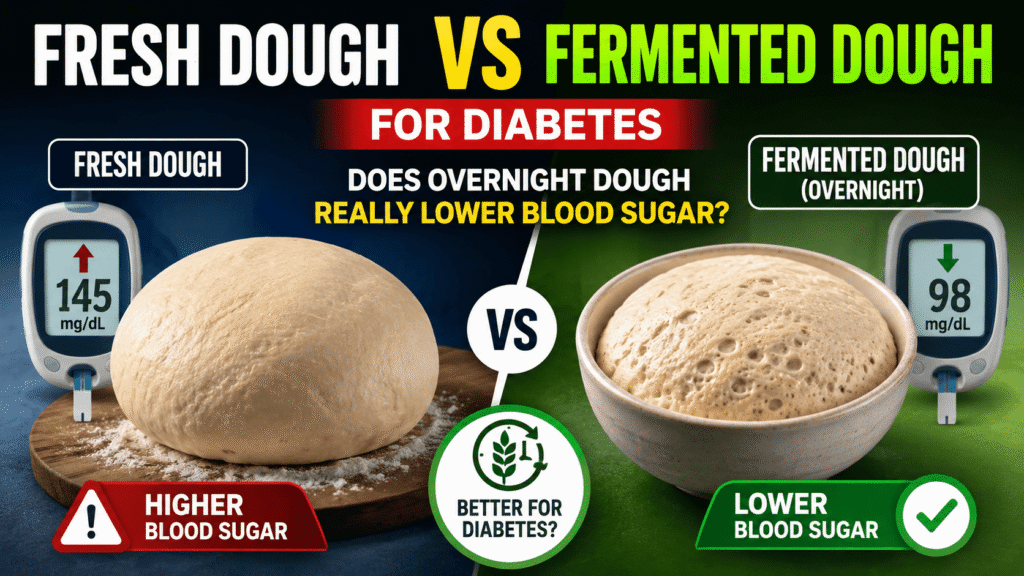
By the end of this article, you will understand not only whether fermented dough offers genuine health benefits but also how important those benefits actually are in everyday diabetes management.
Table of Contents
Why This Question Matters for People with Diabetes
Diabetes affects millions of people worldwide, and dietary choices play a major role in blood sugar management.
For people living in Pakistan, India, Bangladesh, and many Middle Eastern countries, wheat roti is eaten almost every day. Because roti is a major source of carbohydrates, even small improvements in its impact on blood glucose could be valuable.
This has led to increasing interest in naturally fermented dough.
Searches such as:
- Is fermented dough better for diabetes?
- Does overnight dough lower blood sugar?
- Does fermentation reduce carbohydrates?
- Is old dough healthier?
- What is the Glycemic Index of fermented roti?
have become increasingly popular.
Unfortunately, the internet is filled with conflicting information. Some articles claim fermented dough is almost a miracle food for diabetes, while others warn against eating dough that has been stored overnight.
The reality is much more balanced.
Scientific research suggests that fermentation can provide several nutritional advantages, but these benefits are often modest rather than dramatic. Understanding these differences can help people make informed dietary decisions instead of relying on myths.
What Is Fresh Chakki Atta Dough?
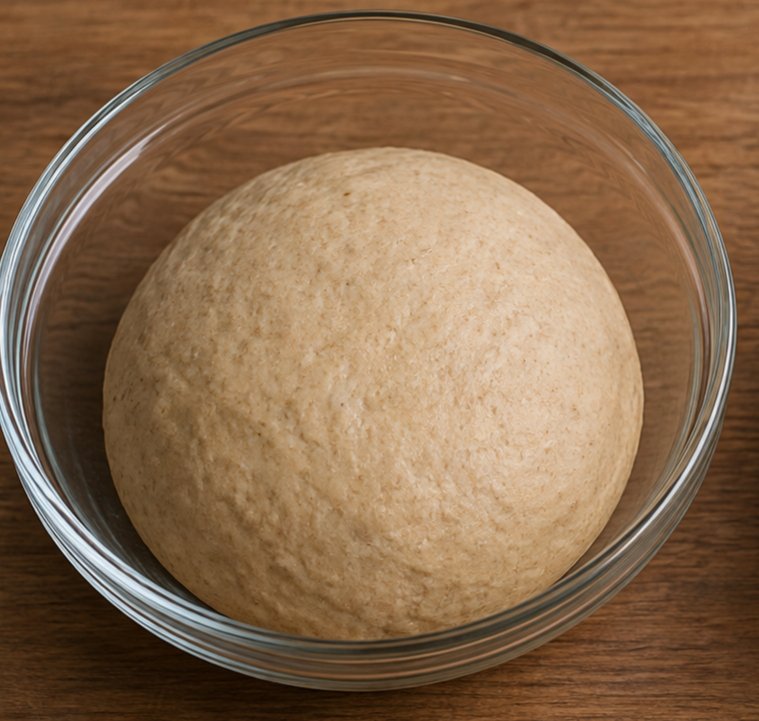
Fresh dough is simply dough that is prepared by mixing whole wheat flour (chakki atta) with water and then cooked shortly afterward.
Typically, the dough is allowed to rest for about 15 to 30 minutes before making rotis.
This short resting period improves the dough’s texture but does not produce fermentation.
During this stage:
- Water is absorbed into the flour.
- Gluten proteins become hydrated.
- The dough becomes softer and easier to roll.
- Starch granules absorb moisture.
- No major biochemical changes occur.
Because fermentation has not yet started, the nutritional composition of the flour remains almost identical to that of dry whole wheat flour.
Fresh dough therefore contains approximately:
| Nutrient (per 100 g flour) | Approximate Value |
| Calories | 340 kcal |
| Carbohydrates | 72 g |
| Protein | 12–13 g |
| Dietary Fiber | 10–12 g |
| Fat | 2–3 g |
These values vary slightly depending on the wheat variety and milling process but generally remain within this range.
What Is Naturally Fermented Dough?
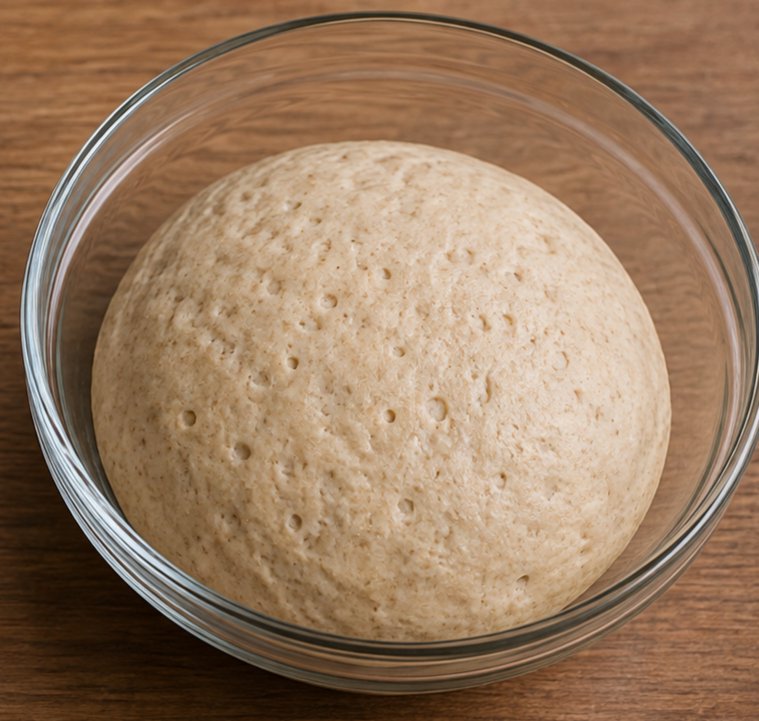
Naturally fermented dough is prepared using the same ingredients—whole wheat flour and water—but instead of being cooked immediately, the dough is left for several hours.
Under suitable conditions, naturally occurring microorganisms begin fermenting the dough.
This process typically takes:
- 8–12 hours at moderate room temperatures, or
- Longer if refrigerated.
Unlike commercial bread, where baker’s yeast is intentionally added, traditional whole wheat dough often relies on wild yeast and lactic acid bacteria that naturally exist in the flour and surrounding environment.
During fermentation, these microorganisms slowly consume a small amount of available sugars and produce several compounds, including:
- Lactic acid
- Acetic acid
- Carbon dioxide
- Various flavor compounds
These changes give fermented dough its characteristic mild sour taste, softer texture, and improved baking properties.
Dough Resting vs Natural Fermentation
One of the biggest misconceptions is that dough becomes fermented simply because it has been left on the kitchen counter for one or two hours.
This is not scientifically accurate.
Many people use the terms rested dough and fermented dough interchangeably, but they are completely different processes.
Dough Resting
When freshly kneaded dough rests for 20–60 minutes:
- Gluten relaxes.
- Water continues to hydrate the flour.
- The dough becomes smoother.
- Rotis become easier to roll.
- Very little microbial activity occurs.
This is a physical process rather than a biological one.
Natural Fermentation
Natural fermentation requires:
- Time
- Moisture
- Suitable temperature
- Naturally occurring microorganisms
During fermentation:
- Beneficial bacteria multiply.
- Organic acids are produced.
- Carbon dioxide develops.
- The dough slowly changes both chemically and physically.
This distinction is important because many online claims incorrectly assume that any rested dough is automatically “fermented.”
Where Do the Beneficial Bacteria Come From?
Another common question is:
If no yeast or bacteria are added, where do they come from?
The answer lies in nature itself.
Whole wheat flour naturally contains tiny populations of microorganisms.
Additional microorganisms are present:
- In the surrounding air
- On wheat grains
- On milling equipment
- On kitchen utensils
- In the household environment
These microorganisms usually remain inactive in dry flour.
However, once flour is mixed with water, they become active.
Given enough moisture, oxygen availability, suitable temperature, and time, they begin multiplying naturally.
Among these microorganisms, the most important are:
Lactic Acid Bacteria
These bacteria are responsible for producing lactic acid during fermentation.
Lactic acid contributes to:
- Mild sour flavor
- Lower dough pH
- Improved texture
- Changes in starch digestibility
Wild Yeasts
Wild yeasts produce carbon dioxide gas.
This gas creates tiny air pockets inside the dough, making it lighter and softer.
Unlike commercial baker’s yeast, naturally occurring wild yeast grows much more slowly, which is why traditional fermentation often takes many hours.
What Happens During Fermentation?
Now comes the most interesting part.
Many people imagine fermentation as a mysterious process, but in reality, it is simply a series of natural biochemical reactions.
As microorganisms multiply, they begin using small amounts of simple sugars naturally available in the dough.
In return, they produce:
- Lactic acid
- Carbon dioxide
- Various enzymes
- Flavor compounds
These changes influence several properties of the dough.
The dough becomes:
- Softer
- Slightly more acidic
- Easier to digest for some people
- More flavorful
Carbon dioxide also forms tiny bubbles inside the dough, giving it a lighter texture.
However, an important misconception must be corrected here.
Some people assume that because bacteria consume sugar, most carbohydrates disappear during fermentation.
This is not true.
Only a very small fraction of simple sugars is used by the microorganisms.
The overwhelming majority of the starch remains intact.
As a result, fermented dough still contains nearly the same amount of carbohydrates as fresh dough.
This is one of the biggest myths surrounding fermented dough and diabetes.
Scientific Comparison of Fresh Dough Vs Fermented Dough for Diabetes
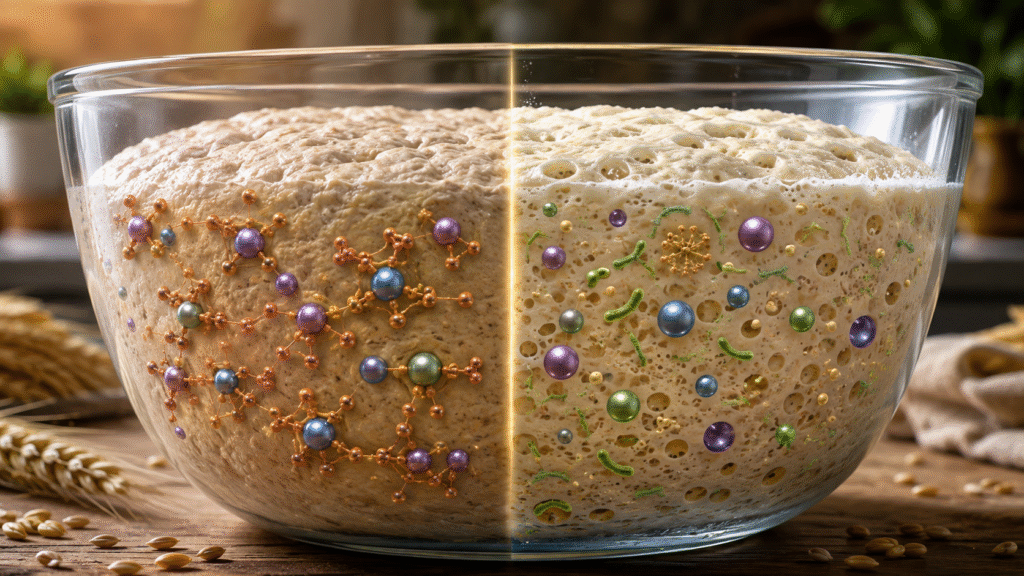
In the previous section, we learned that fresh dough and naturally fermented dough begin with exactly the same ingredients—whole wheat flour and water. The major difference is that naturally fermented dough undergoes several hours of microbial activity, during which beneficial bacteria and wild yeast produce organic acids and other compounds.
But the most important question remains:
Does fermentation make whole wheat roti healthier for people with diabetes?
To answer this question, let’s examine what scientific research tells us about calories, carbohydrates, protein, dietary fiber, Glycemic Index (GI), Glycemic Load (GL), and blood sugar response.
Does Fermentation Reduce Calories?
One of the most common claims on social media is that overnight dough loses a significant amount of calories.
Some people even believe that fermented dough contains only half the calories of fresh dough.
This claim is not supported by scientific evidence.
Calories come primarily from carbohydrates, proteins, and fats. During natural fermentation, microorganisms consume only a very small amount of the simple sugars already present in the dough. The amount of energy lost during this process is extremely small.
Studies consistently show that 100 grams of whole wheat flour provides approximately 340 kcal, and after natural fermentation the energy value remains almost identical, typically around 338–340 kcal.
Comparison
| Parameter | Fresh Dough | Naturally Fermented Dough |
| Calories (per 100 g flour) | ~340 kcal | ~338–340 kcal |
From a nutritional perspective, this difference is too small to have any meaningful impact on daily calorie intake.
Takeaway:
Fermentation does not significantly reduce the calorie content of whole wheat flour.
Does Fermentation Reduce Carbohydrates?
This is perhaps the most important question for people with diabetes.
Many people assume that because bacteria consume sugars during fermentation, fermented dough must contain far fewer carbohydrates.
Again, scientific research tells a different story.
Whole wheat flour contains approximately 72 grams of carbohydrates per 100 grams.
Most of these carbohydrates are present as starch, which is made up of long chains of glucose molecules.
During fermentation, beneficial microorganisms consume only a small amount of the naturally occurring simple sugars.
They do not consume most of the starch.
As a result, naturally fermented dough still contains approximately 70–72 grams of carbohydrates per 100 grams.
Comparison
| Parameter | Fresh Dough | Naturally Fermented Dough |
| Total Carbohydrates | ~72 g | ~70–72 g |
The difference is very small and should not be interpreted as making fermented dough a low-carbohydrate food.
This is one of the biggest misconceptions about fermented foods.
Takeaway:
Natural fermentation changes the way some carbohydrates behave during digestion, but it does not substantially reduce the total carbohydrate content.
Does Fermentation Affect Dietary Fiber?
Dietary fiber plays an important role in blood sugar management because it slows digestion and reduces the speed at which glucose enters the bloodstream.
Fortunately, fermentation has very little effect on the fiber content of whole wheat flour.
Fresh whole wheat flour contains approximately 10–12 grams of dietary fiber per 100 grams, and naturally fermented flour retains nearly the same amount.
Comparison
| Parameter | Fresh Dough | Naturally Fermented Dough |
| Dietary Fiber | 10–12 g | 10–12 g |
Although the quantity of fiber remains almost unchanged, fermentation may slightly alter the structure of the dough, making some fiber components easier for gut microbes to ferment later in the digestive tract.
More research is still needed in this area.
Takeaway:
Natural fermentation does not significantly change the fiber content of whole wheat flour.
What About Protein?
Protein content also remains remarkably stable.
Whole wheat flour contains approximately 12–13 grams of protein per 100 grams.
Scientific studies show that fermentation causes only minor changes in the total protein content.
However, something interesting happens during fermentation.
Naturally occurring enzymes begin breaking down some large protein molecules into smaller peptides and amino acids.
This process may improve digestibility for some individuals.
It is important to note that fermentation does not increase the amount of protein.
Instead, it may improve the way the body digests and utilizes some protein components.
Comparison
| Parameter | Fresh Dough | Naturally Fermented Dough |
| Protein | 12–13 g | 12–13 g |
Takeaway:
Protein content remains almost unchanged, although digestibility may improve slightly.
The Glycemic Index: Where Fermentation Makes the Biggest Difference
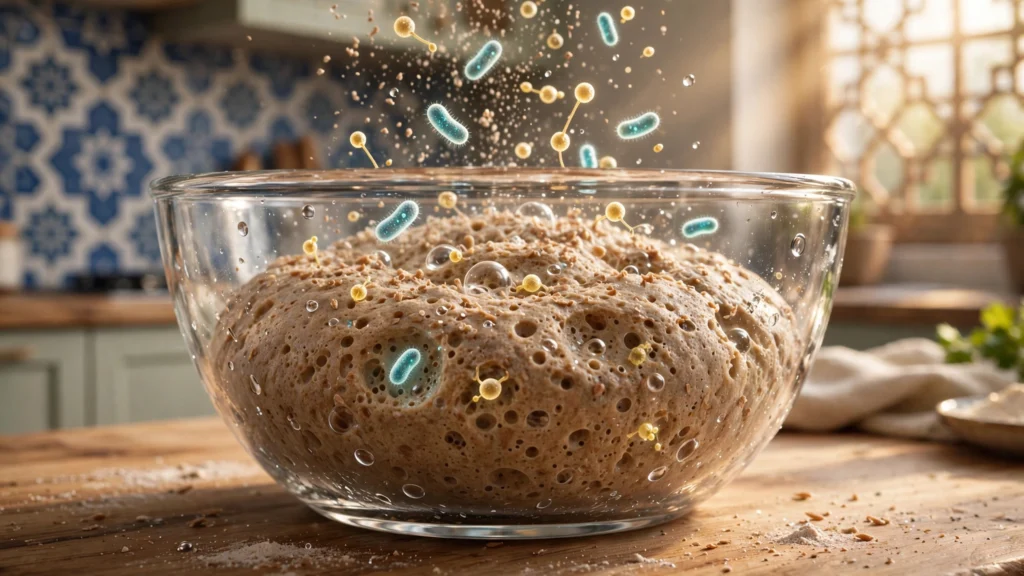
Now we arrive at the characteristic that attracts the most scientific interest.
The Glycemic Index (GI) measures how quickly a carbohydrate-containing food raises blood glucose compared with pure glucose.
Foods with a lower GI generally produce a slower rise in blood sugar.
Fresh whole wheat roti typically has a Glycemic Index between 60 and 65.
Several studies have reported that naturally fermented whole wheat bread or roti may have a Glycemic Index between 50 and 58, although results vary depending on fermentation time, flour type, moisture, preparation method, and cooking conditions.
Comparison
| Parameter | Fresh Roti | Naturally Fermented Roti |
| Estimated Glycemic Index | 60–65 | 50–58 |
Although this reduction is not dramatic, it is scientifically meaningful.
Why Does Fermentation Lower the Glycemic Index?
Researchers believe several mechanisms contribute to this effect.
One of the most important is the production of organic acids, particularly lactic acid.
Lactic acid lowers the pH of the dough and appears to influence the way starch behaves during digestion.
Scientific studies suggest that these acids may:
- slow gastric emptying,
- reduce the rate of starch digestion,
- alter starch structure during cooking,
- and delay glucose absorption into the bloodstream.
The overall effect is a slower and more gradual increase in blood glucose after eating.
This is why naturally fermented whole wheat products often produce a lower glycemic response than similar non-fermented products.
However, it is important not to exaggerate these benefits.
A lower GI does not mean people with diabetes can eat unlimited amounts of fermented roti.
Portion size remains one of the most important factors affecting blood sugar.
Glycemic Load: A More Practical Measure
While the Glycemic Index tells us how quickly carbohydrates raise blood sugar, it does not consider how much carbohydrate is actually eaten.
That is why nutrition experts often recommend looking at Glycemic Load (GL).
Glycemic Load combines both:
- the quality of carbohydrates (GI), and
- the quantity of carbohydrates consumed.
For one medium whole wheat roti:
| Parameter | Fresh Roti | Naturally Fermented Roti |
| Estimated Glycemic Load | 18–19 | 15–17 |
This represents only a modest reduction.
Nevertheless, for some individuals, particularly when fermented roti is eaten as part of a balanced meal containing vegetables, protein, and healthy fats, the overall post-meal blood sugar response may improve slightly.
Is Fermented Roti Better for Blood Sugar?
Based on current scientific evidence, the answer is:
Yes—but only to a modest extent.
Natural fermentation appears to:
✔ slightly lower the Glycemic Index,
✔ slightly reduce the Glycemic Load,
✔ slow glucose release after meals,
✔ improve digestibility for some people.
However,
it does not:
✘ eliminate carbohydrates,
✘ significantly reduce calories,
✘ cure diabetes,
✘ replace diabetes medications,
✘ or allow unlimited consumption of roti.
This balanced interpretation is consistent with current nutrition research and diabetes guidelines.
Practical Advice for People with Diabetes
If your goal is better blood sugar control, choosing fermented dough can be one helpful strategy—but it should not be the only one.
The biggest factors influencing blood glucose remain:
- the number of rotis you eat,
- the size of each roti,
- the flour used,
- what foods you eat alongside the roti,
- your total carbohydrate intake,
- physical activity,
- and your overall eating pattern.
For example, one medium fermented whole wheat roti served with grilled chicken, lentils, vegetables, and plain yogurt is likely to produce a much healthier blood sugar response than several large fermented rotis eaten alone.
In other words, meal composition matters just as much as fermentation.
Phytic Acid, Mineral Absorption, Practical Tips, FAQs, and the Final Verdict
In the previous sections, we learned that natural fermentation does not significantly reduce calories or carbohydrates. However, it may slightly lower the Glycemic Index (GI), improve digestion for some individuals, and produce a more gradual rise in blood sugar.
Another important benefit of fermentation receives much less attention but is strongly supported by nutritional science: improved mineral bioavailability.
To understand this benefit, we first need to understand a naturally occurring compound found in whole grains called phytic acid.
What Is Phytic Acid?
Whole wheat flour naturally contains phytic acid, also known as phytate.
Phytic acid is the primary storage form of phosphorus in grains, legumes, seeds, and nuts. From the plant’s perspective, it is beneficial because it stores nutrients needed for seed germination.
However, from a human nutrition perspective, phytic acid has one important characteristic.
It binds to certain minerals in the digestive tract, including:
- Iron
- Zinc
- Magnesium
- Calcium (to a lesser extent)
Once these minerals are bound to phytic acid, they become more difficult for the body to absorb.
This does not mean whole wheat is unhealthy. Whole grains remain one of the healthiest carbohydrate sources because they provide dietary fiber, vitamins, minerals, and many beneficial plant compounds.
It simply means that not all of the minerals naturally present in whole wheat are fully available for absorption.
How Does Fermentation Reduce Phytic Acid?
One of the remarkable effects of natural fermentation is that it activates an enzyme called phytase.
Phytase gradually breaks down phytic acid during fermentation.
Several scientific studies have shown that depending on:
- fermentation time,
- temperature,
- flour type,
- moisture,
- and microbial activity,
phytic acid may decrease by approximately 20% to 60%.
This reduction allows more minerals to remain available for absorption in the small intestine.
Importantly, fermentation does not add more minerals to the flour.
Instead, it helps the body make better use of the minerals that are already present.
Why Does Better Mineral Absorption Matter?
Minerals play essential roles throughout the body.
Iron
Iron is required for the production of hemoglobin, which carries oxygen in the blood.
Poor iron absorption can contribute to iron deficiency anemia, fatigue, weakness, and reduced physical performance.
By reducing phytic acid, fermentation may improve iron absorption from whole wheat products.
Zinc
Zinc supports:
- immune function,
- wound healing,
- enzyme activity,
- and normal growth and development.
Since zinc absorption is also inhibited by phytic acid, fermentation may improve zinc bioavailability.
Magnesium
Magnesium participates in hundreds of biochemical reactions.
It contributes to:
- muscle function,
- nerve transmission,
- energy production,
- and glucose metabolism.
Although whole wheat already contains magnesium, reducing phytic acid may help the body absorb more of it.
Does Better Mineral Absorption Improve Diabetes?
This is an important distinction.
Improved mineral absorption does not directly cure diabetes.
However, minerals such as magnesium play important roles in insulin action and glucose metabolism. Maintaining adequate mineral intake is one part of overall metabolic health.
The benefit of fermentation is therefore nutritional, not therapeutic.
It should be viewed as one component of a healthy eating pattern rather than a treatment for diabetes.
Fresh Dough vs Naturally Fermented Dough: Scientific Comparison
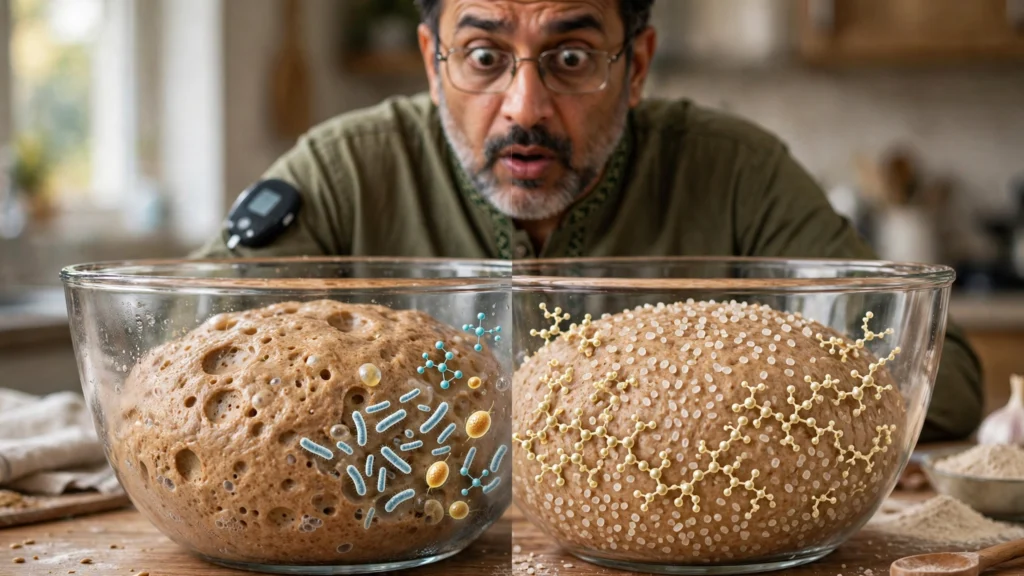
| Parameter | Fresh Dough | Naturally Fermented Dough | Scientific Interpretation |
| Calories | ~340 kcal | ~338–340 kcal | Essentially unchanged |
| Carbohydrates | ~72 g | ~70–72 g | Minimal change |
| Dietary Fiber | 10–12 g | 10–12 g | Essentially unchanged |
| Protein | 12–13 g | 12–13 g | Amount unchanged; digestibility may improve |
| Estimated Glycemic Index | 60–65 | 50–58 | May be modestly lower |
| Estimated Glycemic Load | 18–19 | 15–17 | Slightly reduced |
| Phytic Acid | Higher | 20–60% lower | Improves mineral availability |
| Iron Absorption | Normal | Improved | Better bioavailability |
| Zinc Absorption | Normal | Improved | Better bioavailability |
| Magnesium Absorption | Normal | Improved | Better bioavailability |
What Does Current Research Actually Say?
When all available evidence is considered together, several conclusions emerge.
Natural fermentation appears to provide genuine nutritional benefits.
These include:
- a modest reduction in Glycemic Index,
- a slightly lower Glycemic Load,
- improved mineral bioavailability,
- better dough texture,
- improved flavor,
- and easier digestion for some people.
However, current research does not support the following common claims:
- fermented dough eliminates carbohydrates,
- fermented dough contains dramatically fewer calories,
- fermented roti cures diabetes,
- overnight dough prevents blood sugar spikes completely,
- people with diabetes can eat unlimited fermented roti.
These claims are not supported by high-quality scientific evidence.
Practical Tips for People with Diabetes
If you would like to include naturally fermented dough in your diet, here are a few practical suggestions.
Use 100% whole wheat chakki atta whenever possible, as it contains more fiber and nutrients than refined flour.
Allow the dough to ferment naturally for about 8–12 hours in a clean container. If your kitchen is very warm, refrigeration after a few hours can help prevent over-fermentation.
Do not rely on fermentation alone to control blood sugar. A balanced meal remains far more important than the type of dough.
Aim to pair your roti with:
- non-starchy vegetables,
- lentils or beans,
- grilled chicken or fish,
- eggs,
- plain yogurt,
- or other protein-rich foods.
These combinations help slow digestion and improve overall glycemic response.
Finally, remember that portion size matters.
Even a lower-GI food can raise blood sugar significantly if consumed in large quantities.
Who May Benefit Most from Fermented Dough?
Naturally fermented whole wheat roti may be a reasonable choice for:
- people with Type 2 diabetes,
- individuals with prediabetes,
- those seeking foods with a modestly lower Glycemic Index,
- people who experience mild digestive discomfort with regular wheat products,
- and anyone interested in improving mineral bioavailability from whole grains.
However, individuals with conditions such as celiac disease or a medically diagnosed wheat allergy should avoid wheat products regardless of whether the dough is fermented.
Frequently Asked Questions
Is fermented dough better for diabetes?
Research suggests it may modestly improve blood sugar response compared with fresh dough because it can slightly lower the Glycemic Index. However, portion size and overall meal quality remain much more important.
Does overnight dough contain fewer carbohydrates?
No. Fermentation consumes only a very small amount of simple sugars. Most of the starch remains unchanged.
Does fermented dough have fewer calories?
No. The calorie content remains almost identical to that of fresh dough.
Can people with diabetes eat fermented roti every day?
Yes, provided it fits within an overall healthy meal plan and appropriate portion sizes. Fermentation does not remove the need for carbohydrate awareness.
Is naturally fermented dough the same as sourdough?
They are similar because both rely on fermentation. However, traditional sourdough usually uses a maintained starter culture, while naturally fermented whole wheat dough may rely on the microorganisms already present in the flour and environment.
How long should whole wheat dough ferment?
Typically, 8–12 hours at a suitable temperature allows natural fermentation to develop. The exact time varies depending on temperature and environmental conditions.
Key Takeaways
Before we conclude, let’s summarize the most important points.
- Fresh and naturally fermented dough start with the same ingredients.
- Fermentation does not significantly reduce calories or carbohydrates.
- Dietary fiber and protein remain largely unchanged.
- Natural fermentation may modestly lower the Glycemic Index and Glycemic Load.
- Organic acids produced during fermentation may slow glucose release after meals.
- Fermentation can reduce phytic acid and improve the absorption of iron, zinc, and magnesium.
- These benefits are meaningful but modest.
- Fermented dough is not a cure for diabetes.
- Portion control, balanced meals, regular physical activity, and an overall healthy lifestyle remain the cornerstones of blood sugar management.
Final Verdict
So, which is better for people with diabetes—fresh dough or naturally fermented dough?
Based on the current scientific evidence, naturally fermented whole wheat dough appears to have a slight nutritional advantage. It may produce a somewhat lower post-meal blood sugar response, improve mineral bioavailability, and be easier for some people to digest.
However, these advantages should not be overstated.
Fermented dough is not a miracle food, and it does not replace the fundamental principles of diabetes management.
The most effective strategy for controlling blood sugar still includes eating appropriate portions, choosing whole grains, pairing carbohydrates with protein and vegetables, staying physically active, maintaining a healthy body weight, and following the guidance of your healthcare team.
In other words, fermentation can be one useful piece of the puzzle—but it is not the entire solution.
References
The information presented in this article is based on evidence from peer-reviewed research and authoritative nutrition resources, including:
- International Tables of Glycemic Index and Glycemic Load Values.
- Jenkins DJA, et al. Glycemic Index methodology and applications.
- Harvard T.H. Chan School of Public Health – The Nutrition Source.
- Food and Agriculture Organization (FAO) publications on cereals and fermentation.
- World Health Organization (WHO) nutrition guidance.
- Scientific reviews on lactic acid fermentation, phytase activity, phytic acid reduction, and mineral bioavailability in whole grains.
- Peer-reviewed studies indexed in PubMed on whole-grain fermentation and glycemic response.
Medical Disclaimer
This article is intended for educational purposes only and should not be considered medical advice. Every person with diabetes responds differently to foods. Always consult your physician or a registered dietitian before making significant changes to your diet or diabetes management plan.