
If you have diabetes and are choosing between whole wheat roti and white bread, the answer may seem obvious. Whole wheat roti is traditionally considered the healthier option, while white bread often gets a bad reputation because it is made from refined flour.
But diabetes nutrition is not quite that simple.
A whole wheat roti still contains a substantial amount of carbohydrate, and the amount you eat can make a major difference to your blood glucose response. At the same time, two slices of white bread may contain fewer total carbohydrates by weight than a large roti, but white bread generally provides much less fiber.
So, which is better for diabetes: whole wheat roti or white bread?
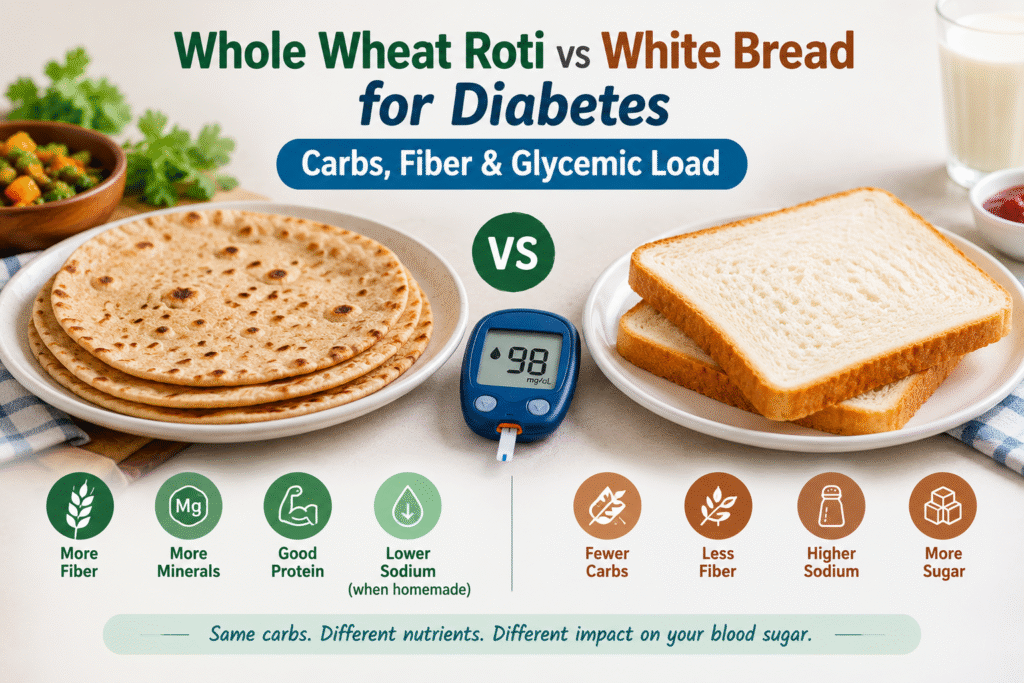
The most useful way to answer this question is to compare their carbohydrates, fiber, protein, calories, minerals, portion sizes, and glycemic load (GL) rather than simply labeling one food as “good” and the other as “bad.”
In this detailed comparison, we will look at whole wheat roti vs white bread for diabetes, including what happens when you compare different serving sizes such as 30 grams, 60 grams, and 100 grams.
Important: Nutrition values for roti and bread can vary considerably depending on the recipe, flour, moisture content, brand, thickness, and preparation method. The values below should therefore be treated as approximate rather than universal.
Table of Contents
Whole Wheat Roti vs White Bread for Diabetes: Why the Comparison Matters
Roti and bread are both common carbohydrate-containing foods. For someone with diabetes, carbohydrate intake deserves particular attention because digestible carbohydrates are broken down into glucose and can affect blood glucose levels.
However, carbohydrate quantity is only one part of the picture.
Two foods containing similar amounts of carbohydrates can produce different blood glucose responses because of differences in fiber, food structure, processing, cooking, and the overall meal.
This is why simply saying:
“Whole wheat is healthy, so roti does not raise blood sugar.”
can be misleading.
Whole wheat roti can still raise blood glucose because it contains starch and other digestible carbohydrates.
Likewise, saying:
“White bread is bad for diabetes.”
does not tell the complete story. The amount eaten, the type of bread, the nutrition label, and what you eat with it all matter.
What Is the Difference Between Whole Wheat Roti and White Bread?
Whole wheat roti is generally prepared using whole wheat flour and water, although recipes can vary. Depending on the preparation, salt or a small amount of oil may also be added.
White bread is generally produced using refined wheat flour. During flour refinement, some components of the wheat grain are removed, and commercial bread may also contain ingredients such as yeast, salt, sugar, oil, and other additives.
One important nutritional difference is fiber.
Whole wheat flour generally retains more of the grain’s components than refined flour, so whole wheat roti can provide substantially more dietary fiber and certain minerals.
But this does not mean that whole wheat roti is carbohydrate-free.
It is still a significant source of carbohydrate.
Whole Wheat Roti vs White Bread: Nutrition Comparison
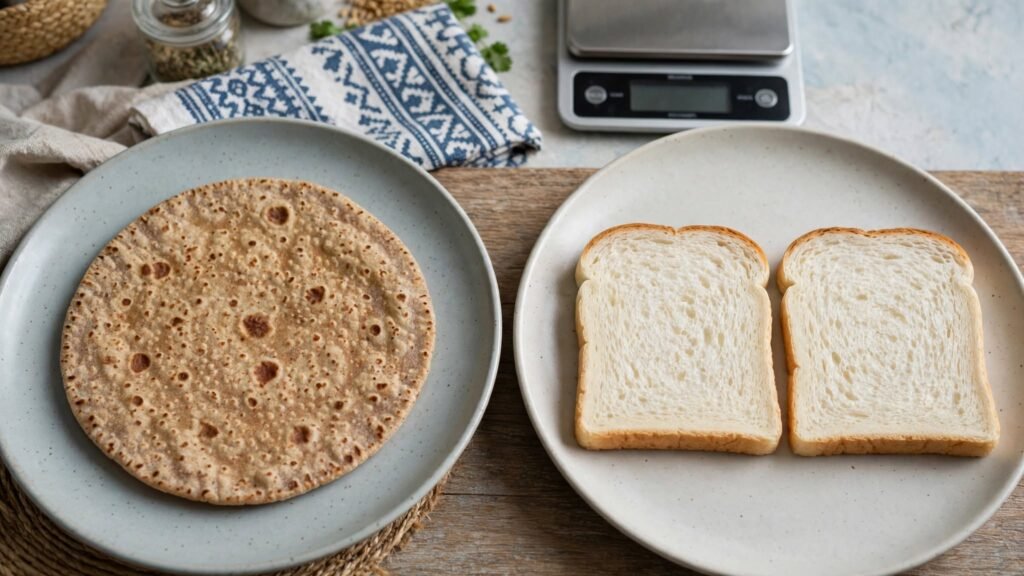
Let’s consider an approximate comparison per 100 grams.
| Nutrient | Whole Wheat Roti | White Bread |
|---|---|---|
| Calories | ~270–290 kcal | ~260–270 kcal |
| Carbohydrates | ~55–60 g | ~49–51 g |
| Fiber | ~8–10 g | ~2–3 g |
| Protein | ~9–11 g | ~8–9 g |
| Sugar | ~1–2 g | ~4–6 g |
| Starch | ~50–55 g | ~43–46 g |
| Sodium | Very low if prepared without salt | ~400–500 mg |
| Magnesium | ~70–100 mg | ~20–30 mg |
| Potassium | ~250–350 mg | ~100–150 mg |
These numbers are approximate and can vary considerably between recipes and commercial products.
Nevertheless, the comparison illustrates an important point.
Whole wheat roti generally provides more fiber and several minerals, while white bread can provide considerably more sodium and less fiber.
But there is another factor that deserves even more attention for diabetes: portion size.
Calories: Is Roti More Fattening Than White Bread?

When comparing 100 grams of each food, the calorie difference may not be particularly large.
Approximately:
- Whole wheat roti: 270–290 calories per 100 g
- White bread: 260–270 calories per 100 g
Therefore, it would be inaccurate to assume that roti automatically contains far fewer calories than white bread.
However, what matters in real life is not simply the calories per 100 grams.
It is the amount you actually eat.
A large homemade roti may weigh considerably more than a small roti. Similarly, bread slices differ in weight depending on the brand and thickness.
Therefore, if you are monitoring your calorie or carbohydrate intake, the actual serving size is more useful than simply asking whether roti or bread is healthier.
Carbohydrates: The Most Important Comparison for Blood Sugar

Carbohydrates are particularly important when managing diabetes.
Approximately 100 grams of whole wheat roti may contain 55–60 grams of carbohydrates, while 100 grams of white bread may contain approximately 49–51 grams.
This tells us something important:
Whole wheat roti is not a low-carbohydrate food simply because it is made from whole wheat.
The carbohydrates in roti largely come from wheat starch.
During digestion, starch is broken down into smaller molecules and eventually glucose, which can contribute to an increase in blood glucose.
The same basic principle applies to the starch in bread.
Therefore, someone with diabetes should consider how much roti or bread they are eating, rather than assuming that whole wheat automatically means unlimited portions.
Fiber: Where Whole Wheat Roti Has an Advantage

One of the most notable nutritional differences between whole wheat roti and white bread is their fiber content.
A typical 100-gram comparison may look approximately like this:
- Whole wheat roti: 8–10 g fiber
- White bread: 2–3 g fiber
Dietary fiber is important for overall health and can help increase fullness. Certain types of fiber can also slow digestion and carbohydrate absorption.
This is one reason whole grain foods are generally encouraged as part of a healthy eating pattern.
However, fiber does not cancel out carbohydrates.
A whole wheat roti containing a substantial amount of carbohydrate can still raise blood glucose, particularly when the portion is large.
So instead of thinking:
“This roti has fiber, therefore it won’t raise my blood sugar.”
a more accurate way to think about it is:
“This roti provides fiber, but I still need to consider its total carbohydrate content and portion size.”
Protein: Is There a Major Difference?
Protein content is relatively similar in this comparison.
Approximately 100 grams of whole wheat roti may provide around 9–11 grams of protein, while white bread may provide around 8–9 grams.
The exact amount depends on the flour and product.
Protein can contribute to satiety and is an important nutrient, but the protein content alone does not determine whether a food is suitable for diabetes.
The overall meal matters.
For example, eating a carbohydrate-containing food alongside a source of protein, vegetables, and healthy fats can create a more balanced meal than eating a large portion of refined carbohydrates alone.
Sugar vs Total Carbohydrates: A Common Diabetes Mistake
A common misconception is that a food with very little sugar cannot significantly affect blood glucose.
That is not correct.
For example, whole wheat roti may contain only a small amount of naturally occurring sugar, but it contains a substantial amount of starch.
Starch is a carbohydrate.
During digestion, starch is broken down into glucose.
Therefore, when evaluating foods for diabetes, don’t look only at the line labeled “sugars.”
Pay attention to:
- Total carbohydrates
- Fiber
- Serving size
- Type of carbohydrate
- Overall meal composition
This is particularly important when comparing roti and bread.
Glycemic Index vs Glycemic Load: What’s the Difference?

You’ve probably heard of the glycemic index (GI).
GI ranks carbohydrate-containing foods according to how quickly they raise blood glucose under standardized testing conditions.
But GI has an important limitation.
It does not tell you how much carbohydrate you actually consumed.
That’s where glycemic load (GL) becomes useful.
A simplified formula for glycemic load is:
GL = GI × available carbohydrate in the serving ÷ 100
This means that portion size matters.
A food with a moderate GI can still have a substantial glycemic load if you eat a large portion.
And this is exactly why comparing roti and bread by serving size can be more meaningful than simply asking which one has the lower GI.
Whole Wheat Roti vs White Bread: Glycemic Load at 30 Grams
Let’s look at an approximate 30-gram serving.
Whole wheat roti
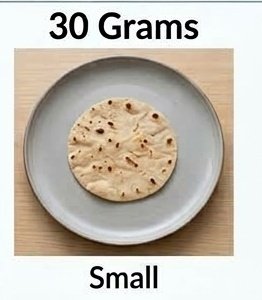
At around 30 grams:
- Carbohydrates: approximately 17.4 g
- Estimated GL: approximately 9.6
White bread
At around 30 grams:
- Carbohydrates: approximately 15 g
- Estimated GL: approximately 11.3
In this example, the white bread has a slightly higher estimated glycemic load despite containing somewhat fewer carbohydrates.
This illustrates why carbohydrate content alone does not tell the entire story.
However, these values should not be interpreted as universal laboratory measurements. GI can vary depending on the food, recipe, preparation, and testing method.
What Happens at 60 Grams?
Now let’s double the portion.
Whole wheat roti — 60 grams
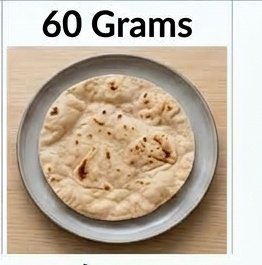
Approximately:
- Carbohydrates: 34.8 g
- Glycemic load: 19.1
White bread — 60 grams
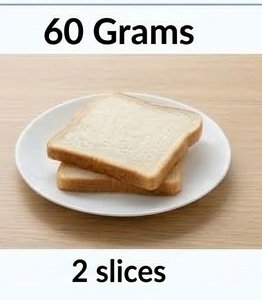
Approximately:
- Carbohydrates: 30 g
- Glycemic load: 22.5
Notice what happens.
The portion has doubled, and the estimated glycemic load also increases substantially.
This is one of the most important lessons for people with diabetes:
A healthier carbohydrate source can still provide a large carbohydrate load when the portion becomes large.
What Happens at 100 Grams?
Now consider 100 grams.
Whole wheat roti
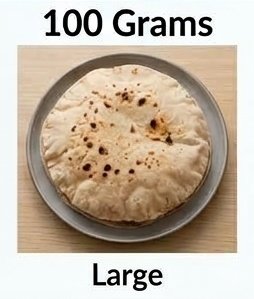
Approximately:
- Carbohydrates: 58 g
- Estimated GL: 31.9
White bread
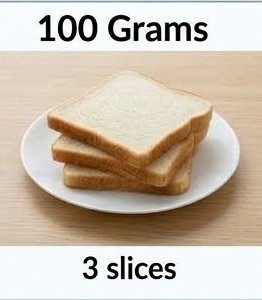
Approximately:
- Carbohydrates: 50 g
- Estimated GL: 37.5
At this portion size, both foods provide a substantial carbohydrate load.
The estimated GL of white bread remains higher in this example, but the whole wheat roti is certainly not a negligible carbohydrate source.
This is why portion control remains important even when choosing whole grains.
1 Roti vs 2 Slices of White Bread

This is probably the most practical question for breakfast.
Suppose you have:
One whole wheat roti on one side
and
two slices of white bread on the other.
Which has fewer carbohydrates?
There is no universal answer because roti and bread vary significantly in weight.
A small roti may contain considerably fewer carbohydrates than a large roti.
Similarly, two thin slices of bread may weigh much less than two thick slices.
This is why comparing grams of food or checking the nutrition label can be more accurate than simply counting pieces.
For example, if your roti weighs around 60 grams, the carbohydrate content may be approximately 34.8 grams based on the values used in this comparison.
If two bread slices together weigh around 60 grams, they may provide approximately 30 grams of carbohydrates.
So the statement “one roti always contains fewer carbohydrates than two slices of bread” cannot be assumed.
Does Whole Wheat Roti Raise Blood Sugar?
Yes.
Whole wheat roti can raise blood glucose because it contains carbohydrates, particularly starch.
The fact that it is made from whole wheat does not make it carbohydrate-free.
However, whole wheat roti can provide more fiber and nutrients than refined white bread, and its effect can depend on the recipe, portion size, and the rest of the meal.
The response can also vary from person to person.
For someone with diabetes, one practical way to understand an individual response is to monitor blood glucose according to their healthcare professional’s recommendations and observe how different portions affect them.
Does White Bread Raise Blood Sugar?
Yes.
White bread contains substantial amounts of carbohydrate, much of it from refined wheat flour.
Because it is generally lower in fiber than whole wheat bread or whole wheat roti, it may produce a different glucose response.
However, the response depends on the particular bread, serving size, meal composition, and individual factors.
This is why “white bread always causes a huge spike” is also an oversimplification.
The better question is:
How much are you eating, what type of bread is it, and what are you eating with it?
Is Brown Bread Automatically Better for Diabetes?
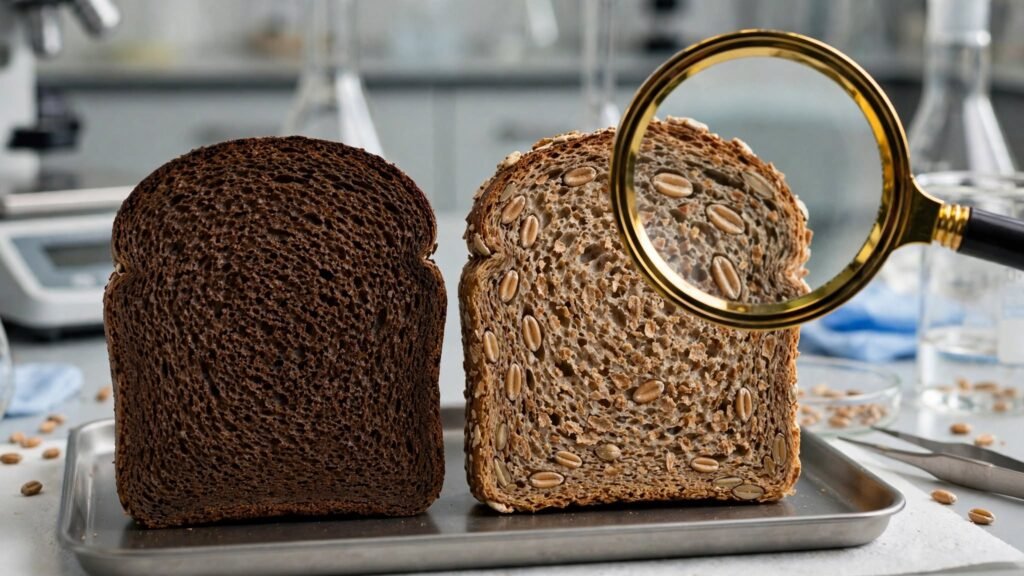
Not necessarily.
The color of bread is not a reliable way to determine whether it is genuinely whole grain.
Some commercially available breads may appear brown because of ingredients or processing rather than because they contain a large proportion of whole grains.
When buying bread, check the:
Ingredients list
and
Nutrition Facts label.
Look for whole wheat or whole grain ingredients near the beginning of the ingredient list, and compare the amount of fiber and total carbohydrate per serving.
Don’t choose bread simply because it looks darker.
What Should You Eat With Roti or Bread?
Another important issue is what you put alongside your carbohydrate source.
A breakfast consisting of a large roti by itself is very different from a smaller roti eaten with protein and vegetables.
For example, a balanced meal might include:
- A controlled portion of whole wheat roti
- Eggs or another suitable protein source
- Non-starchy vegetables
- A modest amount of healthy fat
Similarly, if you choose bread, you can pair it with protein and vegetables rather than consuming several slices with a sugary spread.
The goal is not to make one food “good” and another “bad.”
The goal is to create a meal that fits your overall nutritional needs and carbohydrate target.
Portion Size May Matter More Than the Food’s Reputation
This is perhaps the biggest lesson from the roti-versus-bread comparison.
Imagine two people.
Person A eats a very large whole wheat roti because they believe whole wheat cannot raise blood sugar.
Person B eats a smaller, measured portion of bread together with eggs and vegetables.
It would be overly simplistic to predict the blood glucose response from the food label alone.
The quantity, meal composition, preparation, and individual response all matter.
Whole wheat is a valuable food, but it should not be treated as a free food for diabetes.
Roti or White Bread: Which Should a Person With Diabetes Choose?
Rather than giving a simple “winner,” consider the nutritional differences.
Whole wheat roti generally offers:
- More fiber
- More magnesium
- More phosphorus
- More potassium
- Usually less sodium when homemade without added salt
White bread generally offers:
- Less fiber
- Less of several minerals
- Often more sodium
- Frequently more refined flour
But both contain carbohydrates.
Therefore, if you prefer whole wheat roti, you can include it in a diabetes-friendly eating pattern while paying attention to portion size and total carbohydrate intake.
If you choose bread, read the nutrition label rather than assuming that every brown or multigrain-looking loaf is high in whole grains.
5 Practical Tips for Choosing Between Roti and Bread
1. Watch the portion
A large roti can contain considerably more carbohydrate than a small roti.
2. Check total carbohydrates
Don’t focus only on sugar. Total carbohydrate is important when planning meals for diabetes.
3. Look for fiber
When comparing packaged breads, check the fiber content on the nutrition label.
4. Don’t trust bread color
Brown does not automatically mean whole grain.
5. Consider the whole meal
Roti or bread eaten with protein and non-starchy vegetables may make for a more balanced meal than a large portion of carbohydrate eaten alone.
Frequently Asked Questions
Is whole wheat roti better than white bread for diabetes?
Whole wheat roti generally provides more fiber and several minerals than white bread, but it still contains substantial carbohydrates. For diabetes, portion size, total carbohydrate intake, food quality, and the overall meal all matter.
Does whole wheat roti increase blood sugar?
Yes. Whole wheat roti contains carbohydrates and starch, so it can increase blood glucose. Whole wheat does not mean carbohydrate-free.
Is white bread bad for people with diabetes?
White bread can be included in some eating patterns, but it is generally lower in fiber than whole grain alternatives. Portion size and total carbohydrate intake should be considered.
Which has more carbohydrates: roti or white bread?
It depends on the serving size. Per 100 grams, the approximate values used in this comparison are 55–60 grams of carbohydrate for whole wheat roti and 49–51 grams for white bread. But the weight of an individual roti or bread slice varies.
Is one roti equal to two slices of bread?
Not necessarily. A roti and two bread slices can have different weights and therefore different amounts of carbohydrates. The most reliable comparison is to look at the actual serving weight and nutrition information.
Which has a lower glycemic load: roti or white bread?
In the example values used in this article, whole wheat roti has a lower estimated glycemic load than white bread at the 30-, 60-, and 100-gram serving sizes. However, GL values can vary depending on the actual food, preparation, and GI data used.
Can a diabetic person eat roti every day?
Many people with diabetes can include roti as part of a balanced eating pattern. The appropriate portion depends on individual carbohydrate requirements, overall diet, medications, activity, and blood glucose response. Individual dietary advice should come from a qualified healthcare professional.
Is brown bread better than white bread for diabetes?
Not automatically. Check the ingredients and nutrition label. A darker color does not guarantee that a bread is predominantly whole grain or high in fiber.
Does fiber cancel out the carbohydrates in roti?
No. Fiber can affect digestion and is an important part of a healthy diet, but it does not make the carbohydrates in a large roti disappear. Total carbohydrate and portion size still matter.
What is more important for diabetes: glycemic index or glycemic load?
Both can provide useful information, but glycemic load additionally considers the amount of carbohydrate in a particular serving. This makes GL particularly useful when discussing portion size.
Final Thoughts: Whole Wheat Roti vs White Bread for Diabetes
The comparison between whole wheat roti and white bread for diabetes is more complicated than simply calling one food healthy and the other unhealthy.
Whole wheat roti generally provides more fiber and several important minerals, while white bread is usually more refined and lower in fiber. However, whole wheat roti still contains a substantial amount of carbohydrate and can raise blood glucose, especially when consumed in large portions.
The glycemic load comparison also demonstrates why portion size matters. A moderate carbohydrate food can produce a much larger carbohydrate load when the serving becomes larger.
So, rather than asking only, “Should I eat roti or bread?”, ask:
How much am I eating? How many carbohydrates does it provide? How much fiber does it contain? What am I eating with it? And how does my blood glucose respond?
For many people with diabetes, a sensible approach is to choose minimally processed, higher-fiber carbohydrate sources when possible, keep portions appropriate, and build meals around a combination of carbohydrate, protein, vegetables, and other nutritious foods.
Ultimately, whole wheat roti is not a free food just because it is whole wheat, and white bread is not defined solely by its color or reputation. Understanding portions, carbohydrates, fiber, food quality, and glycemic load gives you a much more useful way to make informed food choices.