
If you have diabetes, you may have heard that replacing wheat and white rice with millets can help control blood sugar. Social media videos often describe millets as a superfood for diabetes, but is that really true? Are millets good for diabetes, and can they help reduce blood sugar levels after meals?
The answer is encouraging, but there is an important detail: not all millets have the same effect on blood sugar. Their nutritional value, glycemic index, carbohydrate content, portion size, processing method, and cooking technique can all influence how your body responds to them.
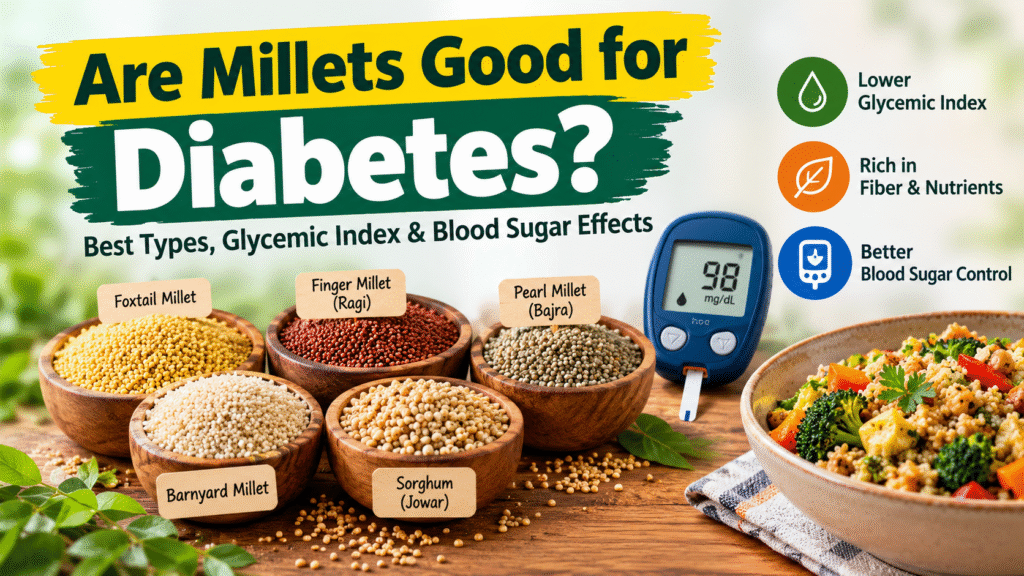
Millets are a group of small-seeded cereal grains that include pearl millet (bajra), finger millet (ragi), foxtail millet, barnyard millet, and several other varieties. They provide carbohydrates, dietary fiber, minerals, and other nutrients. Some varieties may be useful alternatives to refined grains, especially when eaten in appropriate portions as part of a balanced diet.
However, millets are not carbohydrate-free foods, and eating large quantities can still raise blood glucose. People with diabetes should therefore look beyond health claims and understand how different millets fit into their everyday meals.
In this evidence-informed guide, we will explore the best millets for diabetes, millet glycemic index values, millet versus rice and wheat, carbohydrate content, preparation methods, portion sizes, and the scientific evidence connecting millets with blood sugar management.
Table of Contents
1. Are Millets Good for Diabetes?
Yes, millets can be a useful part of a diabetes-friendly diet, particularly when they replace some refined grains and are eaten in appropriate portions. However, their benefits depend on the variety, preparation, amount consumed, and overall meal composition.
Millets contain complex carbohydrates, and many varieties also provide dietary fiber, protein, magnesium, iron, and other nutrients. Whole or minimally processed millets may be a better choice than some highly refined cereal products because they retain more of their original grain structure and nutrients.
There are several reasons why millets may be beneficial for people with diabetes:
- Blood sugar management: Some millet varieties and millet-based meals have a relatively low or moderate glycemic index.
- Dietary fiber: Fiber can support digestive health and may help moderate the absorption of carbohydrates, depending on the food and its preparation.
- Nutrient intake: Millets contribute minerals and other nutrients to the diet.
- Dietary variety: Replacing some refined grains with different whole grains can make meals more varied and nutritious.
- Satiety: Fiber-containing meals may help some people feel satisfied for longer, particularly when combined with protein and vegetables.
It is important to distinguish between a food that can support diabetes management and a food that treats diabetes. Millets do not cure diabetes, and their consumption does not guarantee lower blood glucose or HbA1c.
The practical takeaway: You do not necessarily need to eliminate wheat or rice completely. Instead, consider which grain you eat, how much you consume, how it is prepared, and what accompanies it on your plate.
2. What Are Millets?
Millets are small-seeded cereal grains cultivated in many parts of Asia and Africa. They are valued for their adaptability to different growing conditions and their role in traditional diets.
In Pakistan and India, pearl millet is commonly known as bajra, while finger millet is called ragi or mandua in different regions of India. Foxtail millet and barnyard millet are also used in various traditional dishes.
Millets are not a single grain with a uniform nutritional profile. Different varieties have different proportions of starch, fiber, protein, minerals, and other plant compounds.
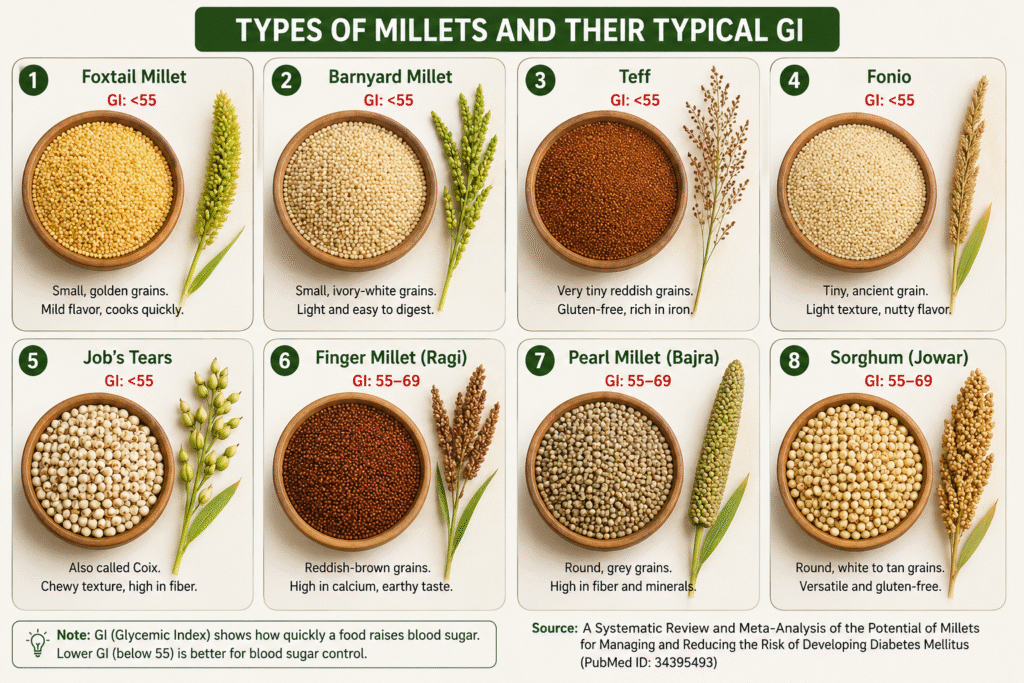
Some commonly consumed varieties include:
| Millet variety | Common name | General nutritional characteristics |
| Pearl millet | Bajra | Provides carbohydrates, fiber, protein, iron, and other minerals |
| Finger millet | Ragi | Notable for its calcium content |
| Foxtail millet | Kangni or kakun | Provides carbohydrates, protein, fiber, and minerals |
| Barnyard millet | Sanwa or jhangora | Contains carbohydrates and fiber; composition varies by product |
| Sorghum | Jowar | A cereal grain rich in carbohydrates and containing fiber and other nutrients |
| Proso millet | Cheena | Provides carbohydrates, protein, and minerals |
| Little millet | Kutki | Contains carbohydrates, fiber, and minerals |
| Kodo millet | Kodo | Provides carbohydrates and fiber |
Note: Sorghum is often discussed alongside millets in nutrition literature and traditional diets, although cereal classifications can vary.
For people with diabetes, this variety matters because the glycemic response to one millet cannot automatically be applied to every other millet.
3. Understanding the Glycemic Index of Millets
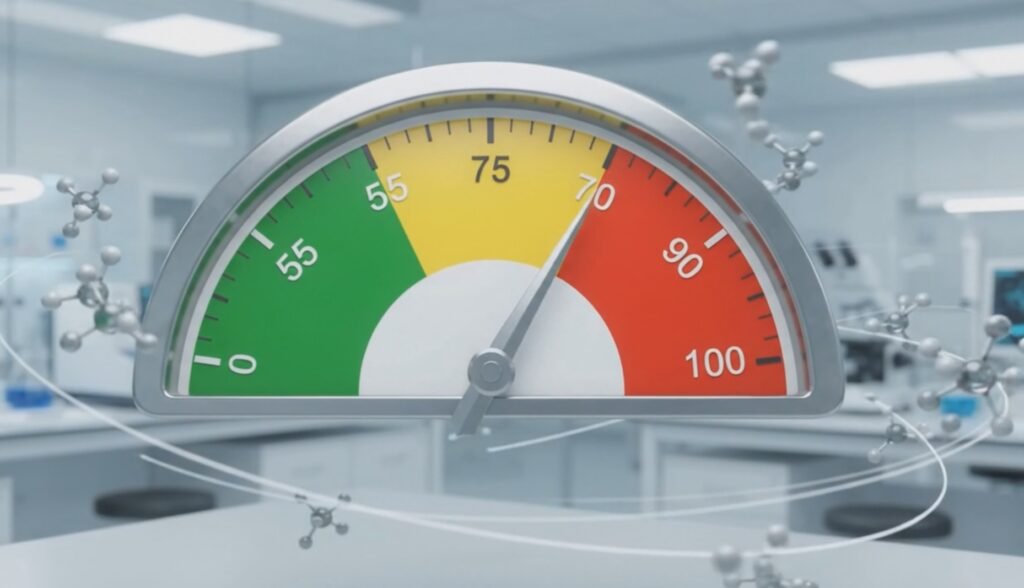
The glycemic index (GI) measures how quickly a carbohydrate-containing food raises blood glucose compared with a reference food, usually glucose. The scale generally ranges from 0 to 100.
Foods are commonly classified as follows:
| Glycemic index category | GI value | General interpretation |
| Low GI | 55 or below | Generally produces a slower blood glucose response |
| Medium GI | 56–69 | Produces an intermediate response |
| High GI | 70 or above | Generally produces a faster blood glucose response |
These categories are useful for comparing foods, but they do not tell the whole story. GI values can vary depending on the grain variety, processing, cooking method, and testing conditions.
For example, a whole grain may behave differently from flour made from the same grain. Similarly, a millet porridge cooked until very soft may produce a different blood glucose response from a less processed grain.
What Does Research Say About Millet Glycemic Index?
A systematic review and meta-analysis published in 2021 examined 65 studies investigating millets and their potential effects on diabetes. The researchers reported an average GI of approximately 52.7 for millets, compared with 71.7 for milled rice and 74.2 for refined wheat.
These findings suggest that millets, on average, may offer a lower-GI alternative to certain refined staples.
However, an average does not mean every millet has a low GI. Some millet varieties and preparations can have moderate or higher GI values.
It is also important to understand that glycemic index and glycemic load are different measurements. GI measures the relative blood glucose response to a carbohydrate-containing food, while glycemic load also accounts for the amount of available carbohydrate in a particular serving.
This distinction is particularly important for people with diabetes because even a relatively low-GI grain can raise blood glucose when consumed in large quantities.
4. Which Millets Are Best for Diabetes?
There is no single millet that is best for every person with diabetes. The most appropriate choice depends on the food’s preparation, portion size, nutritional composition, availability, personal preferences, and individual blood glucose response.
Nevertheless, several varieties are worth considering.
4.1 Foxtail Millet
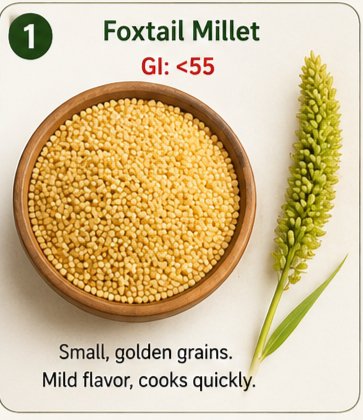
Foxtail millet is a traditional cereal grain that can be used in place of rice in suitable dishes. It provides carbohydrates, some protein, dietary fiber, and minerals.
Some studies have reported favorable glycemic responses to foxtail millet preparations. However, the results depend on the specific recipe and processing method.
How to use it: Try a measured portion of cooked foxtail millet with vegetables and a protein source such as eggs, fish, chicken, or lentils.
4.2 Barnyard Millet
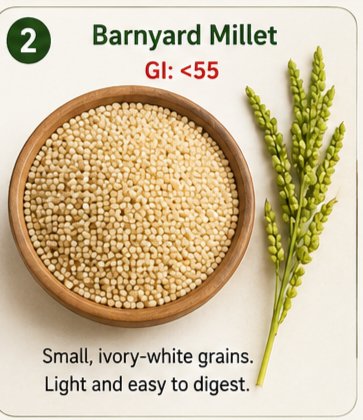
Barnyard millet is another grain used in traditional South Asian cooking. It contains carbohydrates, fiber, and minerals, although its precise nutritional composition varies between products.
Research has investigated heat-treated barnyard millet preparations and their potential effects on fasting blood glucose. These findings are promising but do not establish that every barnyard millet product will have the same effect.
How to use it: Consider using it in place of part of your usual rice portion, and monitor your response to the meal.
4.3 Finger Millet (Ragi)
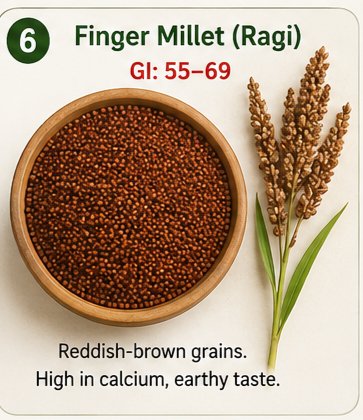
Finger millet is especially known for its calcium content. It is commonly used to prepare porridge, flatbreads, and other traditional foods.
Some research suggests that finger millet preparations may produce favorable glycemic responses under particular conditions. However, finger millet flour is not automatically low GI simply because it comes from a nutritious grain.
Finely milled flour, large portions, and cooking methods that make starch readily digestible can affect the blood glucose response.
How to use it: Consider a moderate portion of finger millet roti paired with vegetables and protein rather than consuming a large serving of plain porridge.
4.4 Pearl Millet (Bajra)
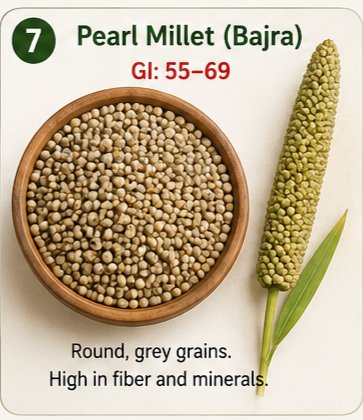
Pearl millet, commonly called bajra in Pakistan and India, is widely used for flatbreads and other traditional dishes.
It supplies carbohydrates, protein, fiber, and several minerals. It can be a useful option for dietary variety, particularly when it replaces some refined grain foods.
However, bajra is still a carbohydrate-rich food. Its effects on blood glucose depend on portion size, preparation, and what else is eaten with it.
How to use it: Try a small or moderate bajra roti with a generous serving of non-starchy vegetables and a suitable protein source.
4.5 Sorghum (Jowar)
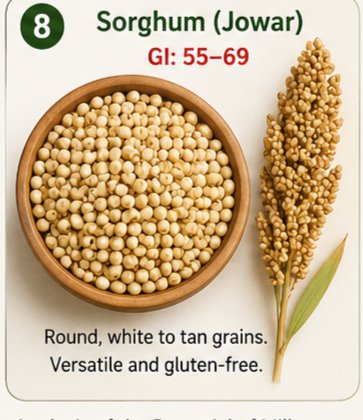
Sorghum, known as jowar, is another traditional cereal often discussed alongside millets. It contains carbohydrates, fiber, and plant compounds.
Research findings for sorghum are not entirely consistent. Its glycemic response can vary according to grain structure, milling, cooking, and the type of food prepared from it.
How to use it: Whole or coarsely processed sorghum may be worth considering, but test your blood glucose response instead of assuming that every sorghum preparation is low GI.
Comparison of Common Millets
| Millet | Potential nutritional advantage | Important consideration |
| Foxtail millet | Provides fiber and minerals | Recipe and processing influence its GI |
| Barnyard millet | Provides carbohydrates and fiber | Evidence for specific preparations is still developing |
| Finger millet | Notable calcium content | Fine flour can produce a different response from less processed grain |
| Pearl millet (bajra) | Provides protein, fiber, and minerals | Portion size remains important |
| Sorghum (jowar) | Provides fiber and plant compounds | Results vary by preparation |
| Little millet | Provides fiber and minerals | Do not assume all products have a low GI |
| Proso millet | Provides protein and minerals | Individual GI and portion size matter |
The most useful strategy is to select a millet you enjoy, prepare it in a minimally processed form where practical, and serve it in a portion that fits your overall meal plan.
5. Millet Glycemic Index: What About Individual Varieties?
The 2021 systematic review found that millet GI values varied considerably across varieties and preparations. Its overall average was approximately 52.7, but that figure should not be interpreted as the GI of every individual millet.
Some varieties, including foxtail millet, barnyard millet, teff, and fonio, have been reported with relatively low GI values in particular studies. Other millet varieties and preparations have produced moderate values.
A reliable comparison should use values measured under comparable conditions. Otherwise, differences in recipes, serving preparation, and testing methods may make comparisons misleading.
| Food | Approximate GI reported in the 2021 review |
| Millets, overall average | 52.7 |
| Milled rice, overall average | 71.7 |
| Refined wheat, overall average | 74.2 |
These figures are research averages, not guaranteed values for a particular brand, recipe, or homemade meal.
If you see a claim that one millet has a GI of exactly 35 or another has a GI of exactly 70, check whether the value comes from a specific study and whether the tested food matches the product you plan to eat.
Remember: A low-GI label does not mean unlimited portions, and a moderate-GI food is not automatically unsuitable for someone with diabetes.
6. Are Millets Better Than White Rice for Diabetes?
Millets may be a useful alternative to white rice for some people with diabetes, particularly when the selected millet preparation has a lower GI and the serving size is appropriate.
The 2021 review reported a lower average GI for millets than for milled rice. However, this does not prove that every millet meal will produce a smaller blood glucose rise than every rice meal.
Consider these differences:
- Type of grain: Different rice and millet varieties have different starch characteristics.
- Processing: Milling and other processing can alter how quickly starch is digested.
- Cooking: Very soft or extensively cooked foods may produce a different glucose response.
- Portion size: A large serving of millet can contain substantial carbohydrate.
- Meal composition: Protein, vegetables, fat, and fiber in the overall meal can influence the blood glucose response.
For someone accustomed to eating a large plate of white rice, a practical first step may be to replace part of the rice with a suitable millet preparation and non-starchy vegetables.
You do not necessarily need to stop eating rice completely. The goal is to find a balanced eating pattern that supports your blood glucose targets and is realistic enough to maintain over time.
7. Are Millets Better Than Wheat for Diabetes?
The answer depends on the type of wheat product and millet preparation being compared.
Refined wheat flour is different from whole-wheat flour. Similarly, whole or coarsely processed millet differs from finely milled millet flour.
The 2021 review reported an average GI of approximately 74.2 for refined wheat, compared with 52.7 for millets overall.
However, these are averages across different studies. They do not establish that every millet roti is better for blood glucose than every whole-wheat chapati.
For people in Pakistan and India, this distinction matters because chapati and roti are everyday foods. Switching to bajra or ragi may provide dietary variety, but the total amount of flour used and the size of the roti still matter.
A balanced approach is to compare similar portions of the foods you actually eat, rather than relying on grain names alone.
For example, if you normally eat two large wheat rotis, replacing them with two equally large millet rotis may not reduce your total carbohydrate intake. A smaller portion combined with vegetables and protein may be more useful.
8. Do Millets Reduce Fasting Blood Sugar and HbA1c?
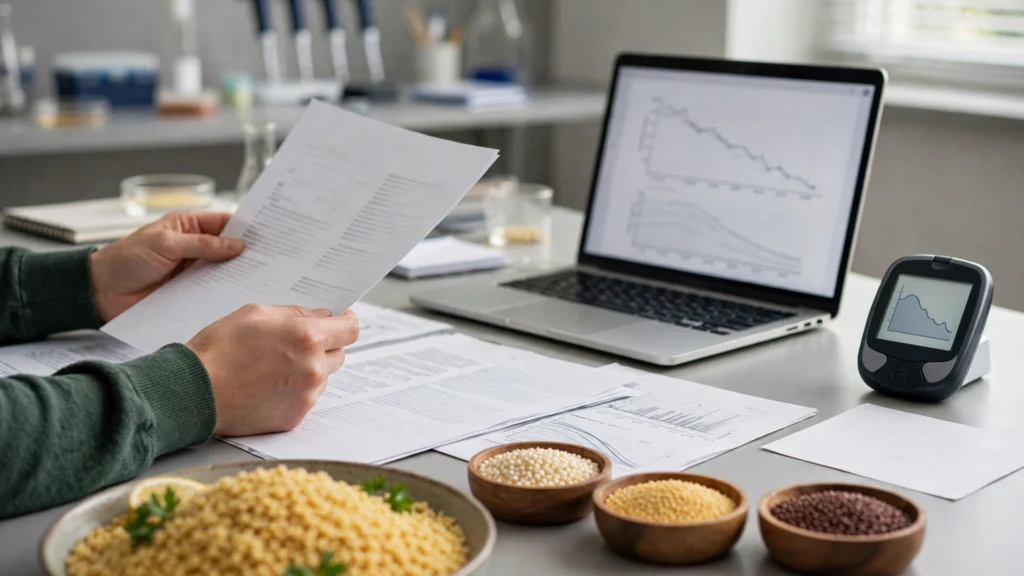
This is one of the most important questions for anyone searching for are millets good for diabetes.
Fasting blood glucose measures blood sugar after a period without food, while HbA1c estimates average blood glucose over approximately the previous two to three months. These measurements provide different information about diabetes management.
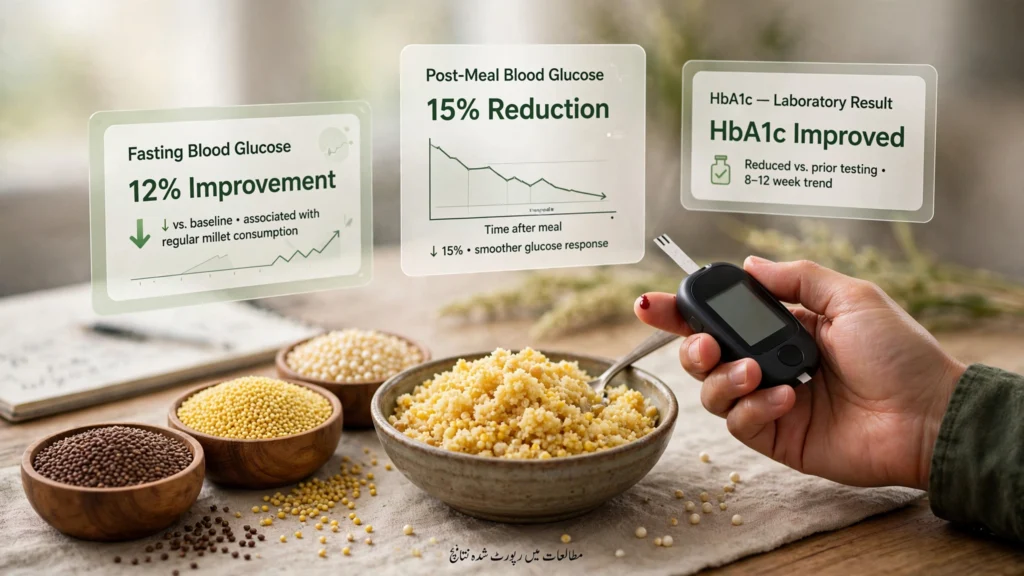
A 2021 systematic review reported that longer-term millet consumption was associated with an approximately 12% reduction in fasting blood glucose and a 15% reduction in post-meal blood glucose across the studies analyzed. However, the included studies differed in their participants, millet varieties, preparations, and study designs. These percentages should not be interpreted as guaranteed results for an individual.
More recent evidence also requires careful interpretation.
A systematic review published online in December 2025, appearing in a January 2026 journal issue, examined six clinical studies involving adults. It found potentially beneficial results for certain millet-based foods, including some multigrain rotis, foxtail millet dosas, and heat-treated barnyard millet preparations. The authors emphasized that the evidence remains limited and that more well-designed studies are needed.
What does this mean in practice?
- Millets may help improve the blood glucose response when used in suitable meals.
- Some preparations have shown encouraging results in research.
- Effects on HbA1c and long-term diabetes management are not yet established with enough certainty to promise a specific reduction.
- The overall diet, physical activity, medication, sleep, and other health factors continue to matter.
If you have diabetes, do not stop or reduce prescribed medication because you have started eating millets. Discuss treatment changes with your healthcare professional.
9. Does the Way You Cook Millets Affect Blood Sugar?
Yes. How you prepare millets can influence their effect on blood glucose. Choosing a suitable grain is only part of the process.
Whole Grains Versus Fine Flour
The physical structure of a grain affects how digestive enzymes access its starch. Grinding a grain into fine flour disrupts that structure and can make starch more accessible during digestion.
This does not mean that all millet flour is unhealthy. It means that a food made from finely milled flour may behave differently from a less processed version of the same grain.
Cooking Time and Texture
Cooking makes grains easier to eat and digest, but it also changes their starch structure. The effect on blood glucose depends on the grain, the amount of water used, cooking duration, and the final texture.
A very soft porridge and a less processed grain dish may therefore produce different responses.
There is no universal cooking method that guarantees a low GI for every millet.
Fermentation
Fermentation is used in some traditional foods made from grains and other ingredients. Depending on the microorganisms, ingredients, and processing conditions, it can change acidity, texture, and starch digestion.
However, fermentation does not automatically make every millet dish suitable for unlimited consumption by people with diabetes.
Adding Vegetables and Protein
Pairing a millet dish with non-starchy vegetables and a source of protein can make a meal more balanced.
Examples include:
- Bajra roti with cooked spinach and eggs.
- A measured serving of foxtail millet with chicken and mixed vegetables.
- A millet-based meal with lentils and a side of salad.
- Ragi roti with fish and non-starchy vegetables.
The goal is to make the entire meal more balanced, rather than relying on a single ingredient to control blood sugar.
10. How Much Millet Can a Person With Diabetes Eat?
There is no single portion size that is suitable for every person with diabetes. The right amount depends on your carbohydrate requirements, activity level, medication, blood glucose targets, and the other foods included in your meal.
A common mistake is to replace rice or wheat with millet but eat much larger portions because millet is considered healthy.
Millets still contain carbohydrates. The amount of carbohydrate you consume can influence your blood glucose even when the food has a relatively low GI.
Here is an illustrative meal-planning approach:
| Meal component | Practical approach |
| Millet | Start with a measured portion that fits your carbohydrate plan |
| Protein | Include eggs, fish, chicken, tofu, or pulses as appropriate |
| Non-starchy vegetables | Include a generous variety, such as spinach, cabbage, cucumber, or cauliflower |
| Added fats | Use moderate amounts of oils or other fats |
| Drinks | Prefer water or unsweetened beverages |
This is a general framework, not an individualized prescription.
If you count carbohydrates, check the nutrition label or use a reliable food composition database. Remember that dry millet and cooked millet have different carbohydrate concentrations per 100 grams because cooking adds water.
For example, 100 grams of dry millet cannot be compared directly with 100 grams of cooked millet. Always compare equivalent food states and realistic serving sizes.
11. How to Include Millets in a Diabetes-Friendly Diet
You do not need to redesign your entire diet overnight. Small, manageable changes can help you find a sustainable way to include millets.
Here are some ideas suited to South Asian eating patterns.
Breakfast
Consider a measured portion of millet porridge paired with a protein source, such as eggs, if appropriate for your dietary needs. Avoid assuming that a sweetened millet porridge is automatically a healthy choice simply because it contains millet.
Lunch
You could try a millet-based dish with chicken, fish, lentils, or another suitable protein source, accompanied by non-starchy vegetables.
If you usually eat rice at lunch, start by replacing part of your normal serving rather than adding a full serving of millet on top of it.
Dinner
A small or moderate bajra or millet-based roti can fit into a balanced dinner. Pair it with vegetables and protein, and consider your total carbohydrate intake from the rest of the meal.
Snacks
Millet-based snacks vary considerably. Deep-fried snacks, sweetened products, and packaged foods can contain added fats, sugars, or large amounts of refined starch.
Check the ingredients and portion size instead of judging a product by the word “millet” on its packaging.
Monitor Your Individual Response
If you use a blood glucose meter or continuous glucose monitor, your readings can help you understand how a particular meal affects you.
Follow the monitoring schedule recommended by your healthcare professional. When appropriate, compare readings before and after meals under similar conditions, and consider the effects of medication, activity, and other foods.
Individual responses vary, so do not assume that a food producing a favorable response for another person will produce exactly the same result for you.
12. Common Mistakes to Avoid When Eating Millets for Diabetes
Even nutritious foods can become part of an unbalanced diet when eaten inappropriately. Avoid these common mistakes.
Mistake 1: Eating unlimited portions. A low-GI food can still provide substantial carbohydrate. Portion size matters.
Mistake 2: Assuming every millet has a low GI. Varieties and preparations differ, and published averages cannot predict every meal’s response.
Mistake 3: Ignoring the processing method. Fine flour, highly processed products, and different cooking methods may change the way a millet affects blood glucose.
Mistake 4: Replacing rice with an equal or larger carbohydrate portion of millet. The substitution may not reduce total carbohydrate intake.
Mistake 5: Forgetting protein and vegetables. A meal made almost entirely of grain is generally less balanced than one that includes a variety of food groups.
Mistake 6: Believing millets can cure diabetes. No millet variety has been established as a cure for diabetes.
Mistake 7: Changing medication without medical advice. Dietary changes should complement your prescribed treatment, not replace it without professional guidance.
Avoiding these mistakes will help you make more informed decisions about millet consumption.
13. Frequently Asked Questions About Millets and Diabetes
Q1. Are millets good for diabetes?
Yes, millets can be included in a diabetes-friendly diet. Some varieties and preparations may produce a more favorable blood glucose response than certain refined grain foods. However, portion size, processing, cooking method, and overall meal composition remain important.
Q2. Which millet is best for diabetes?
There is no universally best millet for everyone. Foxtail millet, barnyard millet, finger millet, pearl millet, and other varieties may be suitable depending on how they are prepared and consumed. Choose a variety you enjoy and monitor your individual response.
Q3. Is bajra good for people with diabetes?
Bajra, or pearl millet, provides carbohydrates, protein, fiber, and minerals. It can be included in a balanced diet, but it still contains carbohydrates and can raise blood glucose. Pay attention to the size of your bajra roti and the foods eaten with it.
Q4. Is ragi good for diabetes?
Ragi, or finger millet, is a source of calcium and other nutrients. Some research has reported favorable blood glucose responses to particular finger millet preparations. However, finely ground ragi flour and large servings may produce different results from less processed forms.
Q5. Can people with diabetes eat millets every day?
Some people may be able to include moderate portions of millet regularly as part of a balanced eating plan. Daily consumption is not necessary for everyone, and the appropriate amount depends on individual nutritional needs, carbohydrate targets, and blood glucose response.
Q6. Are millets better than rice for blood sugar control?
The 2021 systematic review reported a lower average GI for millets than for milled rice. However, the effect of a particular meal depends on the specific varieties, preparation methods, and serving sizes being compared. Replacing part of a refined grain serving with a suitable millet may be a practical option.
Q7. Do millets reduce HbA1c?
Some studies have reported improvements in HbA1c with certain millet-based diets. However, the available clinical evidence is limited, and the results do not establish that millets alone will reliably reduce HbA1c in every person with diabetes.
Q8. Does millet flour increase blood sugar?
Yes, millet flour can raise blood glucose because it contains carbohydrates. The extent of the rise depends on the type of millet, flour fineness, recipe, portion size, and the rest of the meal. Millet flour should not be treated as a carbohydrate-free alternative to wheat flour.
Q9. Can millets replace wheat completely?
Millets can replace some wheat-based foods if they suit your nutritional needs and preferences. However, there is no general requirement for everyone with diabetes to eliminate wheat completely. Whole-wheat foods and millet-based foods can both fit into a balanced diet.
Q10. Are millets suitable for people with prediabetes?
Millets may be useful as part of a balanced eating pattern for people with prediabetes. Choosing minimally processed grains, controlling portions, eating plenty of vegetables, staying physically active, and following appropriate medical advice are all important.
14. What Does the Scientific Evidence Really Tell Us?
When assessing claims about millets and diabetes, it is helpful to distinguish promising findings from proven outcomes.
The following research provides a useful starting point for readers who want to explore the evidence further.
1. Anitha et al. (2021): A Systematic Review and Meta-Analysis of the Potential of Millets for Managing and Reducing the Risk of Developing Diabetes Mellitus.
Published in Frontiers in Nutrition, this review examined 65 studies and reported a lower average GI for millets than for milled rice and refined wheat. It also reported favorable changes in fasting and post-meal blood glucose in the studies analyzed.
Read the study: PubMed – 2021 systematic review of millets and diabetes.
Naik et al. (published online in 2025; journal issue dated 2026): Effects of Millet Consumption on Metabolic Homeostasis (Glycemic Control and Lipid Profiles) in Adults: A Systematic Review.
This review examined six clinical studies and found potentially beneficial results for certain millet-based foods. The authors also emphasized that the available evidence remains limited and that more robust clinical trials are needed.
Read the study: PubMed – systematic review of millet consumption and metabolic health.
These publications support further investigation into millets as part of diabetes nutrition. They do not establish that every millet variety, recipe, or portion will produce the same result. Readers should interpret the findings in the context of the study designs and limitations.
Conclusion: Are Millets Good for Diabetes?
Are millets good for diabetes? The available evidence suggests that millets can be a useful addition to a balanced diet, particularly when they replace some refined grain foods and are consumed in appropriate portions. Foxtail millet, barnyard millet, finger millet, pearl millet, and other varieties provide different nutritional benefits, but none should be considered a miracle food. The glycemic index, carbohydrate content, processing method, cooking technique, portion size, and combination of foods all influence the blood glucose response. For people in Pakistan, India, and other South Asian countries, a practical approach is to include suitable millet-based meals alongside vegetables and protein rather than eliminating all wheat or rice. Monitor your individual blood glucose response, follow your prescribed diabetes treatment, and seek personalized dietary guidance when needed. The goal is not simply to eat millets, but to build a balanced, sustainable eating pattern that supports better blood sugar management over time.
Medical disclaimer: This article is for educational purposes only and is not a substitute for personalized medical or nutritional advice. Glycemic index values and individual blood glucose responses vary. Consult a qualified healthcare professional before making major dietary changes, particularly if you use glucose-lowering medication.