
Bitter gourd, also known as karela, is a familiar vegetable in Pakistani and Indian kitchens. Some people love its distinctive bitter taste, while others avoid it because of its strong flavor. But when prepared with onions, tomatoes, lentils, chickpeas, eggs, or meat, bitter gourd can become a delicious part of everyday meals.
For people living with diabetes, choosing what to eat can sometimes feel confusing. Is bitter gourd a good choice? Does adding potatoes increase the carbohydrate content? Are fried karela slices less healthy than a simple vegetable curry? And how many calories and carbohydrates might be present in a typical serving?

The good news is that you do not necessarily have to give up your favorite traditional dishes to eat more thoughtfully. Understanding ingredients, portion sizes, cooking methods, and the overall balance of a meal can help you make informed choices.
In this guide, we explore 15 bitter gourd recipes for diabetics, including popular Pakistani and Indian dishes. You will learn about their estimated calories and carbohydrates, practical serving considerations, and simple ways to prepare karela as part of a balanced eating pattern.
Important note: The nutritional figures in this article are estimates based on typical home-cooking methods, not laboratory-tested values. Actual calories and carbohydrates can vary according to the recipe, ingredient proportions, serving size, and amount of oil used. This article provides general nutrition education and does not replace individualized medical advice.
Table of Contents
What Is Bitter Gourd, and Why Is It Popular?
Bitter gourd (Momordica charantia) is a green vegetable with a characteristically bitter taste. It is widely used in South Asian cooking and appears in a variety of dishes, from dry vegetable preparations to stuffed karela and meat-based curries.
In Pakistan and India, cooks often combine bitter gourd with onions, tomatoes, green chilies, coriander, turmeric, cumin, and other spices. Some recipes include potatoes, gram flour, lentils, chickpeas, eggs, or meat to create different flavors and textures.
Bitter gourd is a vegetable that can contribute fiber and several micronutrients to the diet. However, the nutritional profile of a finished dish depends on more than the vegetable alone. For example, adding potatoes or chickpeas changes the carbohydrate content, while deep-frying can substantially increase calories.
This is why it is helpful to evaluate bitter gourd recipes for diabetics according to their complete ingredients and serving sizes rather than assuming every karela dish has the same nutritional value.
Are Bitter Gourd Recipes Suitable for People With Diabetes?
Bitter gourd can fit into a balanced eating plan for many people with diabetes. However, it is important to separate its nutritional value from claims that it can independently control or cure diabetes.
Some laboratory and preliminary human research has investigated bitter gourd’s possible effects on blood glucose. The evidence is not strong enough to treat bitter gourd as a replacement for prescribed diabetes medication or established diabetes care.
For everyday meal planning, consider these practical principles:
- Watch total carbohydrates: Potatoes, gram flour, lentils, chickpeas, and roti can all contribute carbohydrates to a meal.
- Use oil thoughtfully: Oil adds calories even though it contains no carbohydrates.
- Pay attention to portions: A large serving can contain considerably more calories and carbohydrates than a small one.
- Balance your plate: Combine vegetables with suitable protein sources and portions of carbohydrate-containing foods.
- Monitor your response: Individual blood glucose responses vary. Follow your healthcare professional’s recommendations for monitoring.
The most useful approach is to consider the entire meal instead of focusing only on whether it contains bitter gourd.
15 Bitter Gourd Recipes for Diabetics With Estimated Calories and Carbs
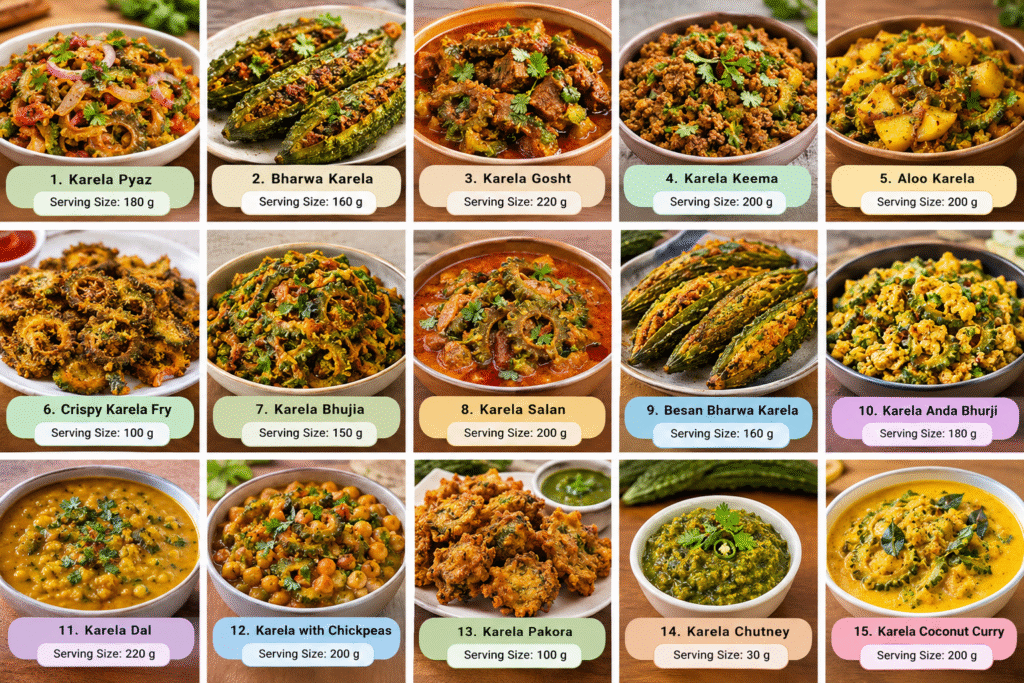
The following recipes represent common ways to prepare karela in South Asian households. The nutritional estimates are intended for general comparison, not as exact values for every recipe.
1. Bitter Gourd With Onions (Karela Pyaz)
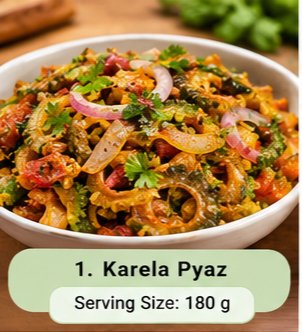
Bitter gourd with onions is one of the simplest and most familiar ways to prepare karela. Thinly sliced bitter gourd is cooked with onions, tomatoes, green chilies, and spices until tender.
The onions add sweetness, while the spices help balance the bitterness. Some cooks prefer a drier preparation, while others leave a little moisture in the pan.
| Nutrition estimate | Per serving |
| Serving size | 180 g |
| Calories | 110 kcal |
| Carbohydrates | 13 g |
Healthy cooking tip: Use a moderate amount of oil and avoid adding excessive amounts of onions or other ingredients without accounting for their contribution to the finished dish. Serve with a suitable portion of roti and a source of protein if needed.
2. Stuffed Bitter Gourd (Bharwa Karela)
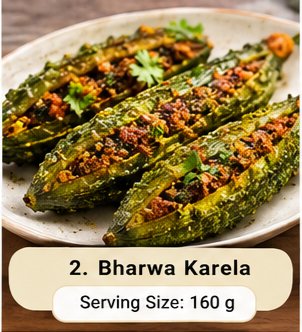
Stuffed bitter gourd is made by slitting the vegetable lengthwise and filling it with a mixture of spices, onions, fennel seeds, coriander, or other ingredients. Some recipes include gram flour in the stuffing.
The stuffed karela is then cooked in a covered pan until tender, sometimes allowing the outside to brown slightly.
| Nutrition estimate | Per serving |
| Serving size | 160 g |
| Calories | 150 kcal |
| Carbohydrates | 15 g |
Healthy cooking tip: Try pan-cooking with a measured quantity of oil. If your stuffing contains gram flour or another carbohydrate-containing ingredient, include it when estimating the total carbohydrates in your meal.
3. Bitter Gourd With Meat (Karela Gosht)
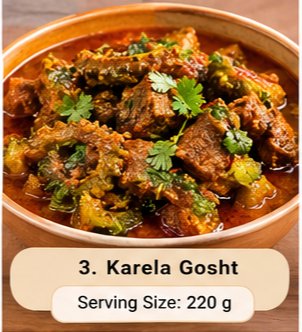
Karela gosht combines bitter gourd with mutton or beef, onions, tomatoes, ginger, garlic, and spices. The meat contributes protein and fat, while the vegetables contribute carbohydrates and other nutrients.
The finished dish can vary significantly depending on the meat cut and the amount of oil used in the curry.
| Nutrition estimate | Per serving |
| Serving size | 220 g |
| Calories | 270 kcal |
| Carbohydrates | 13 g |
Healthy cooking tip: Choose leaner meat when appropriate, trim visible excess fat, and use a moderate amount of oil. Remember that the carbohydrate content of the accompanying roti or rice must also be considered.
4. Bitter Gourd With Minced Meat (Karela Keema)
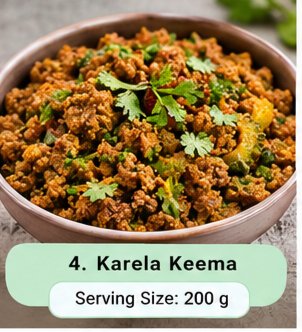
For this recipe, finely chopped bitter gourd is cooked with minced meat, onions, tomatoes, ginger, garlic, and spices. The combination produces a hearty dish with a different texture from traditional karela curry.
| Nutrition estimate | Per serving |
| Serving size | 200 g |
| Calories | 240 kcal |
| Carbohydrates | 11 g |
Healthy cooking tip: Using lean minced meat and measuring the cooking oil can help manage calories. You can also include additional non-starchy vegetables according to your preferences.
5. Bitter Gourd With Potatoes (Aloo Karela)
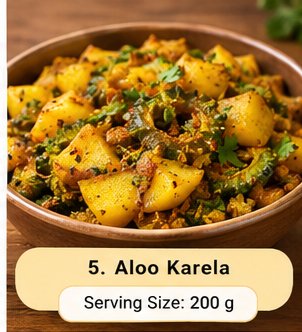
Aloo karela is a popular home-cooked dish in which sliced potatoes and bitter gourd are cooked together with onions and spices.
Although both ingredients can be part of a varied diet, potatoes contribute a meaningful amount of carbohydrates. Increasing the potato portion can therefore raise the carbohydrate content of the finished dish.
| Nutrition estimate | Per serving |
| Serving size | 200 g |
| Calories | 160 kcal |
| Carbohydrates | 24 g |
Healthy cooking tip: If you enjoy aloo karela, consider using a smaller proportion of potatoes and a larger proportion of bitter gourd. Also account for the carbohydrates in the roti or rice served alongside it.
6. Crispy Fried Bitter Gourd
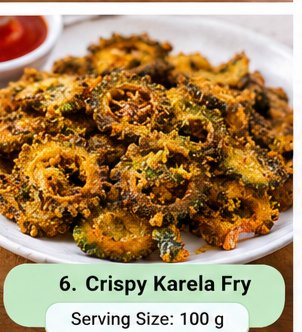
Crispy karela is prepared by slicing the vegetable thinly, seasoning it with spices, and frying it until the pieces become browned and crisp.
Its texture makes it a popular accompaniment to meals. However, the amount of oil absorbed during frying can increase its calorie content.
| Nutrition estimate | Per serving |
| Serving size | 100 g |
| Calories | 180 kcal |
| Carbohydrates | 12 g |
Healthy cooking tip: Consider shallow-frying with a measured amount of oil or baking the slices until crisp. The final nutritional values will depend on the preparation method and ingredients used.
7. Bitter Gourd Bhujia
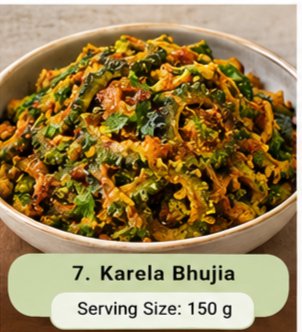
Karela bhujia is a dry-style vegetable preparation. Finely chopped bitter gourd is cooked with onions, turmeric, red chili, coriander, and other spices.
The result is a flavorful side dish that can be served with roti, lentils, or another suitable accompaniment.
| Nutrition estimate | Per serving |
| Serving size | 150 g |
| Calories | 130 kcal |
| Carbohydrates | 12 g |
Healthy cooking tip: Let the spices develop flavor without relying on excessive oil. A nonstick pan and gradual cooking over moderate heat can help achieve a good texture.
8. Bitter Gourd Curry (Karela Salan)

Karela salan is prepared by cooking bitter gourd in a gravy made from onions, tomatoes, ginger, garlic, and spices. Depending on the household, the gravy may be thin or thick.
Because ingredients can be distributed unevenly between servings, the amount of gravy and vegetables on the plate can affect the nutritional values.
| Nutrition estimate | Per serving |
| Serving size | 200 g |
| Calories | 130 kcal |
| Carbohydrates | 15 g |
Healthy cooking tip: Measure the oil and avoid assuming that a watery curry is automatically low in calories. Onions and other ingredients also contribute carbohydrates, so consider the complete recipe.
9. Gram-Flour-Stuffed Bitter Gourd (Besan Bharwa Karela)
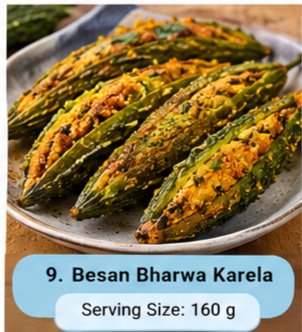
In this recipe, bitter gourd is filled with roasted gram flour, fennel seeds, coriander, and spices. Gram flour, commonly known as besan, gives the filling a rich texture and distinctive flavor.
It provides protein and fiber, but it also contains carbohydrates.
| Nutrition estimate | Per serving |
| Serving size | 160 g |
| Calories | 175 kcal |
| Carbohydrates | 19 g |
Healthy cooking tip: Account for the gram flour when estimating the carbohydrates in your meal. Use a measured amount of oil and adjust the accompanying roti or rice portion to suit your individual meal plan.
10. Bitter Gourd and Egg Bhurji
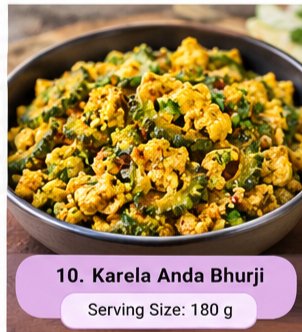
Karela egg bhurji combines finely chopped bitter gourd with onions and green chilies. Eggs are added and cooked until set, creating a protein-containing dish suitable for breakfast or another meal.
| Nutrition estimate | Per serving |
| Serving size | 180 g |
| Calories | 155 kcal |
| Carbohydrates | 10 g |
Healthy cooking tip: Use a moderate amount of oil and pair the dish with vegetables or a suitable portion of whole-grain roti, depending on your dietary needs.
11. Bitter Gourd With Lentils (Karela Dal)
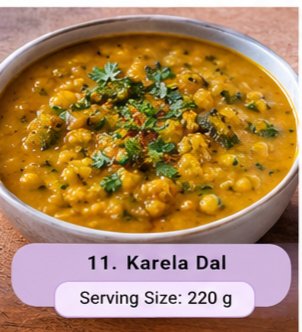
Bitter gourd can be cooked with red lentils, mung beans, or other varieties of lentils. The vegetables and lentils absorb the spices, creating a comforting dish that can be served as a curry or a thicker preparation.
Lentils provide protein and fiber, along with carbohydrates. Their contribution should not be overlooked when planning a meal.
| Nutrition estimate | Per serving |
| Serving size | 220 g |
| Calories | 190 kcal |
| Carbohydrates | 27 g |
Healthy cooking tip: Consider the amount of lentils in each serving. If you eat karela dal with rice or roti, count the carbohydrates from both the dal and the accompanying staple food.
12. Bitter Gourd With Chickpeas (Karela Chana)
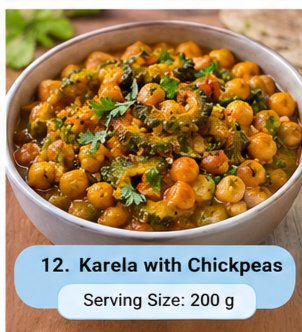
This recipe combines bitter gourd with boiled chickpeas, onions, tomatoes, and spices. Chickpeas add texture and make the dish more filling.
They also contribute protein, fiber, and carbohydrates, so the amount used can make a substantial difference to the nutritional content.
| Nutrition estimate | Per serving |
| Serving size | 200 g |
| Calories | 220 kcal |
| Carbohydrates | 30 g |
Healthy cooking tip: Use a portion of chickpeas that fits your meal plan. Avoid automatically adding a full serving of rice or several rotis without considering the total carbohydrate content of the meal.
13. Bitter Gourd Pakoras
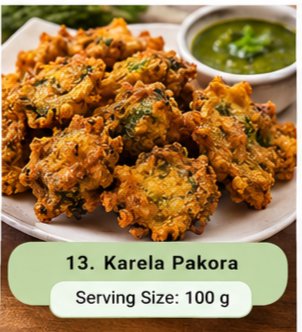
Karela pakoras are prepared by coating bitter gourd slices in a seasoned gram-flour batter and deep-frying them until crisp.
Although bitter gourd is the main vegetable, the batter and frying oil substantially influence the finished dish’s nutritional profile.
| Nutrition estimate | Per serving |
| Serving size | 100 g |
| Calories | 230 kcal |
| Carbohydrates | 23 g |
Healthy cooking tip: Keep portions moderate and consider an oven-baked or air-fried version. The carbohydrate content will depend on the amount of gram flour used, while the calories will also depend on the quantity of oil absorbed.
14. Bitter Gourd Chutney
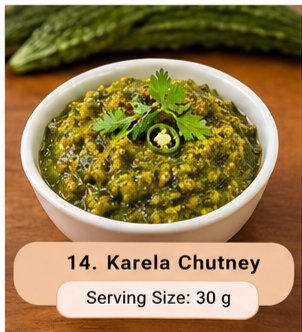
Karela chutney is made by cooking or roasting bitter gourd and blending it with chilies, lemon juice, and spices. Recipes vary according to regional and household preferences.
Chutney is usually consumed in much smaller quantities than a full vegetable dish.
| Nutrition estimate | Per serving |
| Serving size | 30 g |
| Calories | 25 kcal |
| Carbohydrates | 4 g |
Healthy cooking tip: Use a measured quantity of oil, if any. Remember that a small serving of chutney does not replace a full serving of vegetables.
15. Bitter Gourd Curry With Coconut
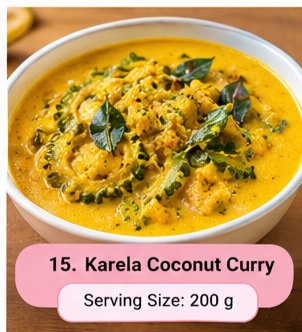
Some regional Indian recipes combine bitter gourd with coconut, coconut milk, and spices. Coconut contributes a creamy texture and distinctive flavor.
The nutritional profile depends on the type and quantity of coconut used, as well as the other ingredients in the curry.
| Nutrition estimate | Per serving |
| Serving size | 200 g |
| Calories | 180 kcal |
| Carbohydrates | 14 g |
Healthy cooking tip: Measure the coconut or coconut milk used in the recipe. Coconut can add considerable calories and fat, even when the carbohydrate content remains relatively moderate.
Nutrition Comparison Table: All 15 Karela Dishes
The following table provides a quick overview of the estimates used throughout this article. It can help readers compare recipes before choosing what to prepare.
| Bitter gourd dish | Serving size | Calories | Carbs |
| Karela pyaz | 180 g | 110 kcal | 13 g |
| Stuffed karela | 160 g | 150 kcal | 15 g |
| Karela gosht | 220 g | 270 kcal | 13 g |
| Karela keema | 200 g | 240 kcal | 11 g |
| Aloo karela | 200 g | 160 kcal | 24 g |
| Crispy fried karela | 100 g | 180 kcal | 12 g |
| Karela bhujia | 150 g | 130 kcal | 12 g |
| Karela salan | 200 g | 130 kcal | 15 g |
| Besan bharwa karela | 160 g | 175 kcal | 19 g |
| Karela egg bhurji | 180 g | 155 kcal | 10 g |
| Karela dal | 220 g | 190 kcal | 27 g |
| Karela chana | 200 g | 220 kcal | 30 g |
| Karela pakoras | 100 g | 230 kcal | 23 g |
| Karela chutney | 30 g | 25 kcal | 4 g |
| Coconut karela curry | 200 g | 180 kcal | 14 g |
Important: These are approximate figures retained from the recipe estimates in this guide. They have not been independently verified through laboratory analysis or standardized recipe calculations. Do not interpret small differences between dishes as proof that one will produce a lower blood glucose response than another.
Which Bitter Gourd Recipes May Be Better Choices for Diabetes?
There is no single bitter gourd recipe that is automatically the best choice for every person with diabetes. The most suitable option depends on portion size, ingredients, cooking method, individual glucose responses, and the rest of the meal.
Nevertheless, some general comparisons can help you plan your meals.
Simple karela dishes: Karela pyaz and karela bhujia can be practical options when prepared with moderate amounts of oil. Their actual nutritional values depend on the proportions of vegetables and other ingredients.
Protein-containing dishes: Karela egg bhurji, karela gosht, and karela keema provide protein from eggs or meat. However, their calories and fat content can vary with the ingredients and cooking method.
Dishes containing lentils or chickpeas: Karela dal and karela chana provide fiber and protein, but they also contain carbohydrates. Portion size matters, especially when these dishes are eaten with roti or rice.
Fried dishes: Karela pakoras and crispy fried karela can contain more calories because of the oil used during preparation. Baking, air-frying, or using a measured amount of oil may help reduce the added fat.
Rather than choosing a dish based on its name alone, consider its ingredients and how it fits into your overall meal.
Does the Glycemic Index of Bitter Gourd Recipes Matter?
The glycemic index (GI) measures how quickly a carbohydrate-containing food raises blood glucose compared with a reference food under standardized testing conditions.
The glycemic load (GL) considers both the glycemic index and the amount of available carbohydrate in a serving.
These concepts can be useful, but there is an important limitation: a reliable GI value cannot simply be assigned to every homemade karela recipe.
For example, plain bitter gourd, aloo karela, besan bharwa karela, and karela chana have different ingredients and carbohydrate profiles. Their overall effects on blood glucose may also vary according to the complete meal and the individual eating it.
The nutritional estimates in this article are not GI or GL measurements. It would be misleading to rank all 15 dishes by glycemic index without reliable evidence specific to those prepared recipes.
If you monitor your blood glucose, follow the testing schedule recommended by your healthcare professional and use your results to support individualized meal planning.
Five Practical Tips for Cooking Karela More Healthfully
1. Measure the Cooking Oil
Oil adds calories without adding carbohydrates. You do not need to eliminate oil completely, but measuring it instead of pouring freely into the pan can make your meals easier to manage.
2. Balance Potatoes, Chickpeas, and Gram Flour
These ingredients can add flavor, texture, protein, or fiber, but they also contribute carbohydrates. Adjust their quantities according to your preferences and nutritional needs.
3. Choose a Suitable Serving Size
A nutritious dish can still contribute more calories and carbohydrates than expected if the portion is very large. Consider the quantity served rather than relying on the recipe name.
4. Consider the Entire Meal
Karela served with several rotis or a large portion of rice can result in a substantially different total carbohydrate intake from karela served with a smaller portion of a staple food and a suitable protein source.
5. Enjoy Variety
You can alternate between dry karela, stuffed karela, egg bhurji, meat-based dishes, and lentil preparations. Variety can make healthy eating more enjoyable and sustainable.
Frequently Asked Questions About Bitter Gourd Recipes for Diabetics
1. Is bitter gourd good for people with diabetes?
Bitter gourd can be included in a balanced diet for many people with diabetes. However, evidence does not establish it as a cure for diabetes or a replacement for prescribed treatment. The overall diet, medication, physical activity, and individual health needs remain important.
2. Which bitter gourd recipe has the fewest calories?
In the estimates presented in this article, a 30-gram serving of bitter gourd chutney contains approximately 25 calories. However, this is a small condiment serving, not a full vegetable portion. Among the larger servings, karela pyaz is estimated at 110 calories per 180 grams. Actual values depend on the recipe.
3. Is karela with potatoes suitable for people with diabetes?
It can fit into some meal plans, but potatoes contribute carbohydrates. Consider using a moderate quantity of potatoes and account for the roti or rice eaten alongside the dish. Individual dietary requirements differ.
4. Does cooking bitter gourd reduce its bitterness?
Cooking methods can change bitter gourd’s flavor and texture. Slicing it thinly, salting it briefly before cooking, and rinsing it when appropriate may help reduce perceived bitterness. Onions, tomatoes, and spices can also balance its flavor.
5. Are fried bitter gourd slices healthy?
Fried bitter gourd can be enjoyed occasionally as part of an overall balanced eating pattern. However, frying can increase calories because of oil absorption. Baking, air-frying, or shallow-frying with measured oil may be alternatives.
6. How many carbohydrates are in bitter gourd?
The carbohydrate content depends on the quantity of bitter gourd and the other ingredients used. In this article, estimated carbohydrate values range from 10 grams per 180-gram serving of karela egg bhurji to 30 grams per 200-gram serving of karela chana. These are recipe estimates, not universal values for the dishes.
7. Can I eat karela every day if I have diabetes?
Whether daily consumption is appropriate depends on your overall diet, preferences, and health needs. There is no requirement to eat bitter gourd every day to manage diabetes. A varied eating pattern is generally more practical than relying on one particular vegetable.
8. Is bitter gourd juice better than cooked bitter gourd?
Not necessarily. Juice and cooked bitter gourd differ in preparation, portion size, and nutritional composition. Juicing can also remove some of the fiber found in the whole vegetable. Neither form should be assumed to control blood sugar better without adequate evidence.
9. Can bitter gourd replace diabetes medication?
No. Bitter gourd should not replace prescribed diabetes medication. Anyone considering concentrated bitter gourd supplements or large medicinal quantities should consult a healthcare professional, particularly because potential glucose-lowering effects may interact with diabetes treatment.
10. Which is better for diabetes: karela dal or karela chana?
Neither is universally better. Both can provide fiber and protein, and both contain carbohydrates. Their suitability depends on the quantities of lentils or chickpeas used, the cooking method, portion size, and the other foods eaten with the meal.
Conclusion
Bitter gourd is a versatile vegetable that can be prepared in many delicious ways, from simple karela pyaz and stuffed karela to meat-based curries, egg bhurji, lentil dishes, and crispy pakoras. These 15 bitter gourd recipes for diabetics demonstrate how the same vegetable can produce very different meals depending on the ingredients, cooking methods, and serving sizes. The most useful approach is to understand the calories and carbohydrates in the complete dish, measure cooking oil, pay attention to portions, and consider the roti, rice, or other foods served alongside it. Bitter gourd can be part of a balanced eating pattern, but it should not be treated as a substitute for prescribed diabetes care. Choose recipes you enjoy, make practical adjustments where needed, and focus on building an overall eating pattern that supports your individual health goals.