
Introduction
When you have diabetes, choosing the right fruit can feel confusing. Many people stand in front of a fruit basket and wonder: Should I eat an apple or a banana? Which one is safer for my blood sugar?
Both apples and bananas are among the most popular fruits worldwide. They are nutritious, delicious, affordable, and readily available throughout the year. However, for people with diabetes, the decision is not always straightforward. While both fruits contain natural sugars, they affect blood glucose levels differently due to variations in carbohydrate content, fiber, glycemic index (GI), and glycemic load (GL).
The good news is that neither apples nor bananas are forbidden for diabetics. The key lies in understanding portion size, timing, and how each fruit impacts blood sugar levels.
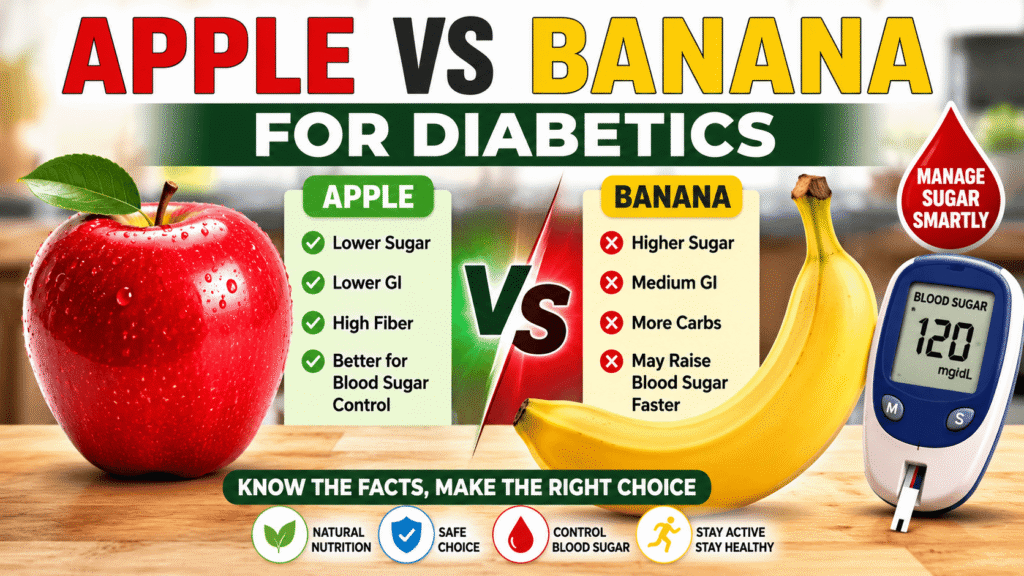
In this comprehensive guide, we will compare apple and banana in detail, analyze their nutritional profiles, discuss their glycemic index and glycemic load, explore how fruit shakes affect blood sugar, and help you decide which fruit is best for diabetes management.
Table of Contents
Why Fruit Selection Matters for Diabetics
People with diabetes need to pay close attention to foods that affect blood glucose levels. Fruits are packed with vitamins, minerals, antioxidants, and fiber, but they also contain natural sugars.
The main factors that determine how a fruit affects blood sugar include:
- Total carbohydrate content
- Fiber content
- Glycemic Index (GI)
- Glycemic Load (GL)
- Serving size
- Ripeness of the fruit
Understanding these factors can help diabetics enjoy fruits safely while maintaining healthy blood sugar levels.
Nutritional Comparison: Apple and Banana
Let’s compare the nutritional values of apples and bananas based on a 100-gram serving.
Nutrition Table: Apple vs Banana (Per 100g)
| Nutrient | Apple | Banana |
| Calories | 52 kcal | 89 kcal |
| Carbohydrates | 14 g | 23 g |
| Natural Sugar | 10 g | 12 g |
| Fiber | 2.4 g | 2.6 g |
| Protein | 0.3 g | 1.1 g |
| Water Content | 86% | 75% |
| Vitamin C | 4.6 mg | 8.7 mg |
| Vitamin B6 | Low | High |
| Potassium | 107 mg | 358 mg |
| Magnesium | 5 mg | 27 mg |
| Iron | Lower | Higher |
What Does This Mean?
The table clearly shows that bananas contain:
- More calories
- More carbohydrates
- More sugar
- More potassium
- More magnesium
- More Vitamin B6
Meanwhile, apples contain:
- Fewer calories
- Fewer carbohydrates
- Slightly less sugar
- Higher water content
- Strong antioxidant properties
For diabetics focused on blood sugar control, the lower carbohydrate content of apples is a major advantage.
Understanding Glycemic Index (GI)
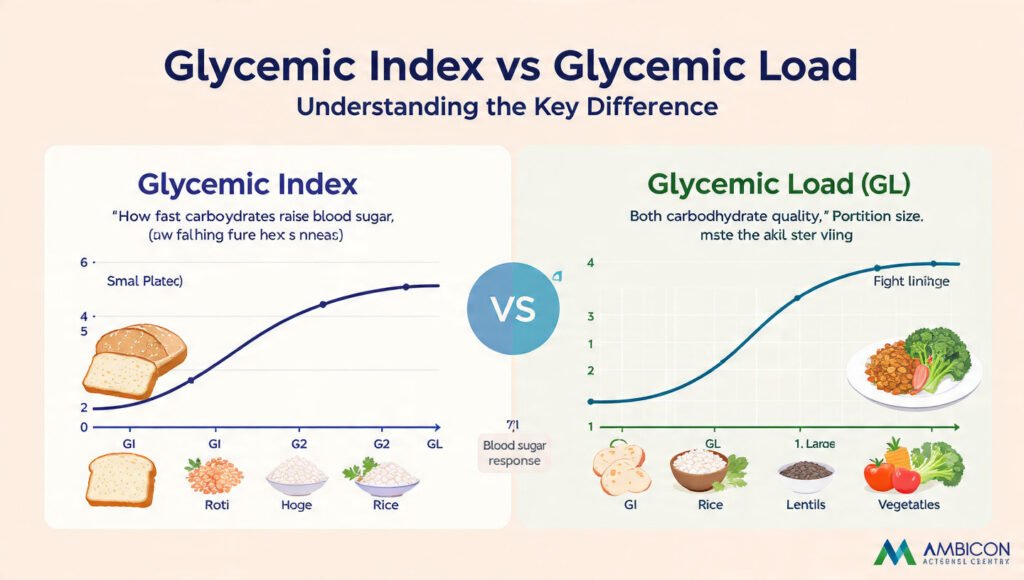
The Glycemic Index measures how quickly a food raises blood sugar levels.
Foods are classified as:
Low GI
55 or less
Medium GI
56–69
High GI
70 or above
Glycemic Index of Apples and Bananas
| Fruit | Glycemic Index |
| Apple | 36–40 |
| Banana | 51–55 |
Winner: Apple
Apples have a significantly lower glycemic index than bananas. This means they release sugar into the bloodstream more slowly, resulting in a gentler rise in blood glucose.
Bananas still fall within the low-to-medium GI range, but they can raise blood sugar faster than apples, especially when fully ripe.
Understanding Glycemic Load (GL)
While GI measures how quickly sugar enters the bloodstream, Glycemic Load provides a more practical picture because it considers both:
- Glycemic Index
- Amount of carbohydrates consumed
This makes Glycemic Load particularly useful for diabetics.
GL Categories
| Glycemic Load | Classification |
| 10 or less | Low |
| 11–19 | Medium |
| 20 or more | High |
Glycemic Load of Apples, Bananas, Fruit Slices, and Fruit Shakes
The following table is based on the information provided in the script.
Glycemic Load Comparison Table
| Serving Size | Apple GL | Banana GL | Mixed Slices GL | Shake GL |
| 50 g | 2.66 | 6.09 | 4.38 | 4.82 |
| 100 g | 5.32 | 12.19 | 8.76 | 9.63 |
| 150 g | 7.98 | 18.29 | 13.13 | 14.45 |
| 200 g | 10.64 | 24.38 | 17.51 | 19.26 |
| 250 g | 13.30 | 30.48 | 21.89 | 24.08 |
What the Glycemic Load Table Tells Us
Several important conclusions can be drawn:
Apples Remain Safer
Even at higher serving sizes, apples generally remain within a manageable glycemic load range.
Bananas Become Riskier as Portion Size Increases
The glycemic load of bananas rises rapidly with larger servings.
At 250 grams, the GL reaches over 30, placing it firmly in the high glycemic load category.
Fruit Shakes Increase Glycemic Impact
Fruit shakes consistently show higher glycemic loads than whole fruit slices.
This demonstrates how processing fruit can influence blood sugar response.
Why Apples Are Often Recommended for Diabetics
Apples are frequently considered one of the best fruits for diabetes management.
1. Low Glycemic Index
Apples digest slowly and release sugar gradually.
2. Rich in Soluble Fiber
The soluble fiber known as pectin slows digestion and sugar absorption.
3. High Water Content
With 86% water content, apples help increase fullness and reduce overeating.
4. Powerful Antioxidants
Apples contain beneficial plant compounds that may help combat oxidative stress associated with diabetes.
5. Weight Management Benefits
Lower calories and high satiety make apples helpful for weight control.
Maintaining a healthy weight is essential for blood sugar management.
Can Diabetics Eat Bananas?
Absolutely.
Bananas are not forbidden for diabetics.
However, portion control is essential.
Benefits of Bananas
- Rich in potassium
- Excellent source of Vitamin B6
- Good source of magnesium
- Provides quick energy
- Convenient and portable snack
Potential Concerns
- Higher carbohydrate content
- Higher glycemic load
- May raise blood sugar faster than apples
Recommended Serving
Many healthcare professionals suggest limiting intake to:
Half a medium banana at a time
This can help reduce the blood sugar impact while still providing nutritional benefits.
Are Ripe Bananas Worse for Diabetes?
Yes.
As bananas ripen, their starch content converts into simple sugars.
This means:
- Sweeter taste
- Higher glycemic response
- Faster blood sugar rise
For diabetics, slightly green or less-ripe bananas may be a better option than fully ripe bananas.
What Happens as Bananas Ripen?
As a banana changes from green to yellow and eventually develops brown spots:
- Resistant starch decreases
- Simple sugars increase
- The fruit becomes sweeter
- Digestion occurs more rapidly
- Blood sugar rises more quickly after eating
This means that a fully ripe banana generally produces a higher glycemic response compared with a green or slightly unripe banana.
Comparing Banana Ripeness and Blood Sugar Impact
| Banana Stage | Sugar Content | Resistant Starch | Glycemic Impact | Best Choice for Diabetics |
|---|---|---|---|---|
| Green Banana | Low | High | Lowest | Excellent |
| Slightly Yellow with Green Tips | Moderate | Moderate | Mild | Very Good |
| Fully Yellow Banana | Higher | Lower | Moderate | Acceptable in moderation |
| Yellow with Brown Spots | Highest | Very Low | Highest | Limit portions |
Why Resistant Starch Matters
Resistant starch behaves somewhat like dietary fiber because it is not digested quickly in the small intestine. It slows glucose absorption, helps maintain steadier blood sugar levels, and may even improve insulin sensitivity.
As bananas ripen, much of this beneficial resistant starch disappears, making the fruit easier to digest but also more likely to raise blood glucose levels rapidly.
Practical Advice for People with Diabetes
People with diabetes do not necessarily need to avoid bananas altogether. Instead, they can make smarter choices by considering ripeness and portion size.
Some helpful strategies include:
- Choose slightly green or less-ripe bananas when possible.
- Eat a small banana instead of a large one.
- Pair bananas with protein or healthy fats such as nuts, peanut butter, or Greek yogurt.
- Monitor blood glucose responses to determine individual tolerance.
Bottom Line
Ripe bananas are not harmful, but they tend to cause a faster and larger increase in blood sugar levels because their starches have been converted into simple sugars. For people with diabetes, slightly green or moderately ripe bananas are often a better choice, as they provide a slower release of glucose and may help support better blood sugar control.
Apple and Banana Together: Is It Safe?
Many people enjoy fruit salads containing both apples and bananas.
In moderation, this combination can be acceptable.
However, keep these points in mind:
- Apples contain more fiber.
- Bananas contain more sugar.
- Larger amounts of banana increase blood sugar response.
A diabetic-friendly fruit salad should contain:
- More apple slices
- Less banana
- A source of protein
Examples include:
- Greek yogurt
- Plain yogurt
- Almonds
- Walnuts
- Chia seeds
This combination slows sugar absorption and improves satiety.
Why Fruit Shakes Are Not Ideal for Diabetics
Many people assume fruit shakes are healthy.
Unfortunately, this is not always true for people with diabetes.
What Happens During Blending?
When fruit is blended:
- Fiber structure breaks down
- Digestion becomes faster
- Sugar becomes more readily available
As a result:
- Blood sugar rises more quickly
- Glycemic response increases
- Satiety decreases
This is why an apple-banana shake often produces a stronger glucose response than eating the fruits whole.
Better Alternative
Eat whole fruits rather than drinking them.
Whole fruits preserve natural fiber and promote slower sugar absorption.
Best Time for Diabetics to Eat Apples and Bananas
Timing can also influence blood sugar control.
Apples
Best times include:
- Mid-morning snack
- Afternoon snack
- Before meals
Apples can generally be consumed daily.
Bananas
Better choices include:
- After exercise
- After walking
- As part of breakfast
Avoid:
- Large bananas on an empty stomach
- Late-night banana consumption
Tips for Eating Fruit Safely with Diabetes
Fruit is packed with vitamins, minerals, antioxidants, and fiber, making it an important part of a healthy diet. However, because fruits also contain natural sugars, people with diabetes should consume them thoughtfully to maintain stable blood sugar levels. The following practical strategies can help you enjoy fruit safely while supporting good glucose control.
1. Control Portions
Even nutritious fruits can contribute to elevated blood sugar levels when consumed in large amounts. Portion size is often more important than the type of fruit itself.
For example, eating one small apple or a handful of berries is very different from eating several servings at once. Paying attention to serving sizes can help prevent excessive carbohydrate intake and reduce the risk of post-meal glucose spikes.
Examples of reasonable portions include:
- One small apple
- One small orange
- Half a large banana
- One cup of berries
- One medium pear
Moderation allows you to enjoy fruit while keeping carbohydrate intake balanced.
2. Pair Fruit with Protein
Combining fruit with protein or healthy fats can slow digestion and reduce the speed at which sugar enters the bloodstream. This strategy may help improve satiety, reduce hunger, and minimize sudden increases in blood glucose.
Healthy pairings include:
- Greek yogurt with berries
- Apple slices with peanut butter
- Pears with a handful of almonds
- Banana with unsweetened yogurt
- Fruit with sunflower or chia seeds
These combinations provide a more balanced snack and can support better blood sugar management.
3. Avoid Fruit Juices
Fruit juice often contains many of the sugars found in whole fruit but lacks the fiber that helps slow glucose absorption.
A glass of juice may contain the sugar equivalent of several pieces of fruit and can cause blood sugar levels to rise rapidly. Even juices labeled as “natural” or “100% fruit juice” can have a significant glycemic impact.
Instead of juice, choose whole fruits whenever possible. Whole fruits provide fiber, promote fullness, and generally have a gentler effect on blood sugar.
4. Choose Whole Fruits
Whole fruits offer the greatest nutritional benefits because they contain fiber, vitamins, minerals, and plant compounds that support overall health.
Fiber is especially important for people with diabetes because it slows digestion, reduces glucose absorption, and helps maintain more stable blood sugar levels.
Good choices include:
- Apples with the skin on
- Pears
- Berries
- Citrus fruits
- Peaches
- Plums
- Kiwi
Whenever possible, select fresh, frozen, or unsweetened fruits rather than canned fruits packed in syrup.
5. Monitor Blood Sugar
People with diabetes can respond differently to the same foods. Factors such as medications, activity level, insulin sensitivity, and overall diet can influence blood sugar responses.
Monitoring glucose levels before and after eating fruit can help you understand how specific fruits affect your body.
Consider checking blood sugar:
- Before eating fruit
- One to two hours after eating
- After trying a new fruit or a larger portion
This information can help you identify which fruits work best for your individual needs and guide future food choices.
6. Spread Fruit Intake Throughout the Day
Eating a large amount of fruit at one time may lead to a bigger rise in blood glucose levels. Distributing fruit intake across the day can help maintain more stable blood sugar patterns.
For example, instead of eating three servings of fruit at breakfast, consider:
- One serving with breakfast
- One serving as an afternoon snack
- One serving after dinner
Spacing fruit consumption throughout the day provides a steady supply of nutrients while helping to minimize blood sugar fluctuations.
Final Thoughts
Fruit does not need to be avoided by people with diabetes. In fact, when consumed in appropriate portions and combined with balanced meals, fruit can be an important component of a healthy diabetes-friendly eating plan. Focusing on portion control, choosing whole fruits, pairing them with protein, and monitoring your body’s response can allow you to enjoy the nutritional benefits of fruit while supporting better blood sugar management.
Guideline Summary
1. Control Portions
Even healthy fruits can raise blood sugar if eaten excessively.
2. Pair Fruit with Protein
Examples:
- Yogurt
- Nuts
- Seeds
3. Avoid Fruit Juices
Juices remove fiber and increase sugar absorption.
4. Choose Whole Fruits
Whole fruits provide maximum nutritional benefits.
5. Monitor Blood Sugar
Everyone responds differently.
Checking blood glucose can help identify your personal tolerance.
6. Spread Fruit Intake Throughout the Day
Avoid consuming large quantities in one sitting.
Apple vs Banana for Diabetics: Final Comparison
| Factor | Apple | Banana |
| Calories | Lower | Higher |
| Carbohydrates | Lower | Higher |
| Sugar | Lower | Higher |
| Fiber | Good | Good |
| Glycemic Index | Lower | Higher |
| Glycemic Load | Lower | Higher |
| Potassium | Lower | Higher |
| Antioxidants | Higher | Lower |
| Diabetes Friendliness | Excellent | Moderate |
Why Apples Are Often Recommended for Diabetics
Apples have a lower glycemic index and glycemic load compared with bananas. They are rich in soluble fiber, particularly pectin, which slows digestion and reduces rapid spikes in blood sugar levels.
Apples also contain powerful antioxidants called polyphenols that may improve insulin sensitivity and support better glucose control. Eating apples with the skin intact further increases fiber intake and enhances their blood sugar benefits.
When Bananas Can Still Be a Healthy Choice
Bananas should not be considered a forbidden fruit for people with diabetes. They provide several important nutrients, including potassium, vitamin B6, magnesium, and dietary fiber.
The key is portion control and choosing bananas at the right stage of ripeness.
- Green or slightly unripe bananas contain more resistant starch and have a lower impact on blood sugar.
- Fully ripe bananas contain more available sugars and can raise blood glucose levels more quickly.
- Pairing a banana with protein or healthy fats, such as nuts, yogurt, or peanut butter, can help reduce its glycemic impact.
Practical Recommendations
For most people aiming for better blood sugar control:
- Choose one medium apple as a regular snack.
- If eating bananas, consider half a banana or a small banana.
- Combine fruit with a source of protein to improve satiety and reduce blood sugar fluctuations.
- Monitor your individual glucose response, as people with diabetes can react differently to the same foods.
Overall Winner
For blood sugar management, apples are generally the better choice for diabetics.
However, bananas can still be enjoyed in moderation and as part of a balanced meal plan.
Frequently Asked Questions (FAQs)
Can diabetics eat an apple every day?
Yes. Most diabetics can safely enjoy one medium apple daily as part of a balanced diet.
Is banana completely banned for diabetes?
No. Bananas can be consumed in moderation, preferably in smaller portions.
Which fruit raises blood sugar faster?
Bananas generally raise blood sugar faster than apples because of their higher carbohydrate and glycemic load values.
Is fruit salad safe for diabetics?
Yes, if portions are controlled and protein-rich foods are included.
Are fruit smoothies healthy for diabetics?
Not usually. Whole fruits are a better choice because they preserve natural fiber.
Should diabetics eat fruit on an empty stomach?
It is generally better to pair fruit with protein or healthy fats to minimize blood sugar spikes.
Conclusion
When comparing Apple and Banana for Diabetics, the evidence strongly favors apples as the safer choice for blood sugar control. Apples contain fewer calories, fewer carbohydrates, a lower glycemic index, and a lower glycemic load. Their rich fiber content and antioxidant profile make them an excellent daily fruit for people managing diabetes.
Bananas, on the other hand, offer valuable nutrients such as potassium, magnesium, and Vitamin B6. They are not off-limits for diabetics, but portion size matters greatly. Half a banana paired with yogurt, nuts, or another protein source is often a smarter option than eating a large banana alone.
The most important lesson is that diabetes management is not about completely avoiding fruit. Instead, it is about making informed choices, controlling portions, selecting the right timing, and choosing whole fruits over processed alternatives like shakes and juices. By following these principles, diabetics can enjoy the nutritional benefits of fruit while maintaining healthy blood sugar levels and improving their overall well-being.