
Hair loss is one of the most frustrating problems people face today. Whether you notice excessive hair on your pillow, in the shower drain, or thinning at the crown, it can affect your confidence and overall well-being. While genetics and hormones often get the blame, a major yet overlooked reason is vitamin deficiency.
In this detailed guide, we will explore what vitamin deficiency causes hair loss, how it affects your body, and most importantly, how you can fix it naturally.
Table of Contents
Understanding Hair Loss: Why It Happens and What Vitamin Deficiency Causes Hair Loss?
Before jumping into deficiencies, it’s important to understand how hair growth works. Your hair goes through a natural cycle:
- Anagen (growth phase)
- Catagen (transition phase)
- Telogen (resting/shedding phase)
When your body lacks essential nutrients, this cycle gets disrupted. Hair enters the shedding phase faster than usual, leading to noticeable thinning.
The Connection Between Vitamins and Hair Health
Hair follicles are among the most metabolically active parts of your body. They require a continuous supply of nutrients to function properly. When your body is deficient in key vitamins, it prioritizes vital organs over hair growth.
This means your hair becomes weak, brittle, and more prone to falling out.
Top Vitamin Deficiencies That Cause Hair Loss
Let’s break down the most important deficiencies linked to hair loss.
1. Vitamin D Deficiency and Hair Loss
Vitamin D plays a crucial role in creating new hair follicles. Without enough vitamin D, your body struggles to maintain healthy hair growth.
Signs of Vitamin D Deficiency
- Hair thinning
- Fatigue
- Bone pain
- Low immunity
Why It Causes Hair Loss
Vitamin D stimulates dormant hair follicles. When levels drop, follicles remain inactive, leading to reduced hair growth.
Best Sources of Vitamin D
- Sunlight exposure
- Fatty fish (salmon, tuna)
- Egg yolks
- Fortified milk
2. Biotin (Vitamin B7) Deficiency
Biotin is often called the “hair growth vitamin.” It supports keratin production, the protein that makes up your hair.
Symptoms of Biotin Deficiency
- Thinning hair
- Weak nails
- Skin irritation
Why It Matters
Without biotin, your hair structure weakens, making strands prone to breakage.
Biotin-Rich Foods
- Eggs
- Nuts (almonds, walnuts)
- Bananas
- Whole grains
3. Vitamin B12 Deficiency
Vitamin B12 is essential for red blood cell formation. These cells carry oxygen to your scalp and hair follicles.
Signs of Low B12
- Hair loss
- Fatigue
- Dizziness
- Pale skin
Impact on Hair
Low oxygen supply weakens follicles, leading to hair shedding.
Food Sources
- Meat
- Dairy products
- Eggs
- Fortified cereals
4. Iron Deficiency (A Major Hidden Cause)
Although not a vitamin, iron deficiency is one of the leading causes of hair loss, especially in women.
Symptoms
- Hair fall
- Weakness
- Shortness of breath
How It Affects Hair
Iron helps red blood cells deliver oxygen. Without it, hair follicles become weak and inactive.
Iron-Rich Foods
- Spinach
- Lentils
- Red meat
- Pumpkin seeds
5. Vitamin A Imbalance
Vitamin A helps in the production of sebum, which keeps your scalp moisturized.
Important Note
- Too little = dry scalp
- Too much = hair loss
Sources
- Carrots
- Sweet potatoes
- Mangoes
Balance is key here.
6. Vitamin E Deficiency
Vitamin E is a powerful antioxidant that protects hair follicles from oxidative stress.
Benefits
- Improves scalp circulation
- Reduces hair damage
- Supports growth
Sources
- Almonds
- Sunflower seeds
- Spinach
7. Zinc Deficiency and Hair Loss
Zinc plays a critical role in tissue growth and repair.
Symptoms
- Hair shedding
- Slow wound healing
- Weak immunity
Why It Matters
Zinc helps maintain oil glands around follicles. Its deficiency leads to hair weakening.
How to Identify Which Deficiency You Have
You cannot always guess the exact deficiency just by symptoms. The best approach is:
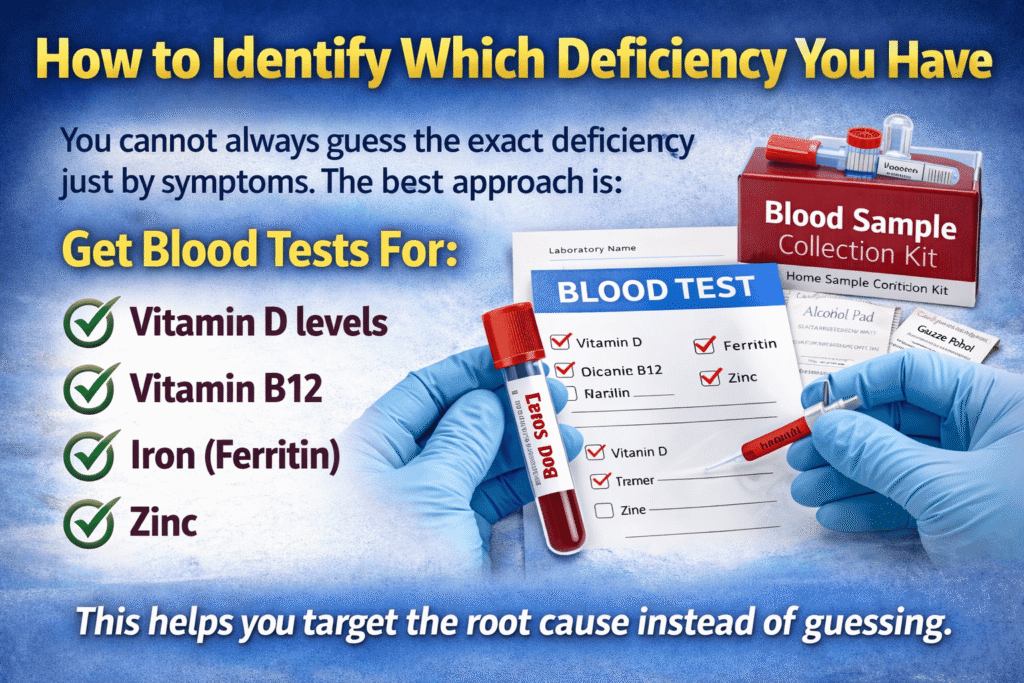
Get Blood Tests For:
- Vitamin D levels
- Vitamin B12
- Iron (Ferritin)
- Zinc
This helps you target the root cause instead of guessing.
Can Multiple Deficiencies Cause Hair Loss?
Yes, and this is very common.
In fact, many people suffer from a combination of deficiencies, especially due to:
- Poor diet
- Stress
- Chronic illness
- Digestive issues
That’s why focusing on overall nutrition is more effective than taking one supplement blindly.
Diet Plan to Prevent Hair Loss Naturally
Instead of relying only on supplements, build a nutrient-rich diet.
Breakfast
- Eggs + whole grain toast
- Milk or yogurt
Lunch
- Lentils or chicken
- Brown rice or roti
- Green vegetables
Snacks
- Nuts and seeds
- Fruits like banana or apple
Dinner
- Fish or beans
- Salad with olive oil
This balanced diet supports overall hair health.
Lifestyle Factors That Worsen Hair Loss
Even if your diet is good, certain habits can make hair loss worse:
- Chronic stress
- Poor sleep
- Smoking
- Crash dieting
Managing these factors is equally important.
Should You Take Supplements?
Supplements can help, but only if:
- You have a confirmed deficiency
- You follow proper dosage
Over-supplementation, especially of Vitamin A, can actually increase hair loss.
How Long Does It Take to See Results?
Hair growth is slow, so patience is key.
- 4–6 weeks: Reduced shedding
- 2–3 months: Noticeable improvement
- 4–6 months: Visible regrowth
Consistency is the secret.
When to See a Doctor
If you experience:
- Sudden severe hair loss
- Bald patches
- Hair loss with fatigue or illness
Consult a healthcare professional immediately.
Common Myths About Hair Loss and Vitamins
Myth 1: Biotin alone can fix hair loss
Truth: Hair loss is usually caused by multiple deficiencies.
Myth 2: More vitamins = faster hair growth
Truth: Excess vitamins can harm your body.
Myth 3: Hair oils can replace nutrients
Truth: Oils help externally, not internally.
Pro Tips for Healthy Hair Growth
- Eat a balanced diet
- Stay hydrated
- Get sunlight daily
- Avoid excessive heat styling
- Manage stress effectively
Conclusion
So, what vitamin deficiency causes hair loss? The answer is not just one. Hair loss is often linked to deficiencies in Vitamin D, Biotin, Vitamin B12, Vitamin E, and even minerals like iron and zinc. Each of these nutrients plays a unique role in maintaining strong, healthy hair.
The key is to focus on overall nutrition rather than a single vitamin. Get proper testing, follow a balanced diet, and maintain a healthy lifestyle. With the right approach, you can not only stop hair loss but also promote strong and natural hair regrowth over time.