
Managing diabetes is no longer just about avoiding sugar or reducing calories. Today, the real challenge is understanding how different foods affect your blood sugar. Many people eat what they think is healthy but still experience unexpected glucose spikes. This is where a Smart Plate becomes a powerful solution.
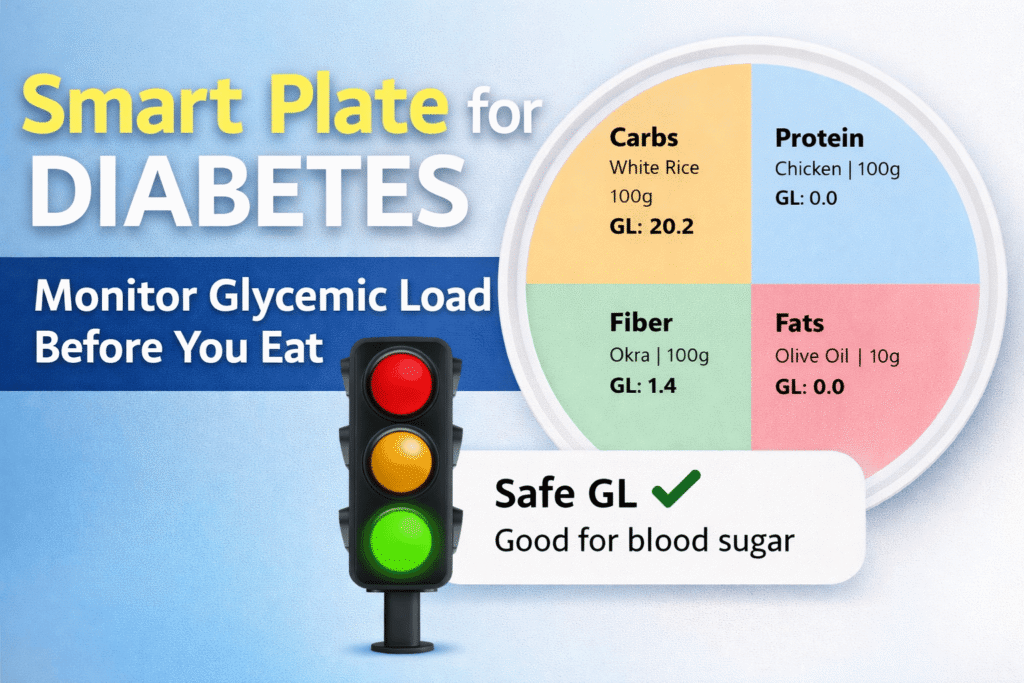
Build Diabetes Free Plate in 5 Seconds
Select food, enter grams, and see your Glycemic Load instantly
Total Glycemic Load: 0
A Smart Plate is a digital tool designed to help you build balanced meals while tracking the Glycemic Load (GL) of your food before you eat. Instead of guessing, you get real-time insight into whether your meal is safe, moderate, or risky for blood sugar control.
In this detailed guide, you’ll learn how the Smart plate works, why it is essential for diabetes management, and how it can transform your daily eating habits.
Table of Contents
Understanding the Real Problem: Why Blood Sugar Spikes Happen
Many people believe that avoiding sweets is enough to control diabetes. However, blood sugar spikes are often caused by:
- Large portions of carbohydrates
- High Glycemic Index (GI) foods
- Low fiber meals
- Poor food combinations
For example, a large serving of white rice or roti can raise blood sugar even without any added sugar.
The issue is not just what you eat, but also:
- How much you eat
- How foods are combined
- The total glycemic impact of your meal
This is exactly what the Smart Plate helps you understand.
What Is a Smart Plate?
A Smart Plate is an interactive digital meal planner that allows users to:
- Select foods from different categories
- Enter serving size in grams
- See the Glycemic Load instantly
- Get a traffic-light risk indicator
- Visualize meal balance on a plate
The tool divides your meal into four sections:
- Carbohydrates
- Protein
- Fiber / Vegetables
- Fats
As you build your meal, the plate updates automatically and calculates the total glycemic load.
This makes the Smart plate a practical tool for everyday diabetes control.
What Is Glycemic Load and Why It Matters
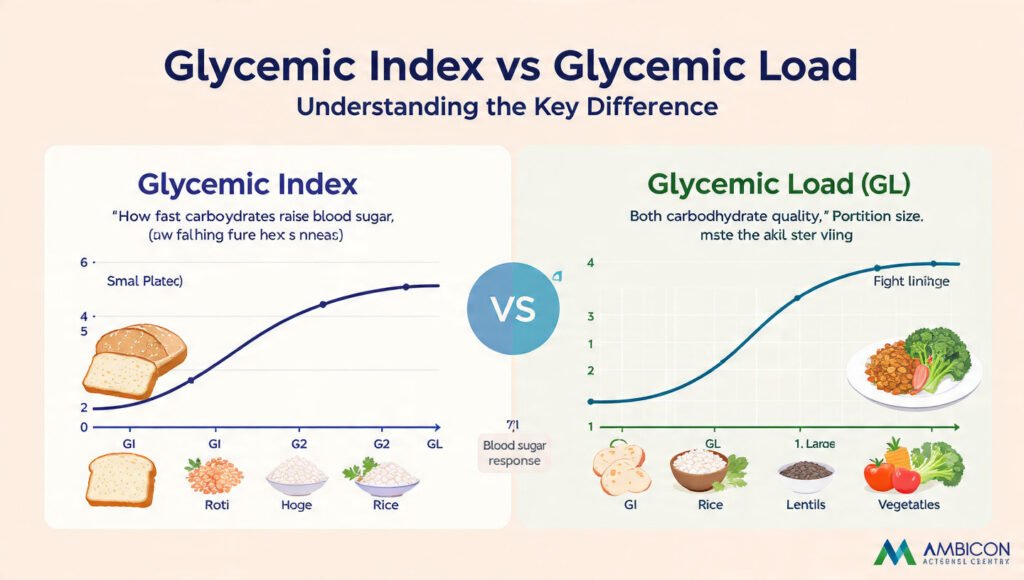
Most people hear about the Glycemic Index (GI), but Glycemic Load (GL) is more accurate.
Glycemic Load considers:
- The GI of the food
- The actual carbohydrate amount in your portion
GL Formula
GL = (GI × Carbohydrates per serving) ÷ 100
GL Categories
- 0–10 → Safe (Low impact)
- 11–20 → Moderate
- Above 20 → High risk (May spike blood sugar)
The Smart Plate calculates this automatically, so you don’t need to do any math.
How the Smart Plate Tool Works (Step-by-Step)
Using the Smart plateis simple and user-friendly.
Step 1: Select Food Category
Choose foods from:
- Carbs (Rice, Roti, Bread, etc.)
- Protein (Chicken, Eggs, Lentils)
- Fiber (Vegetables, Fruits)
- Fats (Oil, Nuts, Ghee)
Step 2: Enter Serving Size
Enter the quantity in grams. This is important because portion size directly affects GL.
Step 3: Instant GL Calculation
The tool calculates:
- Individual food GL
- Total meal GL
Step 4: Visual Plate Display
Each section shows:
- Food name
- Serving size
- Glycemic Load
Step 5: Traffic Light Indicator
- Green → Safe
- Yellow → Moderate
- Red → High risk
This visual system makes decision-making quick and easy.
Why the Smart plateIs a Game-Changer for Diabetes
Traditional diet plans are hard to follow. The Smart Plate simplifies everything.
1. Removes Guesswork
No more confusion about portion size or food combinations.
2. Real-Time Feedback
You know the impact of your meal before eating.
3. Prevents Sugar Spikes
Adjust portions or add fiber to lower GL instantly.
4. Personalized Eating
Everyone eats differently. The tool adapts to your choices.
5. Visual Learning
Seeing the plate helps users understand balanced eating better than reading diet charts.
The Importance of Food Balance in a Smart Plate
A diabetes-friendly meal is not about avoiding carbs completely. It’s about balance.
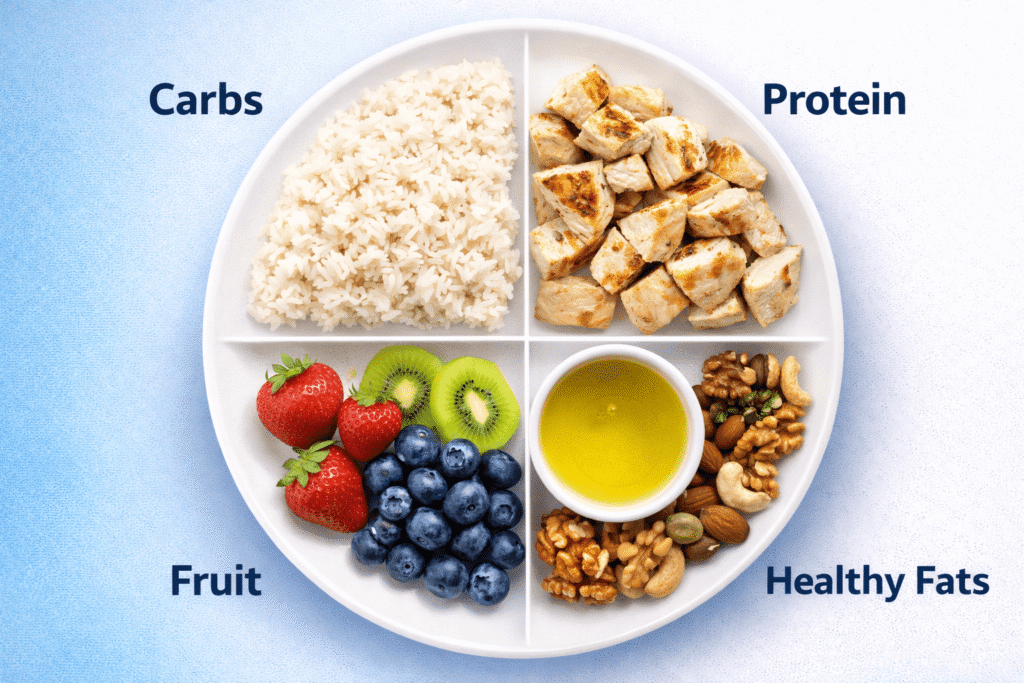
Ideal Smart plateStructure:
- 25% Carbs
- 25% Protein
- 40% Fiber/Vegetables
- 10% Healthy Fats
Adding protein and fiber slows glucose absorption and lowers the glycemic impact.
Example:
- White rice alone → High GL
- Rice + chicken + salad → Lower GL
The Smart Plate helps you achieve this balance easily.
Pakistani Foods and the Smart Plate Advantage
One of the biggest challenges is managing traditional meals.
The Smart plateincludes common Pakistani foods such as:
Carbs
- White rice
- Brown rice
- Roti
- Naan
- Biryani
Proteins
- Chicken
- Beef
- Lentils (Daal)
- Chickpeas
Fiber
- Spinach
- Okra
- Cucumber
- Bitter gourd
Fats
- Olive oil
- Desi ghee
- Nuts
This makes the tool practical for daily local diets.
Who Should Use the Smart Plate?
The Smart plateis useful for:
- Type 2 diabetes patients
- Prediabetic individuals
- Weight loss seekers
- Health-conscious families
- Fitness enthusiasts
Even people without diabetes can use it to maintain stable energy levels.
Benefits of Monitoring Glycemic Load Before Eating
Stable Blood Sugar Levels
Reduces sudden glucose spikes and crashes.
Better Weight Control
Low-GL meals keep you full longer.
Reduced Risk of Complications
Helps prevent:
- Nerve damage
- Heart disease
- Kidney problems
Improved Energy
Balanced meals prevent fatigue and mood swings.
How the Traffic Light System Helps Decision Making
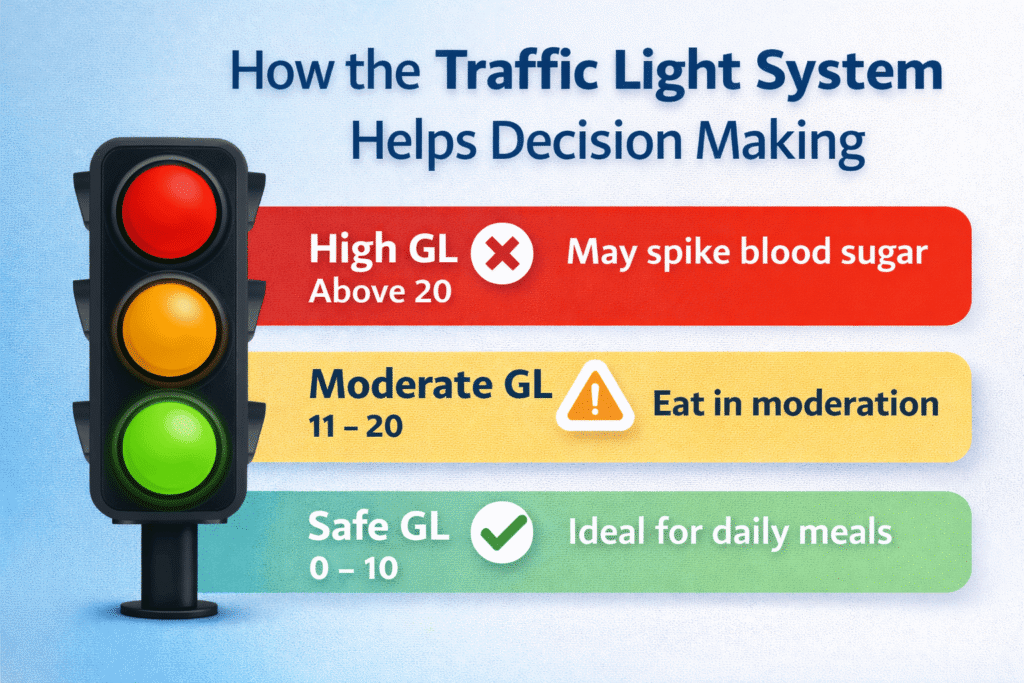
The traffic light is the most powerful feature.
Green (0–10)
Safe to eat. Ideal for daily meals.
Yellow (11–20)
Eat in moderation. Reduce portion or add vegetables.
Red (Above 20)
High risk. Consider:
- Reducing carbs
- Adding protein/fiber
- Choosing a healthier alternative
This instant visual warning helps users make smarter choices.
Practical Example: Using the Smart Plate
Meal Example 1:
- White rice (200g)
- No vegetables
- GL → High (Red)
Meal Example 2:
- Rice (100g)
- Chicken (100g)
- Salad (100g)
- GL → Moderate or Safe
The tool shows the difference immediately, helping you adjust your meal.
Why Portion Size Matters More Than You Think
Many people eat healthy foods but in large quantities.
Even healthy foods like:
- Brown rice
- Fruits
- Lentils
Can raise blood sugar if overeaten.
The Smart plateensures portion control by calculating GL based on grams.
How Smart Plate Helps in Long-Term Diabetes Management
Consistency is key in diabetes control.
Using the Smart plateregularly helps:
- Build healthy eating habits
- Understand food effects
- Reduce dependence on strict diet charts
- Improve HbA1c levels over time
It turns healthy eating into a simple daily routine.
Smart Plate vs Traditional Diet Plans
| Traditional Diet | Smart Plate |
| Fixed meal plans | Flexible choices |
| Hard to follow | Easy and visual |
| No instant feedback | Real-time GL |
| Generic advice | Personalized meals |
This flexibility makes the Smart platemore practical for modern lifestyles.
Tips to Get the Best Results from the Safe Plate
Using a Safe Plate or Smart Plate tool is simple, but a few smart habits can make it far more effective for controlling blood sugar and maintaining long-term health. Follow these practical tips to get the most accurate and beneficial results.
1. Always Measure Approximate Serving Sizes
One of the biggest reasons for high glycemic load is portion size, not just the type of food. Even healthy foods can raise blood sugar if eaten in large amounts.
- Use household measures like cups, spoons, or your hand as a guide.
- For example:
- Rice: ½ to 1 cup cooked
- Roti: 1 medium size
- Meat or chicken: palm-sized portion
- Entering accurate gram values in the tool ensures the glycemic load calculation reflects your real meal.
When you guess portions, the results may not represent your actual blood sugar impact.
2. Increase Fiber in Every Meal
Fiber is your best friend for blood sugar control. It slows down digestion and reduces the speed at which glucose enters the bloodstream.
Try to include at least one fiber-rich option in every meal:
- Salad (cucumber, carrot, cabbage)
- Leafy vegetables (spinach, methi, saag)
- Beans and lentils
- Fruits like apple, guava, or berries
When you add fiber in the Safe Plate tool, you’ll often see the total glycemic load decrease, moving your meal closer to the green (safe) zone.
3. Avoid Large Carb Portions
Carbohydrates have the biggest effect on glycemic load. Even healthy carbs like brown rice or whole wheat roti can raise GL if the portion is too large.
Smart carb control tips:
- Limit rice to ½–1 cup per meal
- Stick to 1–2 rotis instead of 3–4
- Avoid combining multiple carb sources (e.g., rice + roti + potatoes in the same meal)
When you reduce carb quantity in the tool, you’ll notice the traffic light shifting from red to yellow or green.
4. Aim for Green GL Meals Most of the Time
The traffic light system is designed to guide your daily choices:
- Green (0–10 GL): Safe, balanced meal
- Yellow (11–20 GL): Moderate, eat with portion awareness
- Red (Above 20 GL): High risk, may spike blood sugar
You don’t need perfection, but your goal should be:
- Most meals in green
- Occasional yellow meals
- Avoid red meals regularly
Over time, this habit helps improve blood sugar control, weight management, and energy levels.
5. Use the Tool Before Main Meals
The best way to benefit from the Safe Plate is to plan before you eat, not after.
Use it:
- Before lunch or dinner
- While deciding portion sizes
- When trying a new meal combination
- During meal prep
This allows you to:
- Adjust carbs before cooking
- Add vegetables or protein if GL is high
- Make quick corrections that prevent blood sugar spikes
Think of the tool as a meal decision assistant, not just a calculator.
Bonus Tip: Balance All Four Plate Sections
For the best results, try to fill your plate like this:
- ¼ Carbs
- ¼ Protein
- ½ Fiber/Vegetables
- Small amount of Healthy Fats
This natural balance almost always keeps your glycemic load in the safe range.
Consistency will give the best results.
Conclusion
Managing diabetes does not have to be complicated. With the right guidance and tools, you can take control of your health without giving up your favorite foods.
The Smart Plate is a simple yet powerful solution that helps you monitor Glycemic Load before you eat, build balanced meals, and prevent dangerous blood sugar spikes. By combining visual guidance, real-time calculation, and a user-friendly traffic light system, it turns healthy eating into an easy daily habit.
Whether you are living with diabetes, managing prediabetes, or simply trying to eat healthier, the Smart Plate empowers you to make smarter food choices with confidence. Start using a Smart plate today, and take the first step toward stable blood sugar, better energy, and long-term health.
Frequently Asked Questions (FAQs)
1. What is a Smart Plate or Safe Plate?
A Smart Plate (Safe Plate) is a digital meal planning tool that helps you build balanced meals and calculate the Glycemic Load (GL) before eating. It shows whether your meal is safe, moderate, or high risk for blood sugar using a traffic light system.
2. How does the Smart Plate help control blood sugar?
The Smart Plate calculates the total glycemic load of your meal based on:
- Food type
- Glycemic Index (GI)
- Carbohydrate content
- Serving size
This helps you adjust portions or add protein and fiber to prevent sudden blood sugar spikes.
3. What is a safe Glycemic Load for a meal?
Generally:
- 0–10 → Safe (Low impact on blood sugar)
- 11–20 → Moderate (Eat carefully)
- Above 20 → High (May spike blood sugar)
The goal is to keep most meals in the green zone.
4. Can I use the Smart Plate if I don’t have diabetes?
Yes. The Safe Plate is useful for:
- Prediabetes management
- Weight loss
- Healthy eating
- Stable energy levels
Anyone who wants to eat balanced meals can benefit from it.
5. Does the Smart Plate include Pakistani foods?
Yes. The tool is designed to include common Pakistani foods such as roti, rice, daal, chicken, vegetables, and traditional items, making it practical for daily local meals.
6. Why is Glycemic Load more important than Glycemic Index?
The Glycemic Index (GI) only tells how fast a food raises blood sugar.
Glycemic Load (GL) considers both:
- The GI
- The actual portion size
This makes GL a more accurate way to measure the real impact of your meal.
7. How often should I use the Smart Plate?
For best results, use the Smart Plate:
- Before main meals
- When trying new foods
- While planning portion sizes
Regular use helps you develop healthy eating habits over time.
8. Can the Smart Plate help with weight management?
Yes. Low-GL meals keep you full longer and reduce cravings. This supports healthy weight loss and better metabolism.
9. What should I do if my meal shows a high Glycemic Load?
If your plate turns red:
- Reduce the carb portion
- Add more vegetables or fiber
- Include protein or healthy fats
- Choose a lower-GI alternative
Small changes can quickly bring your meal into a safer range.
10. Is the Smart Plate a replacement for medical advice?
No. The Smart Plate is a support tool, not a medical diagnosis or treatment. Always follow your doctor’s advice for medication and medical management.
11. Can the Smart Plate improve long-term diabetes control?
Yes. Consistently eating low-GL meals can help:
- Maintain stable blood sugar
- Reduce glucose fluctuations
- Improve long-term markers like HbA1c
It supports better diabetes management when used regularly.
12. What makes the Smart Plate different from traditional diet plans?
Unlike fixed diet charts, the Smart Plate:
- Allows flexible food choices
- Gives instant feedback
- Adjusts to your portion size
- Provides visual guidance
This makes healthy eating easier and more sustainable.