
Managing diabetes is no longer limited to avoiding sugar or skipping favorite foods. Today, smart planning, portion control, and understanding glycemic load are the real keys to stable blood sugar. This is exactly where a Diabetic Meal Planner Calculator becomes a powerful and practical tool.
If you are living with diabetes, prediabetes, insulin resistance, or simply want better blood sugar control, this detailed guide will help you understand what a diabetic meal planner calculator is, how it works, what outputs it provides, and how to use it effectively in daily life.
This article is written specifically to help you make informed decisions and to serve as a complete resource for anyone searching for a diabetic meal planner, diabetic meal planner free, diabetes food list and meal planner, or a 7 day diabetic meal planner.
Table of Contents
What Is a Diabetic Meal Planner Calculator?
A Diabetic Meal Planner Calculator is a digital tool designed to help people with diabetes plan meals based on:
- Daily calorie needs
- Carbohydrate limits
- Glycemic load per meal
- Body metrics like weight, height, age, and activity level
Unlike traditional meal plans that only focus on calories, this calculator goes a step further by considering glycemic load (GL)—a crucial factor in blood sugar management.
In simple words, it answers questions like:
- How much should I eat?
- How many carbs are safe for me?
- How much food can I eat per meal without spiking blood sugar?
Why a Diabetic Meal Planner Is Essential for Blood Sugar Control
Many people with diabetes struggle not because of what they eat, but because of how much and how often they eat. A diabetic meal planner solves this problem by bringing structure and clarity.
Key benefits include:
- Better post-meal blood sugar control
- Reduced glucose spikes
- Improved insulin sensitivity
- Easier weight management
- Long-term diabetes control
A meal planner calculator turns confusing nutrition advice into clear numbers and actionable guidance.

Understanding Glycemic Load: The Foundation of This Calculator
Before using a diabetic meal planner calculator, it’s important to understand glycemic load.
What Is Glycemic Load (GL)?
Glycemic load measures:
- How fast carbohydrates raise blood sugar
- How much carbohydrate is present in a serving
Unlike glycemic index (GI), glycemic load reflects real-world eating.
Why Glycemic Load Matters for Diabetics
- High GL meals cause blood sugar spikes
- Low GL meals release glucose slowly
- Consistent low GL eating improves HbA1c levels
That’s why this calculator sets a maximum glycemic load per meal, making it far more effective than standard calorie calculators.
Who Should Use a Diabetic Meal Planner Calculator?
This tool is useful for:
- Type 2 diabetes patients
- Prediabetics
- People with insulin resistance
- Overweight or obese individuals
- Anyone following a low glycemic diet
It is especially helpful if you:
- Eat traditional South Asian foods
- Consume roti, rice, lentils, or paratha
- Want portion control without starving
How the Diabetic Meal Planner Calculator Works (Step-by-Step)
Let’s break down how this calculator works in a simple and user-friendly way.
Step 1: Enter Personal Details
The calculator typically asks for:
- Age
- Gender
- Height
- Weight
- Activity level
These details help calculate Basal Metabolic Rate (BMR) and daily energy needs.
Step 2: BMI Calculation
Body Mass Index (BMI) is calculated automatically.
BMI helps determine:
- Whether you are underweight, normal, overweight, or obese
- Whether calorie intake should be reduced or maintained
This step ensures personalized results instead of generic advice.
Step 3: Daily Calorie Requirement
Based on your BMI and activity level, the calculator estimates your daily calorie requirement.
For example:
- Sedentary individuals need fewer calories
- Active individuals need more calories
Calories are adjusted carefully to avoid sudden blood sugar fluctuations.
Step 4: Daily Carbohydrate Limit
This is one of the most critical outputs.
The calculator:
- Allocates a safe percentage of calories from carbohydrates
- Converts calories into grams of carbs
This helps prevent excessive carb intake, which is the biggest trigger for high blood sugar.
Step 5: Meals Per Day
You can choose:
- 3 meals per day
- Or 3 meals + snacks
The calculator divides calories and carbs evenly to maintain blood sugar stability.
Step 6: Maximum Glycemic Load Per Meal
This feature makes the calculator unique.
It defines:
- Maximum glycemic load per meal (for example, GL ≤ 7)
- A safe total daily glycemic load
This prevents overeating high-carb foods even if calories look “acceptable.”
Outputs of the Diabetic Meal Planner Calculator Explained
Many users see numbers but don’t understand what they mean. Let’s explain each output clearly.
1. BMI Result – What Does This Mean?
Body Mass Index (BMI) is a numerical value that helps classify body weight status based on height and weight. It is widely used in clinical and nutritional settings to assess metabolic risk, especially for conditions like insulin resistance, prediabetes, and type 2 diabetes.
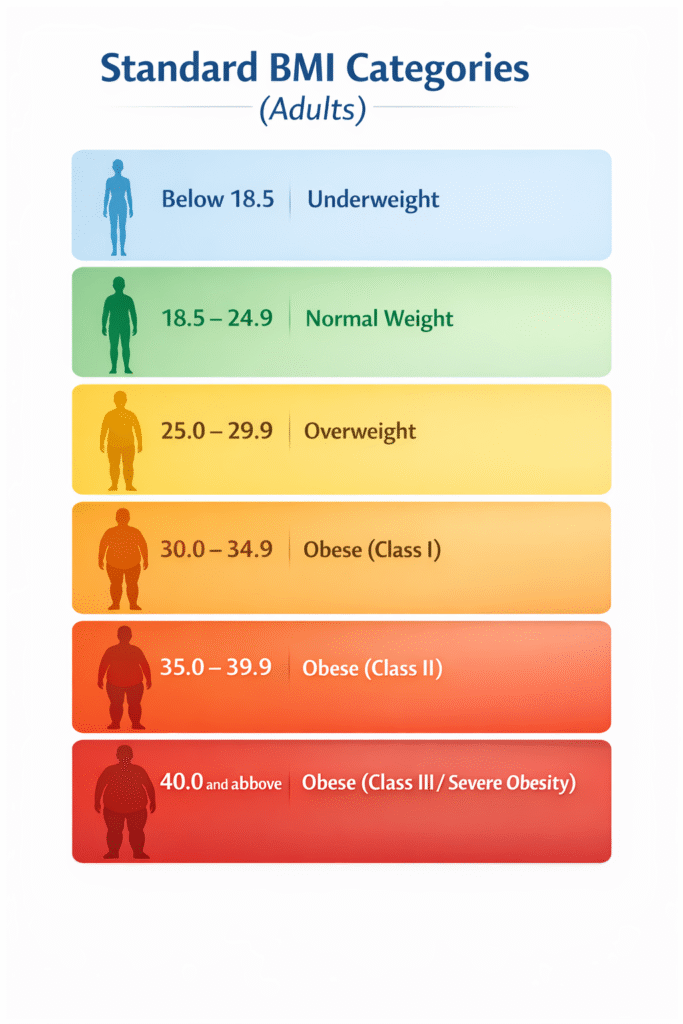
Standard BMI Categories (Adults)
| BMI Value | Category |
|---|---|
| Below 18.5 | Underweight |
| 18.5 – 24.9 | Normal weight |
| 25.0 – 29.9 | Overweight |
| 30.0 – 34.9 | Obese (Class I) |
| 35.0 – 39.9 | Obese (Class II) |
| 40.0 and above | Obese (Class III / Severe Obesity) |
Each BMI range carries different implications for blood sugar control, insulin sensitivity, and portion size decisions.
BMI Below 18.5 – Underweight
A BMI below 18.5 suggests insufficient body weight.
What This Means
- Lower energy reserves
- Possible nutrient deficiencies
- Risk of unstable blood sugar due to inadequate intake
For Glucose Control
- Blood sugar may drop easily (hypoglycemia risk)
- Careful, nutrient-dense weight gain may be required
- Portion sizes should increase gradually, not through sugar or refined carbs
BMI 18.5 – 24.9 – Normal BMI
A BMI between 18.5 and 24.9 is considered healthy and metabolically favorable.
What This Means
- Good insulin sensitivity
- Easier blood sugar control
- Lower risk of type 2 diabetes
For Glucose Control
- Blood sugar rises are usually more predictable
- Smaller insulin response is needed after meals
- Portion sizes are easier to manage
👉 Goal: Weight maintenance, not loss
👉 Focus: Balanced meals, consistent portions, quality carbohydrates
BMI 25.0 – 29.9 – Overweight
A BMI between 25 and 29.9 indicates excess body weight and early metabolic stress.
What This Means
- Beginning of insulin resistance
- Increased fat storage, especially around the abdomen
- Higher post-meal blood sugar spikes
For Glucose Control
- Carbohydrates raise blood sugar more quickly
- Larger portions worsen insulin resistance
👉 Goal: Gradual weight loss
👉 Focus: Portion reduction, low glycemic load foods, controlled carbs
BMI 30.0 – 34.9 – Obese (Class I)
A BMI 30 or above confirms obesity, which significantly impacts metabolism.
What This Means
- Clear insulin resistance
- Increased insulin demand
- Higher risk of diabetes, fatty liver, and heart disease
For Glucose Control
- Frequent sugar spikes after meals
- Delayed return to normal glucose levels
👉 Goal: Structured weight loss
👉 Focus: Strict portion control, reduced refined carbs, higher protein & fiber
BMI 35.0 – 39.9 – Obese (Class II)
This BMI range reflects advanced metabolic stress.
What This Means
- Severe insulin resistance
- Difficulty losing weight
- Appetite and fullness signals become unreliable
For Glucose Control
- Blood sugar remains elevated for longer periods
- Higher medication or insulin needs may occur
👉 Goal: Medically guided weight loss
👉 Focus: Small portions, meal timing, very low glycemic load meals
BMI 40.0 and Above – Obese (Class III / Severe Obesity)
A BMI of 40+ is associated with very high metabolic risk.
What This Means
- Extremely high insulin resistance
- Pancreatic stress
- Very high diabetes and cardiovascular risk
For Glucose Control
- Even small carbohydrate portions can raise blood sugar sharply
- Portion size control becomes critical, not optional
👉 Goal: Aggressive but safe weight reduction
👉 Focus: Strict portion sizing, professional dietary planning, lifestyle restructuring
How BMI Helps Guide Portion Size Decisions
BMI directly answers “How much should I eat?”
- Higher BMI → smaller portions needed
- Lower BMI → greater portion flexibility
- Normal BMI → balanced portions for maintenance
BMI tells you whether weight loss, maintenance, or careful gain is required.
2. Daily Calories – What Does This Mean?
This is the total energy your body needs per day.
Eating more than this can:
- Increase weight
- Increase insulin resistance
Eating less (in a controlled way) can:
- Improve blood sugar
- Support weight loss
3. Daily Carbohydrate Limit – What Does This Mean?
This is the maximum safe carb intake per day.
It includes carbs from:
- Roti
- Rice
- Lentils
- Fruits
- Milk
This helps prevent accidental overconsumption.
4. Meals Per Day – What Does This Mean?
This tells you:
- How to distribute calories
- How to spread carbs evenly
Balanced meals prevent sudden glucose spikes.
5. Maximum Glycemic Load Per Meal – What Does This Mean?
This is the most important number.
It ensures:
- Each meal stays blood-sugar friendly
- No single meal overloads glucose
Even healthy foods must stay within this limit.
6. Safe Total Daily Glycemic Load – What Does This Mean?
Safe Total Daily Glycemic Load (GL) refers to the combined glycemic impact of all foods consumed throughout the entire day. Instead of looking at blood sugar response from a single food or one meal, this concept focuses on the overall glucose exposure your body experiences in 24 hours.
This is important because blood sugar control is not decided by one meal alone—it is the sum of all meals, snacks, and beverages that determines whether glucose levels remain stable or fluctuate excessively.
Why Safe Total Daily Glycemic Load Matters
Maintaining a safe daily glycemic load ensures that:
- Overall daily glucose exposure stays controlled
- Fasting blood sugar remains stable the next morning
- Post-meal glucose spikes are reduced
- Insulin demand on the pancreas stays manageable
When daily glycemic load is too high, even “small” meals can contribute to cumulative glucose overload, leading to persistently elevated blood sugar levels.
Impact on Fasting and Post-Meal Readings
A controlled total daily GL helps:
- Prevent high fasting glucose, which often reflects what was eaten the previous day
- Reduce post-meal spikes, especially after lunch and dinner
- Improve overnight glucose stability
In contrast, a high daily glycemic load often results in:
- Morning hyperglycemia
- Sugar crashes followed by hunger
- Increased insulin resistance over time
Planning the Entire Day, Not Just One Meal
Safe Total Daily Glycemic Load helps you distribute carbohydrates wisely across the day rather than consuming most of them in one or two meals.
For example:
- A low-GL breakfast allows flexibility later
- A high-GL lunch requires compensation at dinner
- Repeated moderate-GL meals are safer than one large spike
This approach encourages balanced meal planning, mindful portion sizes, and strategic food choices throughout the day.
Long-Term Benefits of Staying Within a Safe Daily GL
Consistently maintaining a safe total daily glycemic load:
- Improves long-term blood sugar control
- Supports weight management
- Reduces insulin resistance
- Lowers the risk of diabetes-related complications
Rather than focusing on restriction, it promotes smart distribution and awareness.
Diabetic Food List Used in the Meal Planner
A good diabetes food list and meal planner focuses on low glycemic load foods.
Recommended Foods
- Whole wheat roti (limited portion)
- Jowar, bajra, barley roti
- Lentils (moong, masoor, chana dal)
- Non-starchy vegetables
- Eggs, fish, chicken
- Yogurt and curd
Foods to Limit
- White rice
- Refined flour
- Sugar and sweets
- Bakery items
- Sugary drinks
This calculator helps control quantity, not just food choice.
Diabetic Meal Planning Calculator
7-Day Diabetic Meal Planner Example (Calculator-Based)
Using a 7 day diabetic meal planner becomes easier with calculator guidance.
Each day includes:
- Balanced breakfast
- Controlled lunch
- Low GL dinner
Portions are adjusted to stay within:
- Daily carbs
- Per-meal glycemic load
This removes guesswork and confusion.
Why a Diabetic Meal Planner Calculator Is Better Than Manual Planning
Manual planning requires:
- Nutrition knowledge
- Carb counting skills
- Glycemic load understanding
A calculator:
- Automates complex math
- Reduces mistakes
- Saves time
It’s ideal for beginners and advanced users alike.
Diabetic Meal Planner Free vs Paid Tools
Many people search for a diabetic meal planner free, and rightly so.
Free tools are useful for:
- Education
- Awareness
- Daily planning
Paid tools may add:
- App tracking
- Food logging
- Coaching
But a well-designed free calculator is enough for most users.
Common Mistakes People Make Without a Meal Planner
Without proper planning, people often:
- Eat “healthy” foods in excess
- Underestimate carbs
- Ignore glycemic load
- Skip meals and overeat later
A diabetic meal planner calculator prevents these mistakes.
How This Calculator Supports Long-Term Diabetes Control
Consistent use can help:
- Lower HbA1c
- Improve fasting glucose
- Reduce medication dependence (with doctor guidance)
- Build sustainable eating habits
Small daily decisions create big long-term results.
Frequently Asked Questions (FAQ)
What is the best diabetic meal planner?
The best diabetic meal planner is one that considers calories, carbohydrates, and glycemic load, not just food lists.
Is a diabetic meal planner calculator accurate?
Yes, when based on scientific formulas and glycemic load principles, it provides reliable guidance.
Can I use a diabetic meal planner for weight loss?
Absolutely. Controlled calories and low glycemic load support healthy weight loss.
Is this suitable for type 2 diabetes?
Yes, it is especially effective for type 2 diabetes and prediabetes.
Do I still need to count carbs manually?
No. The calculator simplifies carb management and portion control.
Can vegetarians use this diabetic meal planner?
Yes. Lentils, vegetables, dairy, and plant proteins are easily included.
Final Conclusion
A Diabetic Meal Planner Calculator is more than just a nutrition tool—it is a daily decision-making guide for better blood sugar control. By combining calories, carbohydrates, and glycemic load into one smart system, it empowers people with diabetes to eat confidently, consistently, and safely.
Instead of guessing portions or fearing food, this calculator brings clarity, balance, and structure to daily meals. Whether you are newly diagnosed or managing diabetes for years, using a diabetic meal planner can be a life-changing step toward long-term health and stability.
When used correctly and consistently, it transforms eating from a challenge into a controlled, stress-free routine—one meal at a time.