
Choline rich foods for diabetes can be an important part of a balanced eating pattern, especially for people who want to obtain this essential nutrient from everyday foods. Choline is needed for normal cell structure, neurotransmitter production, lipid transport and metabolism, and several other biological functions. The body can make some choline, but this does not necessarily provide all the choline a person needs, so dietary sources remain important.
For people with diabetes, however, choosing foods based only on their choline content is not enough. The amount of carbohydrate, portion size, fiber, food preparation, and overall meal composition can also influence the blood glucose response.
This is particularly important when comparing foods such as potatoes, grains, legumes, nuts, seeds, and vegetables. Some foods can provide useful amounts of choline while contributing relatively little carbohydrate, whereas others contain more carbohydrate and may have a higher glycemic load when eaten in larger portions.
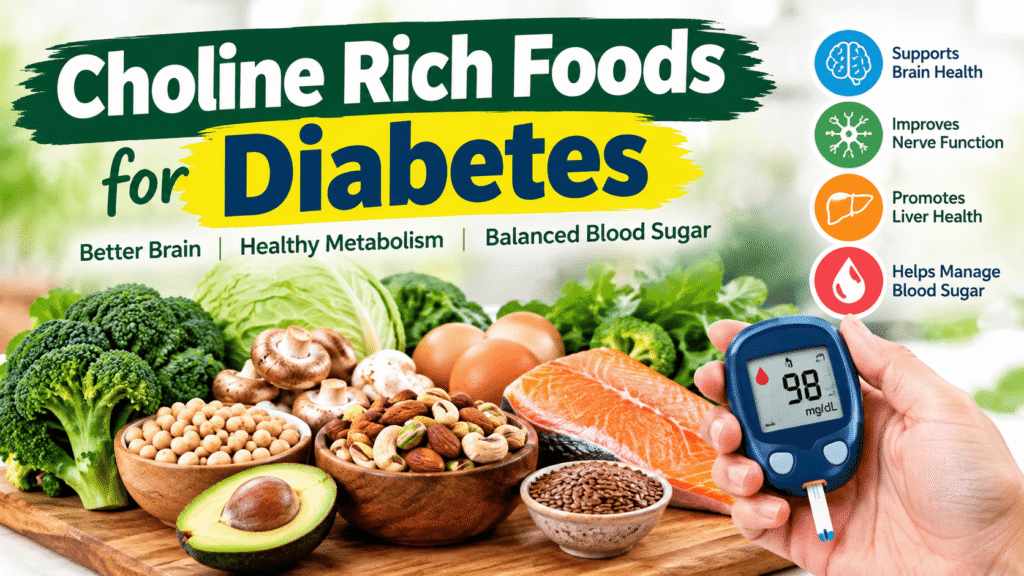
In this guide, we will look at choline rich foods for diabetes, with particular attention to vegetarian and plant-based sources, glycemic load, portion size, and practical ways to include these foods in a diabetes-conscious eating pattern.
Table of Contents
What Is Choline?
Choline is an essential nutrient that is naturally present in many foods and is also available in some dietary supplements.
The body uses choline to make phosphatidylcholine and sphingomyelin, which are important components of cell membranes. Choline is also required to produce acetylcholine, a neurotransmitter involved in memory, mood, muscle control, and other nervous-system functions. It also participates in lipid metabolism, cell signaling, and gene regulation.
Although the liver can produce some choline, the amount produced by the body is not considered sufficient to meet human requirements in all circumstances. This is why dietary sources of choline are important.
Choline is found in both animal and plant foods. Eggs, meat, poultry, fish, and dairy products can provide substantial amounts, while plant sources include certain beans, nuts, seeds, potatoes, cruciferous vegetables, and whole grains.
How Much Choline Do You Need Per Day?
Choline requirements depend on age and sex.
According to the U.S. National Institutes of Health Office of Dietary Supplements, the adequate intake for adults is 550 mg per day for men and 425 mg per day for women. Requirements are different during pregnancy and breastfeeding.
| Group | Adequate Intake of Choline |
| Adult men | 550 mg/day |
| Adult women | 425 mg/day |
| Pregnant women | 450 mg/day |
| Breastfeeding women | 550 mg/day |
| Boys 14–18 years | 550 mg/day |
| Girls 14–18 years | 400 mg/day |
These figures are population-level recommendations, not a prescription for an individual person.
It is also important to distinguish normal dietary intake from high-dose supplementation. The established upper intake level for adults is 3,500 mg per day from all sources, including food and supplements. Excessive choline intake can cause adverse effects such as low blood pressure, sweating, vomiting, and a fishy body odor.
For most people, the practical goal should be to obtain choline through a varied diet rather than attempting to consume very large quantities of a single food.
Why Should People With Diabetes Think About Glycemic Load?
If you have diabetes, choline is only one part of the nutritional picture.
A food may contain a useful amount of choline but also provide a substantial amount of digestible carbohydrate. This is where glycemic load, or GL, can provide additional context.
The glycemic index, or GI, describes how carbohydrate-containing foods affect blood glucose compared with a reference food. Glycemic load takes both the food’s glycemic index and the amount of available carbohydrate in a particular portion into account.
A commonly used classification is:
| Glycemic Load | Classification |
| 10 or less | Low |
| 11–19 | Medium |
| 20 or more | High |
These categories are useful for understanding carbohydrate impact, but they should not be interpreted as a guarantee of an individual’s blood glucose response.
Portion size matters. The same food can have a different glycemic load depending on how much you eat.
This is why saying that a particular food is simply “good” or “bad” for diabetes can be misleading.
1. Broccoli: A Choline-Rich Vegetable
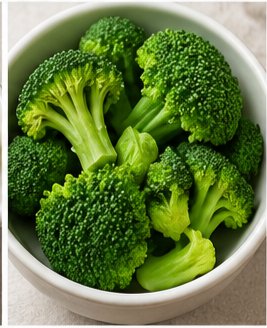
Broccoli is one of the plant foods that can contribute choline to the diet while also providing fiber and other nutrients.
Because broccoli is a non-starchy vegetable, a normal serving generally provides considerably less carbohydrate than a serving of grains or potatoes.
The NIH specifically lists broccoli among plant foods that provide choline.
For someone with diabetes, broccoli can therefore be a practical way to increase vegetable intake while adding some dietary choline.
Try steamed or lightly cooked broccoli as part of a meal containing a protein source and a controlled portion of carbohydrate.
2. Cauliflower: Choline With Very Little Carbohydrate
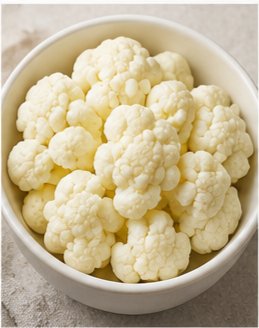
Cauliflower is another cruciferous vegetable that provides choline.
The NIH lists boiled cauliflower as a source of choline, with approximately 24 mg in a half-cup serving.
Cauliflower is also naturally relatively low in carbohydrate, making it easy to include in meals where carbohydrate portions need to be considered.
You can use cooked cauliflower as a vegetable side dish, add it to mixed vegetable dishes, or combine it with other non-starchy vegetables.
3. Cabbage
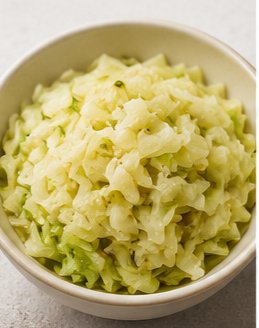
Cabbage is inexpensive, widely available, and easy to include in everyday meals.
Boiled cabbage is listed by the NIH as a source of choline, with approximately 15 mg in a half-cup serving.
For people in South Asian countries, cabbage can be especially practical because it can be incorporated into familiar vegetable dishes rather than requiring a completely different style of eating.
However, the way cabbage is prepared matters. A vegetable dish cooked with large amounts of oil, potatoes, or refined carbohydrates can have a very different nutritional profile from a simple cabbage-based dish.
4. Green Peas
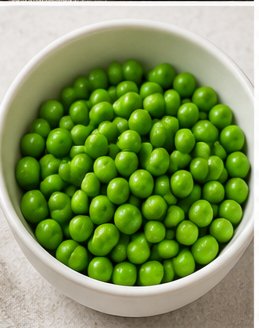
Green peas provide both choline and carbohydrate.
The NIH lists boiled green peas as a source of choline, with approximately 24 mg in a half-cup serving.
Unlike non-starchy vegetables, peas contribute a meaningful amount of carbohydrate, so portion size still matters for someone monitoring blood glucose.
That does not mean peas need to be avoided. Instead, consider them as part of the carbohydrate-containing portion of a balanced meal.
5. Potatoes

Potatoes deserve special attention because they provide choline but are also a significant source of starch.
The NIH includes potatoes among plant foods that provide choline.
For people with diabetes, the issue is not simply whether potatoes contain choline. The more useful questions are:
- How much potato are you eating?
- How is it prepared?
- What else is on the plate?
- Are you eating it alongside protein, vegetables, and fiber?
- How does your own blood glucose respond?
Harvard’s Nutrition Source lists baked potato among foods that can have a high glycemic load depending on the serving.
Therefore, potatoes can provide useful nutrients, but they should not automatically be considered a low-glycemic food simply because they contain choline.
6. Brussels Sprouts
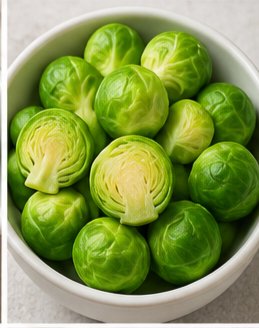
Brussels sprouts are another cruciferous vegetable that can contribute choline.
The NIH specifically includes Brussels sprouts among plant foods containing choline.
They can be roasted, steamed, or incorporated into mixed vegetable dishes.
For people with diabetes, non-starchy vegetables such as Brussels sprouts can be useful because they allow you to add volume and variety to meals without relying heavily on carbohydrate-dense foods.
7. Peanuts
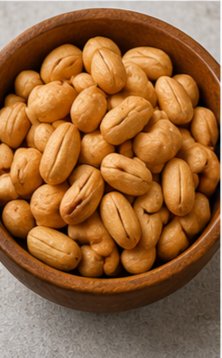
Peanuts are another interesting source of choline.
The NIH lists dry-roasted peanuts among foods containing choline, with approximately 24 mg in a quarter-cup serving.
Peanuts are also relatively low in carbohydrate compared with many grain-based snack foods.
However, peanuts are energy-dense. Therefore, eating large amounts simply because their glycemic load is relatively low can still contribute substantial calories.
A small portion of unsweetened, minimally processed peanuts can be a more practical approach.
8. Flaxseeds
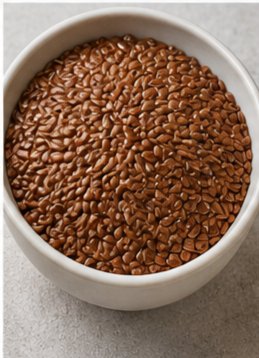
Flaxseeds are particularly useful as a small-portion food because they can be incorporated into meals without requiring a large serving.
They provide fat, fiber, and several micronutrients in addition to contributing choline.
Because seeds are generally eaten in small amounts, their carbohydrate contribution can be relatively modest compared with a large serving of grains or starchy vegetables.
Ground flaxseed can be added to plain yogurt, vegetable dishes, or other appropriate foods.
Remember, however, that adding a nutrient-rich food does not automatically make an otherwise high-carbohydrate meal suitable for diabetes. The entire meal still matters.
9. Soybeans
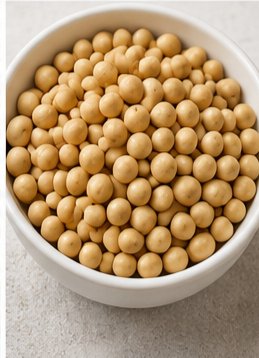
Soybeans are one of the more substantial plant sources of choline.
They are also nutritionally interesting because they provide protein, fat, fiber, and several micronutrients.
Soybeans can be used in different forms, including cooked whole soybeans and traditional soy foods.
For people following vegetarian diets, soy can be particularly useful because it can contribute both protein and choline.
As with other legumes, however, preparation and portion size should be considered when calculating the carbohydrate contribution of a meal.
10. Kidney Beans
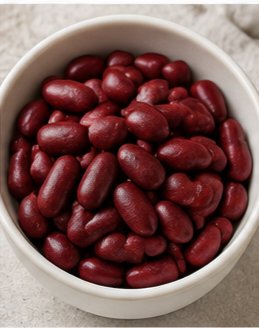
Kidney beans can contribute choline as well as plant protein and dietary fiber.
Beans generally provide a combination of carbohydrate, protein, and fiber rather than functioning like a pure carbohydrate food.
This makes them useful in balanced meals, but their carbohydrate content still needs to be considered by someone monitoring blood glucose.
A practical approach is to use a controlled serving of kidney beans alongside non-starchy vegetables and an appropriate protein source rather than combining a large serving of beans with several other carbohydrate-heavy foods.
11. Oats and Whole Grains
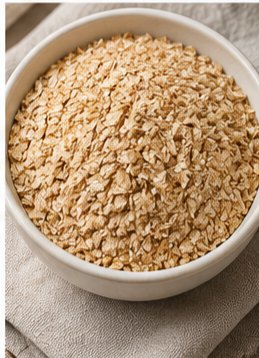
Whole grains can contribute choline, although their carbohydrate content means that portion size remains important for diabetes meal planning.
Oats are a good example.
The glycemic response to oats can vary depending on the type of oats, processing, cooking method, and serving size. Less processed forms generally behave differently from highly processed instant products.
Harvard notes that whole oats generally have a lower glycemic response than many highly processed carbohydrate foods.
Instead of asking whether oats are “good” or “bad” for diabetes, consider the type of oats, portion size, preparation, and what you eat with them.
12. Wheat Germ
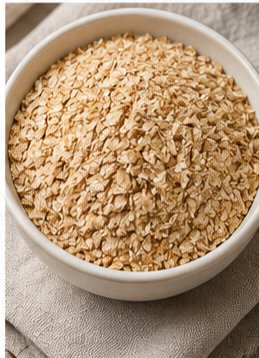
Wheat germ is particularly interesting because it can provide a relatively concentrated source of several nutrients.
It can be added to foods in small quantities, although it is still important to distinguish nutrient density from carbohydrate impact.
If wheat germ is included as part of a meal, the total carbohydrate content of the meal should still be considered.
This is a good example of why the highest amount of a nutrient does not automatically make a food the best choice for everyone with diabetes.
Choline-Rich Vegetarian Foods: Quick Comparison
The following table provides a practical overview. Exact nutrient values can vary according to the food variety, growing conditions, processing, cooking method, and database used.
| Food | Choline contribution | Diabetes consideration |
| Broccoli | Moderate | Low-carbohydrate vegetable |
| Cauliflower | Moderate | Very useful low-carbohydrate vegetable |
| Cabbage | Moderate | Low-carbohydrate vegetable |
| Brussels sprouts | Moderate | Low-carbohydrate vegetable |
| Green peas | Moderate | Contains more carbohydrate; portion matters |
| Potatoes | Provides choline | Higher starch content; portion matters |
| Peanuts | Moderate | Low carbohydrate but energy-dense |
| Flaxseeds | Useful contribution | Small portions can add nutrients and fiber |
| Soybeans | Relatively high | Provides protein, fat, fiber and choline |
| Kidney beans | Useful contribution | Carbohydrate and fiber both need consideration |
| Oats | Useful contribution | Portion and processing matter |
| Wheat germ | Relatively concentrated | Use an appropriate portion |
The table should be viewed as a general nutrition guide rather than a personalized diabetes meal plan.
Which Choline-Rich Foods May Have a Lower Glycemic Load?
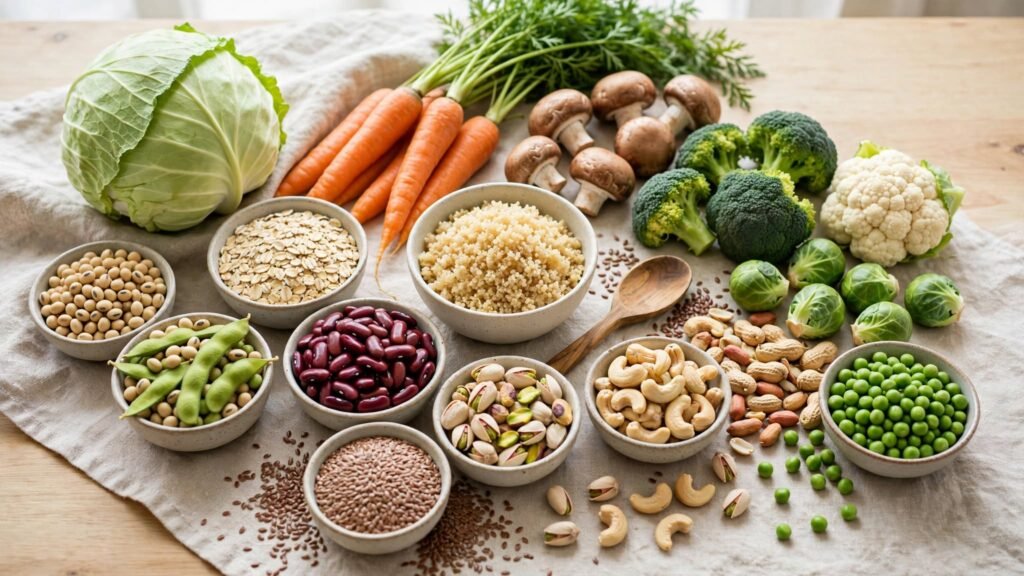
If your goal is to increase choline while keeping the carbohydrate contribution of a meal relatively modest, vegetables and certain nuts and seeds can be useful options.
Examples include:
Broccoli, cauliflower, cabbage, Brussels sprouts, mushrooms, peanuts, and flaxseeds.
Legumes such as kidney beans and soybeans can also fit into a diabetes-conscious diet, but they contain carbohydrates and should be considered as part of the overall carbohydrate intake.
Foods such as potatoes, corn, and grain products require more attention to serving size because they generally contribute more carbohydrate.
This does not mean that potatoes, corn, oats, or whole grains must be eliminated from a diabetes diet. It simply means that portion size and meal composition matter.
Does Choline Lower Blood Sugar?
This is an important question.
Choline is an essential nutrient, but it should not be promoted as a treatment for diabetes or as a blood-sugar-lowering supplement.
The nutritional role of choline is different from the role of carbohydrate management.
When choosing foods for diabetes, it is more useful to consider the complete nutritional profile of the food: carbohydrate, fiber, protein, fat, calories, portion size, and overall meal composition.
The American Diabetes Association emphasizes individualized diabetes management and nutrition rather than treating a single nutrient as the solution to blood glucose management.
Therefore, the goal should be to obtain adequate choline as part of a balanced eating pattern rather than taking large amounts of choline in an attempt to control blood sugar.
How Can Vegetarians Get Enough Choline?
Vegetarians can obtain choline from a variety of plant foods.
Rather than relying on one food, consider combining several sources throughout the day.
For example, a vegetarian eating pattern might include:
- Soybeans or another legume as a protein source
- Broccoli or cauliflower as a vegetable
- Cabbage or Brussels sprouts as another vegetable
- Peanuts or seeds in a controlled portion
- Whole grains or oats in an appropriate serving
The key is dietary variety.
Because different foods provide different nutrients, relying heavily on one food to meet a nutritional requirement is generally less useful than building a varied diet.
Choline and Diabetes: What About Portion Size?
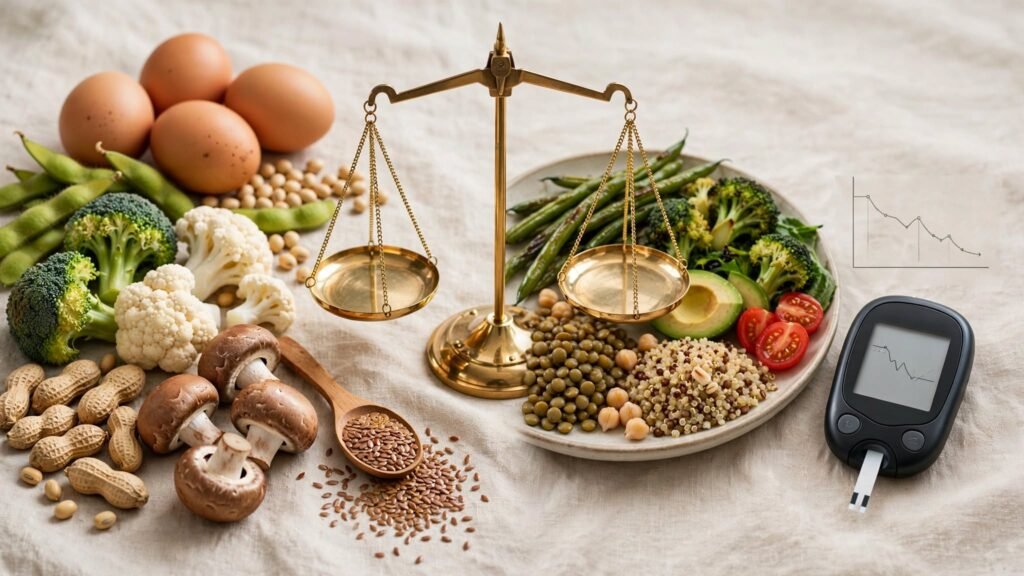
Portion size is one of the most important concepts in this entire discussion.
Imagine two people eating the same food. One eats a small serving while the other eats three times as much. Their carbohydrate exposure and glycemic load will not be identical.
This is why glycemic load can sometimes provide more practical information than looking at glycemic index alone.
Harvard explains that glycemic load incorporates the amount of available carbohydrate in the food rather than looking only at the food’s GI.
For someone with diabetes, therefore, a practical strategy is to ask:
How much am I eating?
rather than only:
Is this food high or low GI?
Does Cooking Change the Glycemic Response?
Yes, preparation can influence the nutritional characteristics of carbohydrate-containing foods.
Processing, cooking, texture, ripeness, and meal composition can all influence how quickly carbohydrate is digested and absorbed.
For example, a whole food eaten with protein, fiber, and fat may produce a different glucose response from the same carbohydrate eaten alone.
This is another reason not to treat a single glycemic-load number as a guaranteed prediction of an individual’s blood glucose response.
People with diabetes can also learn a great deal by monitoring their own glucose response to particular meals, where appropriate and in accordance with their healthcare professional’s advice.
A Practical Choline-Focused Plate for Diabetes
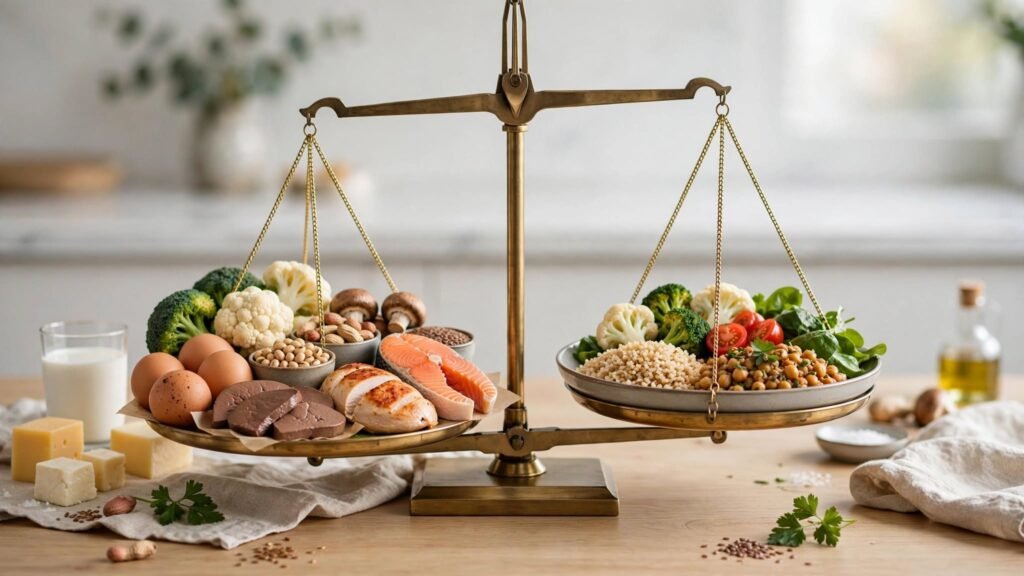
Instead of building a meal around one nutrient, consider building a balanced plate.
For example, a meal could include:
Half the plate: non-starchy vegetables such as broccoli, cauliflower, cabbage, or other vegetables.
A protein source: such as beans, soy foods, eggs, fish, poultry, or another suitable protein depending on dietary preferences.
A controlled carbohydrate portion: such as whole grains, a suitable serving of legumes, or another carbohydrate source.
A small amount of healthy fat: such as nuts or seeds.
This type of approach makes more sense than trying to maximize choline at every meal.
Frequently Asked Questions About Choline Rich Foods for Diabetes
What are the best choline rich foods for diabetes?
There is no single best food for everyone with diabetes. Plant foods such as broccoli, cauliflower, cabbage, Brussels sprouts, soybeans, peanuts, and certain beans and seeds can contribute choline. The appropriate choice depends on the person’s overall diet, carbohydrate needs, portion size, and individual glucose response.
Which vegetables are high in choline?
Vegetables that can contribute choline include broccoli, cauliflower, Brussels sprouts, cabbage, potatoes, and green peas. The amount varies considerably between foods and depends on the serving and preparation method.
Can people with diabetes eat choline-rich foods?
Yes. Having diabetes does not mean that choline-rich foods need to be avoided. The more important consideration is the food’s complete nutritional profile, particularly its carbohydrate content and portion size.
Is broccoli a good source of choline?
Broccoli is a useful plant source of choline and is also a non-starchy vegetable. It can therefore be a practical addition to a balanced diabetes-conscious eating pattern.
Are peanuts high in choline?
Peanuts contain choline. The NIH lists approximately 24 mg of choline in a quarter-cup serving of dry-roasted peanuts.
Are soybeans high in choline?
Yes. Soybeans are among the more substantial plant sources of choline and can also provide protein and other nutrients.
Can choline supplements lower blood sugar?
Choline should not be considered a diabetes treatment or a blood-sugar-lowering supplement. Most people should aim to meet nutrient requirements through a varied diet unless a healthcare professional recommends supplementation.
How much choline does an adult need?
Adult men have an adequate intake of approximately 550 mg per day, while adult women have an adequate intake of approximately 425 mg per day. Pregnancy and breastfeeding have different recommendations.
Is high choline intake always better?
No. More is not necessarily better. Very high choline intakes can cause adverse effects, and the adult upper intake level is 3,500 mg per day from all sources.
What is more important for diabetes: choline or glycemic load?
They answer different nutritional questions. Choline is an essential nutrient, while glycemic load helps describe the potential blood glucose impact of a carbohydrate-containing food or portion. For diabetes meal planning, both the nutrient quality and carbohydrate characteristics of the overall diet matter.
Final Takeaway
Choline rich foods for diabetes do not need to be complicated. Choline is an essential nutrient involved in cell membranes, neurotransmitter production, metabolism, and other important functions, and it can be obtained from a wide variety of foods.
For people with diabetes, however, choosing foods based only on their choline content is not the best approach. Portion size, carbohydrate content, glycemic load, fiber, food preparation, and the overall meal all deserve attention.
Vegetarian foods such as broccoli, cauliflower, cabbage, Brussels sprouts, soybeans, beans, peanuts, flaxseeds, oats, and other whole foods can contribute to dietary choline. Some are particularly useful because they provide choline without contributing large amounts of carbohydrate.
The main lesson is simple: do not chase one nutrient at the expense of the whole diet. Aim for variety, reasonable portions, nutrient-dense foods, and a meal pattern that works with your individual diabetes-management plan.
If you have diabetes and are changing your diet substantially, especially if you use glucose-lowering medication or insulin, discuss major dietary changes with your doctor or registered dietitian.
This article is for educational purposes only and is not a substitute for individualized medical or nutrition advice.