
Introduction
Do you wake up every morning only to find that your blood sugar level is higher than expected? Have you ever eaten a light dinner, avoided sweets, and still discovered that your fasting blood sugar reached 150 mg/dL, 180 mg/dL, or even higher the next morning?
If your answer is yes, you are not alone.
Millions of people with diabetes and prediabetes struggle with elevated fasting blood sugar levels despite making efforts to eat healthy meals. This situation can be frustrating and confusing because many people assume that eating less at night automatically guarantees lower morning glucose levels.
The reality is quite different.
High fasting blood sugar is often influenced by several factors beyond food intake. Hormonal changes, sleep quality, insulin resistance, stress levels, physical activity, and even the body’s natural biological processes can all contribute to elevated morning glucose levels.
The good news is that with the right diet plan for high fasting sugar, proper meal timing, and healthy lifestyle habits, it is possible to significantly improve fasting blood glucose levels and maintain better diabetes control.

In this comprehensive guide, you will learn:
- Why fasting blood sugar rises overnight
- The science behind the Dawn Phenomenon
- Common mistakes that increase morning glucose
- Foods that help stabilize blood sugar
- A complete diet plan for high fasting sugar
- Lifestyle strategies to improve insulin sensitivity
- Tips for long-term diabetes management
Let’s begin by understanding why fasting blood sugar becomes elevated in the first place.
Table of Contents
What Is Fasting Blood Sugar?
Fasting blood sugar refers to the amount of glucose present in your bloodstream after not eating for at least 8 to 10 hours.
Most healthcare professionals recommend checking fasting glucose immediately after waking up in the morning before consuming any food or beverages.
Generally accepted fasting blood sugar ranges are:
- Normal: 70–99 mg/dL
- Prediabetes: 100–125 mg/dL
- Diabetes: 126 mg/dL or higher
For many people with diabetes, maintaining fasting blood sugar between 80 and 130 mg/dL is considered a reasonable target, depending on individual medical advice.
Why Is My Fasting Sugar High Even After Eating a Light Dinner?
One of the biggest misconceptions is that high fasting sugar is always caused by eating too much food at night.
In reality, several biological processes continue while you sleep.
Your body still requires energy during the night. To provide this energy, the liver releases stored glucose into the bloodstream.
Under normal circumstances, insulin regulates this glucose release effectively.
However, when insulin resistance develops or diabetes is present, the liver may release more glucose than necessary, causing elevated fasting blood sugar.
Understanding the Dawn Phenomenon
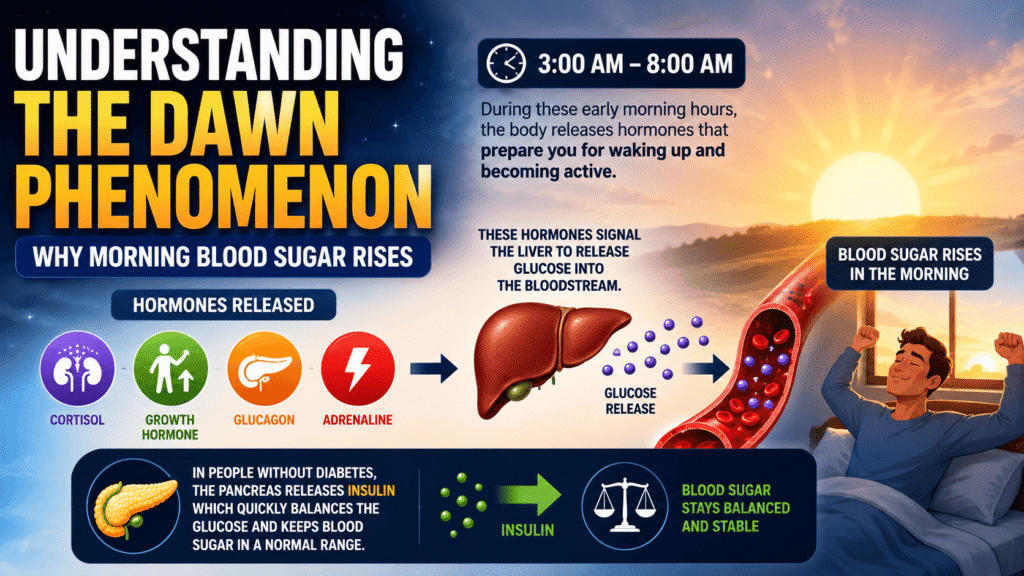
The Dawn Phenomenon is one of the most common reasons for high fasting blood sugar.
During the early morning hours, usually between 3:00 AM and 8:00 AM, the body releases hormones such as:
- Cortisol
- Growth hormone
- Glucagon
- Adrenaline
These hormones prepare the body for waking up and becoming active.
Unfortunately, they also signal the liver to release glucose into the bloodstream.
For people without diabetes, insulin quickly balances this glucose release.
For those with diabetes or insulin resistance, blood sugar levels may rise significantly, resulting in elevated morning readings.
This explains why many people wake up with high blood sugar even when they ate very little the night before.
Late-Night Eating Can Increase Morning Sugar
While hormones play a major role, meal timing also matters.
Eating large meals late at night can contribute to elevated fasting glucose levels.
Foods that commonly worsen morning blood sugar include:
- White rice
- White bread
- Refined flour products
- Sugary desserts
- Sweetened beverages
- Processed snacks
These foods contain rapidly digestible carbohydrates that continue affecting blood glucose levels for several hours.
As a result, glucose remains elevated overnight and may still be high by morning.
The Importance of a Proper Diet Plan for High Fasting Sugar
A carefully designed diet plan for high fasting sugar focuses on:
- Reducing glucose spikes
- Improving insulin sensitivity
- Supporting healthy liver function
- Encouraging stable overnight blood sugar
- Preventing excessive glucose release during sleep
The goal is not starvation.
Instead, it is about choosing the right foods at the right times.
Five Golden Rules to Lower Fasting Blood Sugar
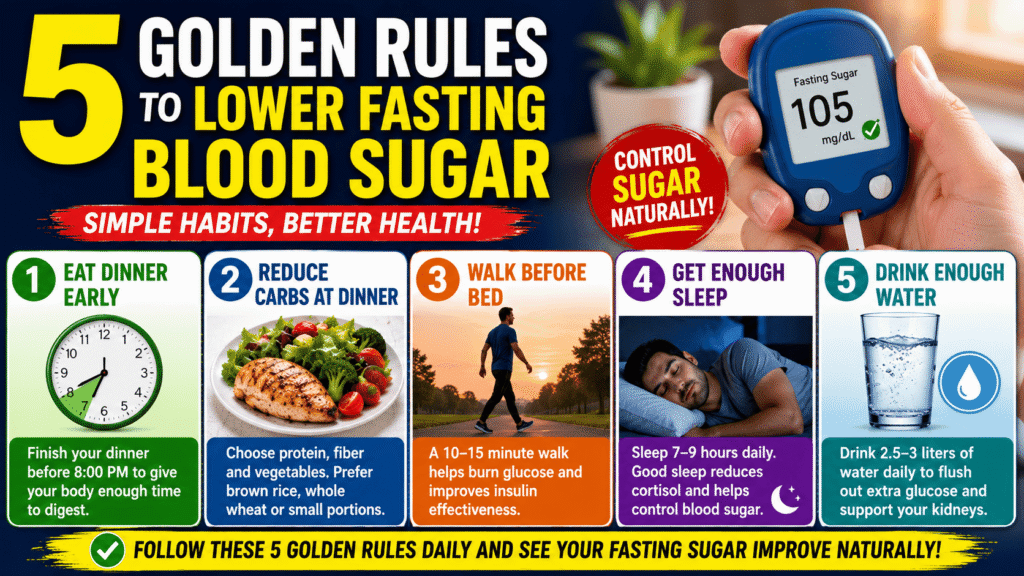
1. Eat Dinner Early
Try to finish dinner before 8 PM whenever possible.
Early dinners give your body sufficient time to digest food before bedtime.
This reduces overnight glucose fluctuations and improves insulin efficiency.
2. Reduce Dinner Carbohydrates
Carbohydrates have the greatest impact on blood sugar.
At dinner, focus more on:
- Lean protein
- Non-starchy vegetables
- Fiber-rich foods
Reduce portions of:
- White rice
- Pasta
- White bread
- Sugary foods
Lower carbohydrate intake at night often leads to better fasting glucose readings.
3. Walk After Dinner
A simple 10 to 15-minute walk after dinner can be surprisingly effective.
Walking helps muscles utilize glucose directly from the bloodstream.
Benefits include:
- Improved insulin sensitivity
- Better glucose utilization
- Lower overnight blood sugar
Even light movement can make a noticeable difference.
4. Prioritize Quality Sleep
Poor sleep can increase insulin resistance.
Sleeping less than six hours may increase cortisol production, which contributes to elevated blood sugar levels.
Aim for:
- 7 to 9 hours of sleep
- Consistent bedtime schedules
- Reduced screen exposure before bed
Good sleep is one of the most overlooked tools for diabetes management.
5. Stay Hydrated
Water supports proper glucose regulation.
Adequate hydration helps:
- Improve kidney function
- Remove excess glucose
- Support metabolic processes
Aim for approximately 2.5 to 3 liters of water daily unless your healthcare provider advises otherwise.
Complete Diet Plan for High Fasting Sugar
Now let’s explore a practical and effective diet plan for high fasting sugar that focuses on low glycemic load foods and balanced nutrition.
Early Morning (Upon Waking)
Start your day with:
- One glass of lukewarm water
- One teaspoon of fenugreek seeds soaked overnight
Fenugreek contains soluble fiber and plant compounds that may support insulin sensitivity and blood sugar management.
This simple morning routine can be a valuable addition to your diabetes-friendly lifestyle.
Healthy Breakfast for Stable Blood Sugar
Breakfast should provide protein and nutrients without causing blood sugar spikes.
Recommended options include:
Option 1
- Two boiled eggs
- Unsweetened green tea
Option 2
- Vegetable omelet made from two eggs
- Green tea or black coffee without sugar
Protein-rich breakfasts help reduce hunger and stabilize blood glucose throughout the day.
Mid-Morning Snack
If hunger develops between breakfast and lunch:
- 20 grams mixed nuts
- Almonds
- Walnuts
- Pistachios
Nuts provide:
- Healthy fats
- Protein
- Fiber
These nutrients help slow glucose absorption and prevent blood sugar fluctuations.
Healthy Dinner Plan for Stable Fasting Sugar
Dinner plays a very important role in controlling morning blood sugar levels. A heavy or carbohydrate-rich dinner can lead to higher fasting glucose, even if your daytime diet is healthy.
A well-designed diet plan for high fasting sugar always includes a light and balanced dinner.
Ideal Dinner Options
A good dinner should include:
- Lean protein (chicken, fish, eggs)
- Non-starchy vegetables (spinach, cabbage, broccoli, cucumber)
- Light soup-based meals
- Small portion of healthy fats
Example Dinner Meal
- Vegetable soup (low salt)
- Grilled chicken or grilled fish
- Fresh salad (cucumber, lettuce, carrots)
This combination is light on digestion and helps prevent overnight glucose spikes.
Foods You Should Avoid for High Fasting Sugar
If you want to improve fasting glucose, certain foods must be limited or avoided, especially at night.
1. Refined Carbohydrates
- White bread
- White rice
- Maida-based foods
- Naan and bakery items
2. Sugary Foods
- Cakes
- Sweets
- Chocolate bars
- Sweetened drinks
3. Processed Foods
- Chips
- Packaged snacks
- Fast food items
These foods increase glucose levels quickly and often lead to high morning readings.
Best Foods to Include in Your Diet Plan for High Fasting Sugar
A good diabetes-friendly diet includes foods that release glucose slowly.
Recommended Foods
- Eggs
- Lentils (dal)
- Chickpeas
- Leafy vegetables
- Nuts and seeds
- Brown rice (in moderation)
- Whole wheat bread (limited quantity)
- Herbal tea
These foods support stable glucose levels and reduce insulin resistance over time.
Role of Exercise in Controlling Fasting Sugar
Exercise is one of the most powerful tools for managing diabetes naturally.
Best Exercises for High Fasting Sugar
- Walking (30 minutes daily)
- Light jogging
- Cycling
- Yoga
- Stretching exercises
Even simple movement improves how your body uses insulin.
Why Exercise Helps
- Burns excess glucose
- Reduces insulin resistance
- Improves metabolism
- Helps liver regulate sugar better
Weight Management and Fasting Blood Sugar
Excess body weight, especially around the abdomen, increases insulin resistance.
Even a small weight loss of 5–10% can significantly improve fasting blood sugar levels.
Tips for Weight Control
- Eat smaller portions
- Avoid late-night eating
- Increase fiber intake
- Stay physically active
- Drink more water
Lifestyle Changes for Better Results
A successful diet plan for high fasting sugar is not only about food. Lifestyle plays an equally important role.
Important Lifestyle Habits
- Sleep 7–9 hours daily
- Avoid stress and anxiety
- Maintain a fixed eating schedule
- Reduce screen time before bed
- Stay consistent with meals and exercise
These habits help regulate hormones that control blood sugar.
Common Mistakes That Increase Fasting Sugar
Many people unknowingly make mistakes that worsen their condition.
Mistakes to Avoid
- Eating late at night
- Skipping dinner and overeating later
- Drinking sugary beverages
- Lack of physical activity
- Poor sleep quality
Avoiding these mistakes can significantly improve morning glucose levels.
Frequently Asked Questions (FAQ)
1. Why is my fasting sugar high even if I don’t eat at night?
Because the liver releases glucose during sleep and hormones like cortisol can increase blood sugar in the morning.
2. What is the best diet plan for high fasting sugar?
A low-carb, high-protein diet with early dinner, vegetables, and controlled portion sizes works best.
3. Can walking reduce fasting blood sugar?
Yes, a 10–30 minute walk after dinner can significantly lower glucose levels.
4. Is rice bad for high fasting sugar?
White rice can increase blood sugar quickly. Brown rice or small portions are better options.
5. How much water should I drink daily?
Around 2.5 to 3 liters of water is recommended unless restricted by a doctor.
6. Can fasting sugar be controlled without medication?
In some cases, lifestyle and diet changes help, but medical advice is always important.
7. Does stress affect fasting blood sugar?
Yes, stress increases cortisol, which raises blood glucose levels.
8. Is skipping dinner good for diabetes?
Not recommended. Instead, eat a light and balanced dinner.
9. How long does it take to improve fasting sugar?
With consistent diet and lifestyle changes, improvements may be seen in a few weeks.
10. What is the best bedtime food for high sugar?
A small amount of unsweetened milk or a light protein snack may help in some cases.
Conclusion
Managing high fasting blood sugar is not about extreme dieting or starvation. It is about making smart, consistent, and healthy choices every day.
A well-structured diet plan for high fasting sugar focuses on:
- Eating early and light dinners
- Choosing low glycemic foods
- Staying physically active
- Getting proper sleep
- Reducing stress levels
When combined together, these habits can significantly improve fasting blood sugar levels and overall health.
Remember, diabetes management is a lifestyle journey, not a short-term fix. Small daily improvements can lead to big long-term results.
If you follow this plan consistently, you may notice better energy, improved sleep, stable glucose levels, and a healthier life overall.