
Introduction: The Great Carbs vs Fat Debate
When it comes to diabetes management, one question continues to confuse millions of people around the world: Carbs vs Fat – which one is actually more harmful?
Many people believe carbohydrates are the primary reason blood sugar levels rise, while others blame fats, especially ghee, butter, and oily foods, for worsening diabetes. As a result, some individuals completely eliminate carbohydrates from their diet, whereas others consume unlimited amounts of fatty foods thinking they are harmless.
The reality is far more complex.
Neither carbohydrates nor fats are inherently bad. Both are essential nutrients that play important roles in maintaining energy, supporting brain function, and promoting overall health. The real problem begins when the wrong types of carbohydrates and fats are consumed in excessive amounts.
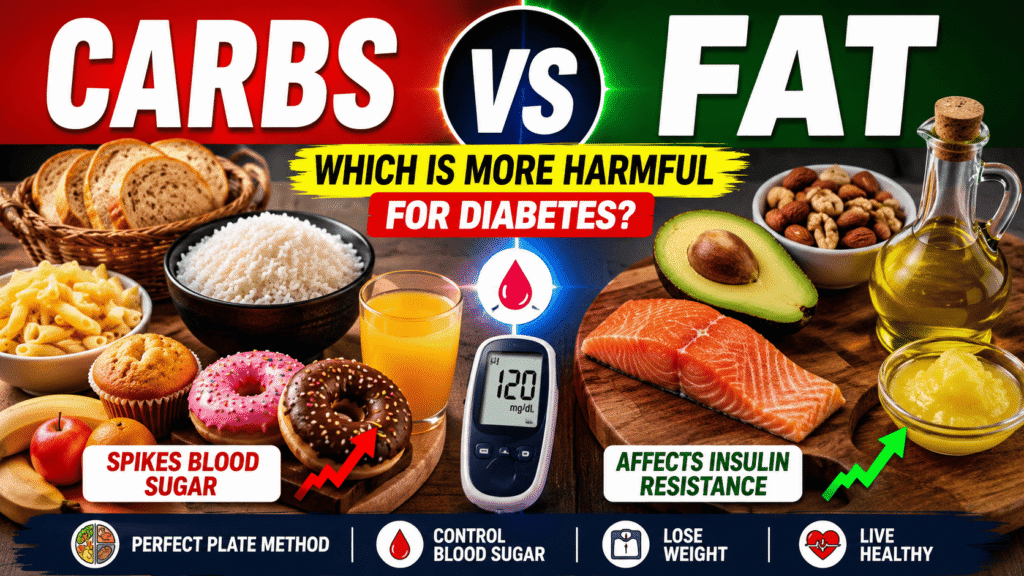
In this comprehensive guide, we will uncover the truth behind the Carbs vs Fat debate, explain how each affects blood sugar, discuss their impact on insulin resistance, and reveal the best plate method for people living with diabetes.
By the end of this article, you will know exactly how to balance carbohydrates, proteins, and fats to keep your blood sugar stable while enjoying a healthier lifestyle.
Table of Contents
Understanding Carbohydrates: Why Your Body Needs Them
Before labeling carbohydrates as the enemy, it’s important to understand their role in the human body.
Carbohydrates are the body’s preferred source of energy. Every cell in your body relies on glucose derived from carbohydrates to function efficiently. Your brain, in particular, depends heavily on glucose to perform cognitive tasks.
Without adequate carbohydrate intake, you may experience:
- Fatigue
- Brain fog
- Low energy
- Reduced concentration
- Mood changes
This is why completely eliminating carbohydrates is rarely recommended for most people.
However, not all carbohydrates are created equal.
Simple vs Complex Carbohydrates: The Difference Matters
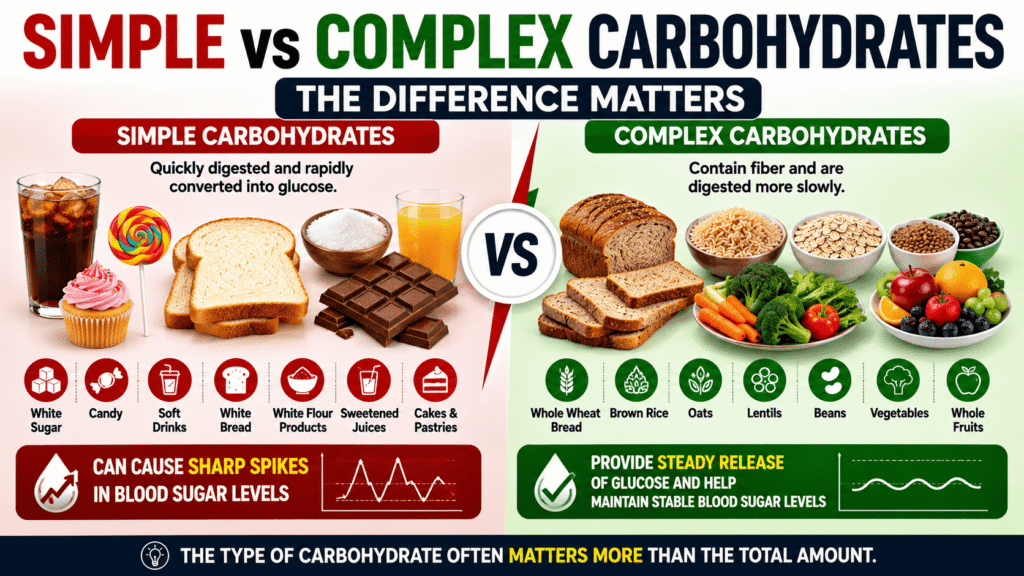
The impact of carbohydrates on blood sugar depends largely on the type consumed.
Simple Carbohydrates
Simple carbohydrates are quickly digested and rapidly converted into glucose.
Examples include:
- White sugar
- Candy
- Soft drinks
- White bread
- White flour products
- Sweetened juices
- Cakes and pastries
These foods can cause sharp spikes in blood sugar levels, making them problematic for people with diabetes.
Complex Carbohydrates
Complex carbohydrates contain fiber and are digested more slowly.
Examples include:
- Whole wheat bread
- Brown rice
- Oats
- Lentils
- Beans
- Vegetables
- Whole fruits
Because they break down gradually, they provide a steady release of glucose and help maintain stable blood sugar levels.
This distinction is crucial in the Carbs vs Fat discussion because the type of carbohydrate often matters more than the total amount.
Why Fruit Juice Is Not the Same as Whole Fruit
One of the biggest misconceptions in diabetes nutrition is the belief that fruit juice is as healthy as eating whole fruit.
Although both may contain similar amounts of carbohydrates, they affect blood sugar very differently.
The reason is fiber.
When fruit is turned into juice:
- Most fiber is removed.
- Digestion becomes faster.
- Glucose enters the bloodstream rapidly.
- Blood sugar spikes occur more easily.
Whole fruits, on the other hand, retain their fiber, which slows digestion and moderates glucose absorption.
Fruit vs Juice Comparison
| Factor | Whole Fruit | Fruit Juice |
| Fiber Content | High | Very Low |
| Digestion Speed | Slow | Fast |
| Blood Sugar Impact | Moderate | High |
| Satiety | High | Low |
| Diabetes Friendly | Yes | Limited |
For people with diabetes, eating whole fruit is almost always a better choice than drinking fruit juice.
Understanding Dietary Fat: Friend or Foe?
Fats often receive a bad reputation, but they are vital for health.
Healthy fats help:
- Produce hormones
- Support brain function
- Absorb vitamins
- Protect organs
- Provide long-lasting energy
Unlike carbohydrates, fats do not directly raise blood sugar levels.
This leads many people to believe they can consume unlimited amounts of fat without consequences.
Unfortunately, that’s not true.
How Excess Fat Can Increase Insulin Resistance
While fats don’t immediately spike blood sugar, excessive fat consumption can worsen insulin resistance.
Insulin resistance occurs when the body’s cells stop responding efficiently to insulin.
As a result:
- More insulin is required.
- Blood sugar remains elevated longer.
- Diabetes becomes harder to control.
This is one reason why people who consume large amounts of unhealthy fats often struggle with both weight gain and blood sugar management.
Therefore, when evaluating Carbs vs Fat, it’s important to consider long-term effects, not just immediate blood sugar changes.
Healthy Fats vs Unhealthy Fats
Not all fats affect the body in the same way.
Healthy Fats
Healthy fats support heart health and may reduce inflammation.
Examples include:
- Olive oil
- Almonds
- Walnuts
- Flaxseeds
- Chia seeds
- Avocados
- Fatty fish
Unhealthy Fats
Unhealthy fats can increase cardiovascular risk and worsen metabolic health.
Examples include:
- Deep-fried foods
- Processed snacks
- Fast foods
- Trans fats
- Excessive ghee
- Hydrogenated oils
Fat Quality Comparison
| Healthy Fats | Unhealthy Fats |
| Olive Oil | Deep-Fried Foods |
| Almonds | Fast Food |
| Walnuts | Packaged Snacks |
| Avocados | Hydrogenated Oils |
| Flaxseeds | Trans Fats |
Choosing healthier fats can significantly improve long-term diabetes outcomes.
Carbs vs Fat: Which Raises Blood Sugar Faster?
Let’s answer the most important question.
Carbohydrates
- Raise blood sugar quickly.
- Directly convert into glucose.
- Have an immediate effect on blood sugar levels.
Fats
- Do not directly raise blood sugar.
- Affect blood sugar indirectly.
- Excessive intake may worsen insulin resistance over time.
Quick Comparison Table
| Feature | Carbohydrates | Fats |
| Immediate Blood Sugar Effect | High | Minimal |
| Energy Source | Quick | Slow and Sustained |
| Satiety | Moderate | High |
| Impact on Insulin Resistance | Moderate | Can Increase if Excessive |
| Weight Gain Risk | High if Excessive | High if Excessive |
The answer is simple: carbohydrates raise blood sugar faster, but excessive fats can create long-term metabolic problems.
The Hidden Problem: Portion Size
Many people focus solely on whether carbohydrates or fats are harmful.
The real issue is often portion size.
Even healthy foods can become problematic when consumed in excessive quantities.
For example:
- Too much brown rice can still elevate blood sugar.
- Too many almonds can still contribute excess calories.
- Too much olive oil can lead to weight gain.
Balance and moderation are the keys to success.
The Diabetes Plate Method: A Practical Solution
Instead of counting every calorie or gram of carbohydrate, many nutrition experts recommend the Plate Method.
This method simplifies healthy eating while supporting blood sugar control.
Ideal Diabetes Plate
| Plate Portion | Food Group |
| 50% | Non-Starchy Vegetables |
| 25% | Protein |
| 25% | Healthy Carbohydrates |
This simple strategy helps create balanced meals without complicated calculations.
Half Your Plate Should Be Vegetables
Vegetables are rich in:
- Fiber
- Vitamins
- Minerals
- Antioxidants
They have a low glycemic load and help prevent blood sugar spikes.
Excellent choices include:
- Spinach
- Cucumbers
- Tomatoes
- Carrots
- Pumpkin
- Bottle gourd
- Broccoli
- Cauliflower
These foods add volume to meals while keeping calorie intake under control.
One-Quarter of Your Plate Should Be Protein
Protein helps:
- Reduce hunger
- Maintain muscle mass
- Slow digestion
- Improve meal satisfaction
Good protein sources include:
- Chicken
- Fish
- Lentils
- Beans
- Eggs
- Low-fat dairy
- Tofu
Protein also slows carbohydrate absorption, reducing sudden blood sugar increases.
One-Quarter of Your Plate Should Be Smart Carbohydrates
Carbohydrates are still important but should be selected carefully.
Choose:
- Whole wheat bread
- Brown rice
- Oats
- Quinoa
- Lentils
- Sweet potatoes
Avoid:
- White bread
- Sugary cereals
- Refined flour products
- Sugary beverages
The quality of carbohydrates matters more than simply reducing them.
Why Combining Carbs, Protein, and Fat Works So Well
One of the best strategies for diabetes management is combining nutrients.
Instead of eating carbohydrates alone, pair them with protein and healthy fats.
For example:
Better Choice
Whole wheat bread + chicken curry + yogurt
Less Ideal Choice
White bread alone
The balanced meal slows digestion and reduces rapid blood sugar fluctuations.
Sample Diabetes-Friendly Plate with Glycemic Load
Here’s an example of a balanced meal:
- Half plate vegetables
- One-quarter grilled chicken
- One-quarter whole wheat bread
- Small serving of yogurt
- One tablespoon olive oil
Estimated Meal Values
| Component | Portion |
| Vegetables | 50% Plate |
| Chicken or Lentils | 25% Plate |
| Whole Wheat Bread | 25% Plate |
| Yogurt | Small Serving |
| Olive Oil | 1 Tablespoon |
| Estimated Glycemic Load | 15–20 |
A glycemic load of 15–20 is generally considered low to moderate and suitable for most people with diabetes.
Common Mistakes People Make in the Carbs vs Fat Debate
Many individuals unknowingly sabotage their diabetes management.
Common mistakes include:
Eliminating All Carbohydrates
This can lead to fatigue, nutrient deficiencies, and unsustainable eating habits.
Drinking Fruit Juice Regularly
Many people consider juice healthy despite its strong impact on blood sugar.
Eating Unlimited Fat
Healthy fats are beneficial, but excessive amounts can lead to weight gain.
Choosing Low-Fat Processed Foods
Many low-fat products compensate by adding sugar.
Always read nutrition labels carefully.
The Best Approach for Diabetes Management
The healthiest strategy is not choosing between carbohydrates and fats.
Instead:
- Choose complex carbohydrates.
- Consume healthy fats.
- Include adequate protein.
- Follow portion control.
- Eat plenty of vegetables.
- Monitor blood sugar regularly.
A balanced dietary approach is far more effective than extreme dieting.
Frequently Asked Questions (FAQs)
1. In the Carbs vs Fat debate, which nutrient raises blood sugar more?
Carbohydrates raise blood sugar much faster than fats because they are converted into glucose during digestion. However, consuming excessive unhealthy fats can increase insulin resistance over time, making blood sugar harder to control.
2. Are carbohydrates bad for people with diabetes?
No, carbohydrates are not inherently bad for people with diabetes. The key is choosing complex carbohydrates such as whole grains, legumes, vegetables, and fruits instead of refined carbohydrates and sugary foods.
3. Can eating too much fat worsen diabetes?
Yes. While fats do not directly raise blood sugar, excessive intake of unhealthy fats can contribute to weight gain and insulin resistance, which may worsen diabetes management.
4. What are the best carbohydrates for diabetes?
Some of the best carbohydrate choices for people with diabetes include whole wheat bread, brown rice, oats, lentils, beans, sweet potatoes, and non-starchy vegetables. These foods are rich in fiber and help stabilize blood sugar levels.
5. What are the healthiest fats for people with diabetes?
Healthy fats include olive oil, avocados, almonds, walnuts, flaxseeds, chia seeds, and fatty fish. These fats support heart health and may help reduce inflammation.
6. Is fruit juice healthier than whole fruit for diabetics?
No. Whole fruits are generally a better choice because they contain fiber, which slows sugar absorption. Fruit juice often lacks fiber and can cause rapid spikes in blood sugar levels.
7. What is the Diabetes Plate Method?
The Diabetes Plate Method is a simple meal-planning strategy that recommends filling half the plate with non-starchy vegetables, one-quarter with lean protein, and one-quarter with healthy carbohydrates to support blood sugar control.
8. Should diabetics completely avoid carbohydrates?
No. Completely eliminating carbohydrates is usually unnecessary and may lead to low energy levels and nutrient deficiencies. Instead, focus on consuming high-quality carbohydrates in appropriate portions.
9. How can I prevent blood sugar spikes after meals?
You can help prevent blood sugar spikes by combining carbohydrates with protein and healthy fats, eating fiber-rich foods, controlling portion sizes, and avoiding sugary drinks and processed foods.
10. Which is better for weight loss: low-carb or low-fat diets?
Both approaches can be effective when properly planned. The most important factor is maintaining a balanced diet, controlling calorie intake, and choosing nutrient-dense foods rather than focusing solely on reducing carbohydrates or fats.
11. Are low-fat packaged foods always healthy?
Not necessarily. Many low-fat products contain added sugars and refined carbohydrates to improve taste. Always read nutrition labels before purchasing packaged foods.
12. What is the ideal glycemic load for a diabetes-friendly meal?
A meal with a glycemic load of approximately 10–20 is generally considered low to moderate and may help maintain more stable blood sugar levels throughout the day.
Conclusion: Carbs vs Fat—What Is the Real Enemy?
The debate between Carbs vs Fat often leads people to believe that one nutrient is responsible for all diabetes-related problems. In reality, both carbohydrates and fats play essential roles in a healthy diet. Carbohydrates provide the body’s primary source of energy, while fats support hormones, brain function, and long-lasting satiety.
For people with diabetes, the key is not eliminating either nutrient but choosing the right types and consuming them in appropriate portions. Complex carbohydrates, healthy fats, lean proteins, and fiber-rich vegetables create a powerful combination that helps stabilize blood sugar levels and improve overall health.
Ultimately, the true enemy is not carbohydrates or fats—it is an unbalanced diet. By following the Plate Method, practicing portion control, and making smarter food choices, you can successfully manage blood sugar, support weight loss, and enjoy a healthier life for years to come.