
If you search online for “Can diabetics eat roti”, you’ll see mixed answers. Some say never touch roti, others say one roti is fine, and many simply create fear without offering a practical solution.
The truth is more balanced — diabetics can eat roti, but how much, when, and under what conditions makes all the difference.
In this detailed guide, we’ll break down:
- Whether roti is safe for diabetics
- How roti affects blood sugar
- Roti vs rice comparison
- Common myths around roti and diabetes
- And most importantly, how to use the Roti & Rice Safe Limit Calculator to make smart, data-based decisions instead of guessing
This article is written in simple, conversational English, based on real-life South Asian eating habits, and designed to help you control blood sugar without giving up roti forever.
Table of Contents
Understanding Diabetes and Carbohydrates
Diabetes is not caused by eating sugar alone. It’s mainly about how your body handles carbohydrates.
Carbohydrates:
- Break down into glucose
- Raise blood sugar levels
- Require insulin (or insulin sensitivity) to manage
Roti, rice, naan, paratha — all are carbohydrate-rich foods, which is why diabetics are often warned against them.
But here’s the key point:
Diabetes does not mean zero carbohydrates. It means controlled carbohydrates.
What Is Roti Made Of and Why Does It Matter?
A traditional roti is made from:
- Whole wheat flour (atta)
- Water
- Sometimes oil or ghee
Nutritional profile of one medium roti:
- Carbohydrates: ~15–18g
- Fiber: 2–3g
- Protein: 3g
- Glycemic Index: Medium (varies by flour quality)
Whole wheat roti contains fiber, which slows down sugar absorption. That makes it better than white bread — but still not harmless if eaten in excess.
Can Diabetics Eat Roti? The Straight Answer
Yes — diabetics can eat roti, but:
- Not unlimited
- Not at the wrong time
- Not without considering blood sugar levels
- Not without balancing with protein, fiber, and activity
The problem is portion size, not roti itself.
Why Roti Causes Sugar Spikes in Some Diabetics
Many people say:
“I eat only roti, but my sugar still goes high.”
Common reasons include:
- Eating too many rotis
- Eating roti alone without protein
- Eating roti when fasting sugar is already high
- Sedentary lifestyle (desk job, no movement)
- Poor-quality refined flour instead of whole wheat
This is why a fixed rule like ‘1 roti is safe’ does not work for everyone.
Roti vs Rice for Diabetics: Which Is Safer?
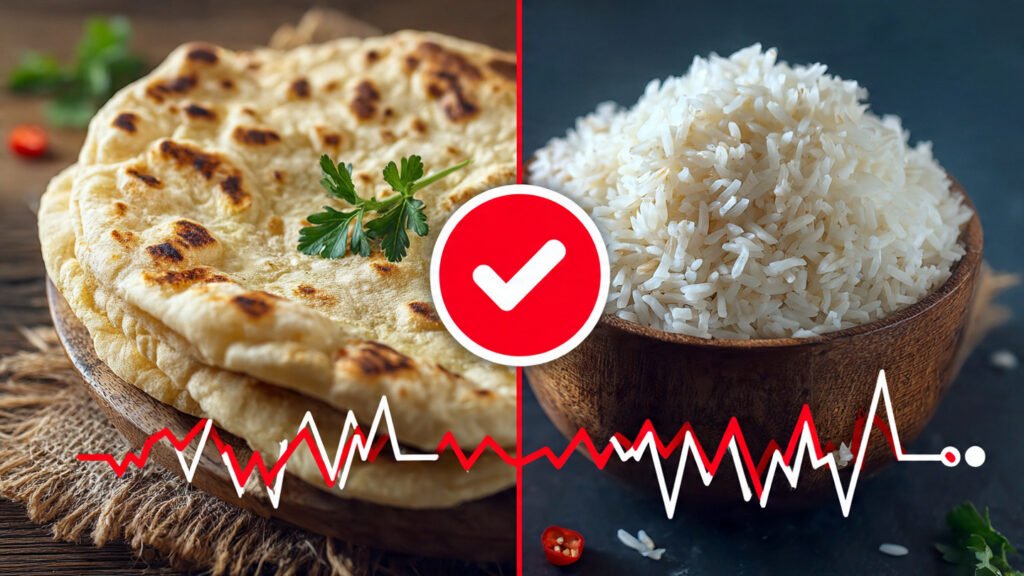
This debate is endless, but let’s be clear.
Roti
- Medium glycemic index
- Contains fiber
- Slower sugar release
- Better portion control
White Rice
- High glycemic index
- Low fiber
- Faster sugar spikes
- Easy to overeat
👉 For most diabetics, roti is safer than white rice, especially when eaten in controlled portions.
But again — portion and timing matter more than the food itself.
The Biggest Problem: Guesswork in Diabetic Diet
Most diabetics eat roti based on:
- Guess
- Fear
- Advice from relatives
- Random YouTube videos
Very few people ask:
- What is my current blood sugar?
- What time of day am I eating?
- What is my activity level?
- What type of diabetes do I have?
This is exactly where the Roti & Rice Safe Limit Calculator comes in.
What Is the Roti & Rice Safe Limit Calculator?
The Roti & Rice Safe Limit Calculator is a practical online tool designed to answer one simple question:
How much roti or rice is safe for me right now?
Instead of general advice, it gives personalized guidance based on:
- Current blood sugar
- Time of day
- Diabetes type
- Activity level
This makes it extremely useful for:
- Type 2 diabetics
- Pre-diabetics
- Office workers
- People who don’t want to quit roti completely
How the Roti & Rice Safe Limit Calculator Works
The calculator does not replace a doctor. It works as an educational guide to help you make safer meal decisions.
It adjusts recommendations based on how likely your blood sugar is to spike after eating roti or rice.
Step-by-Step: How to Use the Roti & Rice Safe Limit Calculator
Let’s walk through it clearly.
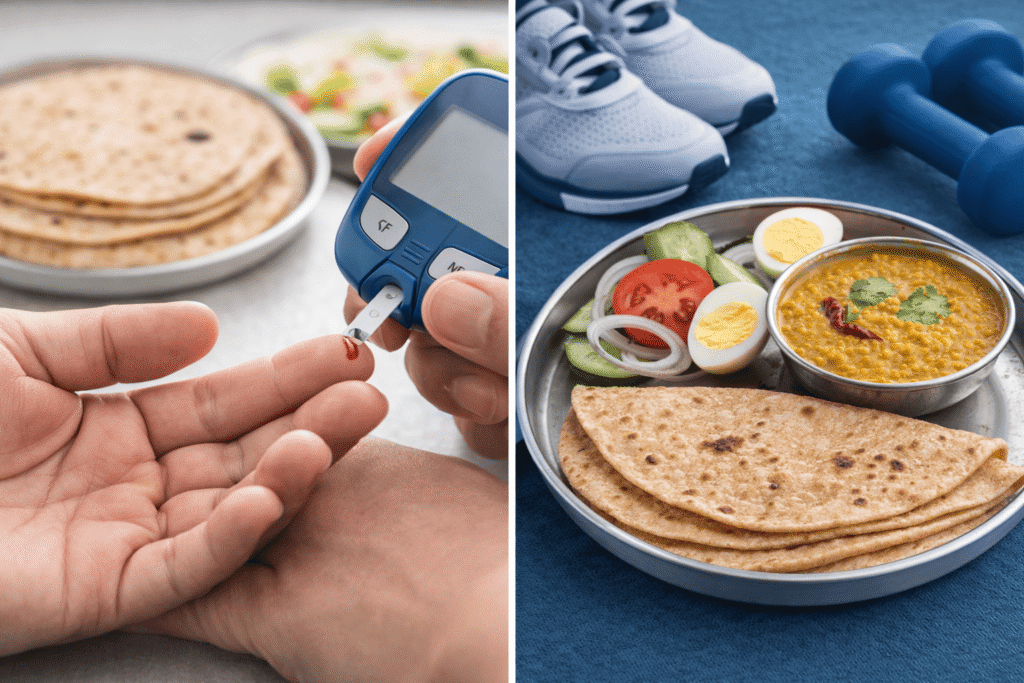
Step 1: Enter Your Current Blood Sugar (mg/dL)
You enter your latest blood sugar reading, for example:
- 110 mg/dL
- 135 mg/dL
- 180 mg/dL
Why this matters:
- Lower sugar = more flexibility
- Higher sugar = stricter limits
👉 If your sugar is already high, eating roti can push it dangerously higher.
Step 2: Select Time of Day
You choose:
- Breakfast
- Lunch
- Dinner
Why this matters:
- Morning insulin resistance is common
- Lunch is usually safer
- Dinner needs extra caution
The same roti behaves differently at different times of day.
Step 3: Choose Your Diabetes Type
Options may include:
- Type 2 (diet controlled)
- Type 2 (on medication)
- Insulin-dependent
Why this matters:
- Diet-controlled diabetics tolerate carbs differently
- Insulin users need stricter planning
Step 4: Select Activity Level
Options include:
- Desk job / sitting
- Moderate activity
- Active lifestyle
Why this matters:
- Physical activity burns glucose
- Sedentary life increases sugar spikes
An office worker needs fewer carbs than someone physically active.
Step 5: Click “Check Safe Limit”
Once you click the button, the calculator analyzes your inputs and gives:
- Safe roti quantity
- Rice limit (if applicable)
- Clear guidance (e.g., “limit”, “avoid”, or “safe in small amount”)
This removes confusion and emotional eating decisions.
Roti & Rice Safe Limit Calculator
Find out how much roti or rice is safe based on your blood sugar
⚠️ This calculator is for educational purposes only. Always follow your doctor’s advice.
Why This Calculator Is a Game-Changer for Diabetics
1. No More Fear-Based Eating
You don’t have to completely ban roti out of fear.
2. Personalized, Not Generic
Advice is based on your numbers, not someone else’s.
3. Practical for South Asian Diets
Roti and rice are realities — this tool respects that.
4. Perfect for Office Workers
Sedentary lifestyle is directly considered.
How Many Rotis Can a Diabetic Eat in a Day?
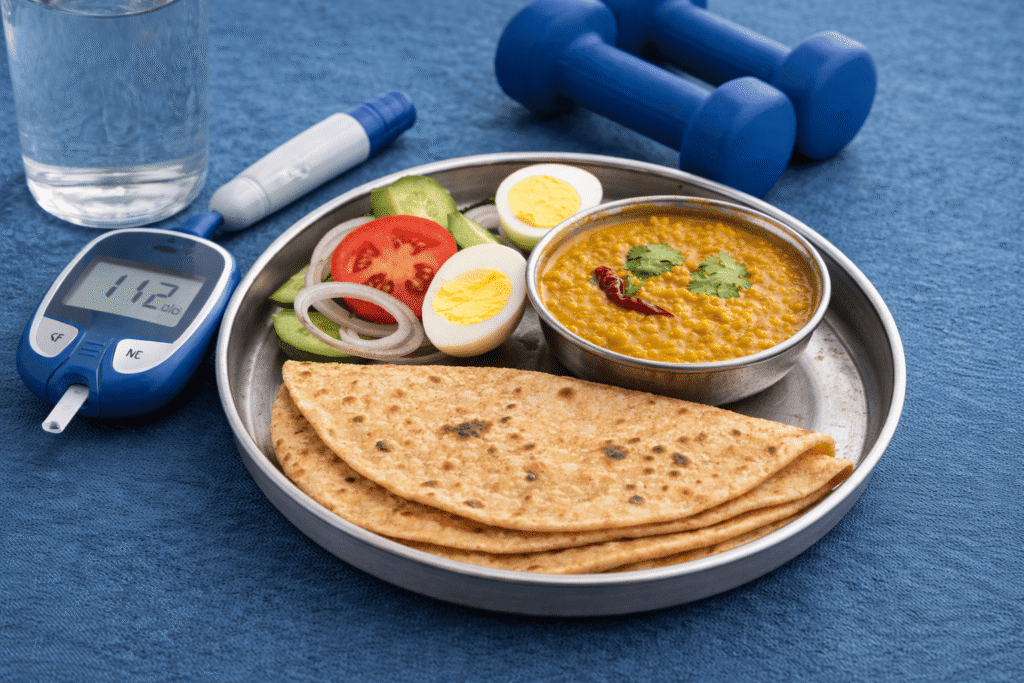
There is no universal answer.
But in general:
- Well-controlled sugar + active lifestyle → 1–2 small rotis
- Borderline sugar + desk job → ½ to 1 roti
- High sugar (>180 mg/dL) → best to avoid temporarily
The calculator helps decide which category you fall into today.
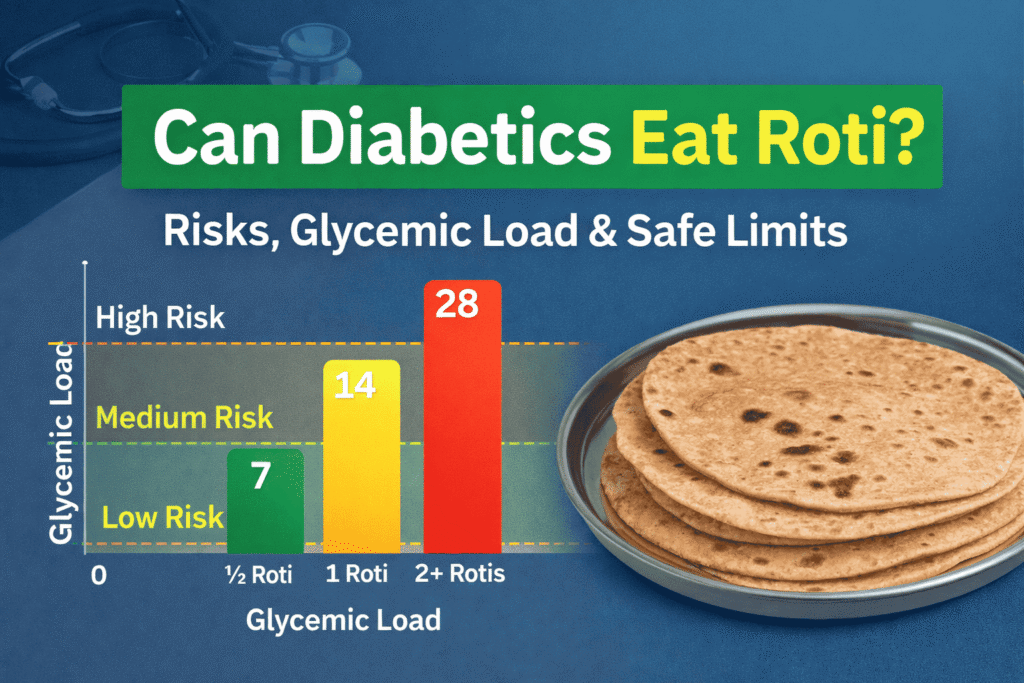
Glycemic Load of Roti by Serving Size
When discussing diabetes management, most people focus only on the Glycemic Index (GI) of food. However, for people with diabetes, Glycemic Load (GL) is far more important because it considers both the quality and quantity of carbohydrates consumed.
Whole wheat roti has a moderate glycemic index, but its glycemic load increases significantly when portion size increases. This is why understanding the glycemic load of roti is essential for safe blood sugar control.
Glycemic Load Table of Roti
Below is an approximate glycemic load chart based on a standard medium whole wheat roti. These values are educational estimates and may vary depending on flour quality, roti thickness, and cooking method.
| Roti Serving Size | Approx. Carbohydrates (g) | Glycemic Index (GI) | Glycemic Load (GL) | Blood Sugar Impact |
| ½ Roti | 8–9 g | ~55 | 7 | Low |
| 1 Roti | 15–18 g | ~55 | 14 | Moderate |
| 2 Rotis | 30–36 g | ~55 | 28 | High |
| 3 Rotis | 45–54 g | ~55 | 42 | Very High |
Understanding the Glycemic Load Ranges
To make these numbers easier to understand:
- GL below 10 → Low glycemic load
- Usually safer for diabetics
- Causes slower rise in blood sugar
- GL between 11 and 20 → Moderate glycemic load
- Requires portion control
- Should be balanced with protein and fiber
- GL above 20 → High glycemic load
- Higher risk of sugar spikes
- Needs careful monitoring
What This Means for Diabetics Eating Roti
The table clearly shows that roti itself is not dangerous. The real issue is portion size.
- Eating half roti generally falls within a low glycemic load range.
- Eating one roti moves into a moderate range, which may still be acceptable for well-controlled diabetes.
- Eating two or more rotis quickly pushes glycemic load into a high-risk zone.
This explains why many diabetics experience sugar spikes even when eating homemade whole wheat roti.
Graphical Interpretation of Roti Glycemic Load
When glycemic load is displayed in graphical form, it becomes easier to visualize how blood sugar risk increases with serving size.
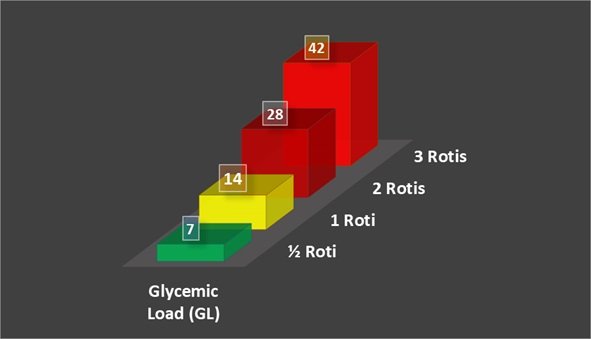
The graphical chart divides roti consumption into three zones:
🟢 Green Zone – Low Glycemic Load
This zone represents safer carbohydrate intake. Half roti usually falls within this range and produces a slower rise in blood sugar.
🟡 Yellow Zone – Moderate Glycemic Load
This zone represents moderate sugar impact. One roti typically falls here and should be eaten with protein sources such as eggs, lentils, chicken, or yogurt.
🔴 Red Zone – High Glycemic Load
This zone represents higher risk of blood sugar spikes. Eating two or more rotis usually falls into this category, especially for sedentary individuals or those with uncontrolled diabetes.
Why Portion Size Matters More Than Food Type
Many people believe that switching from rice to roti automatically makes their diet diabetic-friendly. While roti is generally better due to fiber content, overeating roti can still lead to significant glucose spikes.
Glycemic load explains this clearly. Even foods with a moderate glycemic index can become harmful when consumed in large quantities.
How Lifestyle Changes Affect Roti Tolerance
Not every diabetic responds to roti the same way. Several factors influence how safely you can consume roti:
Physical Activity
Active individuals burn glucose more efficiently and may tolerate slightly higher carbohydrate portions.
Current Blood Sugar Level
Eating roti when blood sugar is already high increases spike risk.
Meal Timing
Morning insulin resistance may make breakfast roti harder to tolerate compared to lunch.
Combination With Other Foods
Adding protein, fiber, and healthy fats slows carbohydrate absorption and reduces glycemic impact.
Using Glycemic Load with the Roti & Rice Safe Limit Calculator
While the glycemic load table provides general guidance, individual carbohydrate tolerance varies from person to person. This is where the Roti & Rice Safe Limit Calculator becomes extremely useful.
The calculator personalizes roti and rice portion limits based on:
- Current blood sugar level
- Time of day
- Diabetes type
- Physical activity level
By combining glycemic load knowledge with personalized data, diabetics can make smarter food decisions without unnecessary food restrictions.
Practical Tips for Eating Roti Safely in Diabetes
If you want to include roti in your diabetic diet, follow these simple strategies:
- Choose whole wheat or multigrain flour
- Avoid eating roti alone
- Combine roti with protein-rich foods
- Include vegetables or salad with meals
- Eat slowly to improve glucose response
- Take a short walk after meals
These small changes can significantly reduce blood sugar spikes.
Best Way to Eat Roti for Diabetes Control
If you do eat roti, follow these rules:
- Always combine roti with protein (eggs, dal, chicken)
- Add fiber (vegetables, salad)
- Avoid roti alone
- Prefer whole wheat or multigrain atta
- Eat slowly
- Walk 10–15 minutes after meals
These steps reduce glucose spikes significantly.
Common Myths About Roti and Diabetes
Myth 1: Diabetics must never eat roti
False. Controlled intake is key.
Myth 2: Brown atta means unlimited roti
False. Quantity still matters.
Myth 3: Rice is always worse than roti
Not always — portion and timing matter.
Myth 4: Skipping carbs cures diabetes
Skipping carbs may cause weakness and binge eating later.
Who Should Be Extra Careful with Roti?
- People with fasting sugar consistently above 160 mg/dL
- Those with HbA1c above target
- People with very low physical activity
- Late-night roti eaters
For these individuals, the calculator is especially useful.
Roti, Rice, and Long-Term Diabetes Control
Long-term control is about:
- Consistency
- Portion awareness
- Lifestyle balance
Completely banning cultural foods often leads to:
- Frustration
- Non-compliance
- Emotional eating
Smart tools like the Roti & Rice Safe Limit Calculator help people stay realistic and sustainable.
Is the Calculator a Medical Tool?
No.
It is:
- Educational
- Awareness-based
- Decision-supportive
You should always:
- Follow your doctor’s advice
- Monitor sugar regularly
- Adjust diet based on medical guidance
Final Thoughts: Can Diabetics Eat Roti?
Yes — diabetics can eat roti, but not blindly.
The real question is not “Can I eat roti?”
The real question is:
How much roti is safe for me right now?
By using tools like the Roti & Rice Safe Limit Calculator, you move from fear and confusion to clarity and control.
Diabetes management does not require extreme restrictions. It requires smart choices, awareness, and balance.
Roti doesn’t have to be your enemy — ignorance and guesswork are.
Take control, eat wisely, and let data guide your plate.