
Rice is one of the most loved foods on the planet. From South Asia to the Middle East, from East Asia to Africa, rice is eaten daily, often in large portions. For many people, a meal feels incomplete without rice. Because it is natural, plant-based, and has been consumed for centuries, most people assume rice is safe, healthy, and harmless for blood sugar.
Unfortunately, this belief is one of the biggest nutritional misunderstandings, especially for people with diabetes, prediabetes, insulin resistance, or belly fat.
In this detailed guide, we will break down the glycemic index of rice, explain why rice spikes blood sugar faster than sugar, compare white rice vs brown rice vs Middle Eastern rice varieties, and clearly show the glycemic load of rice in five different serving sizes using an easy-to-understand table.
This article is written in simple, conversational language, backed by nutritional science, and tailored for people who want real clarity, not confusion.
Table of Contents
1. Why Rice Needs Serious Attention in Blood Sugar Control
Rice is often labeled as a “complex carbohydrate,” which sounds slow, steady, and safe. In reality, most cooked rice behaves like fast sugar inside the body.
The problem is not just rice itself, but:
- How refined it is
- How it is cooked
- How much is eaten
- How often it is consumed
For people eating rice daily, especially in large plates, blood sugar spikes become chronic, leading to:
- Insulin resistance
- Fat gain
- Type 2 diabetes
- Poor diabetes control despite medication
Understanding rice properly can change your health trajectory.
2. What Is the Glycemic Index? (Explained Simply)
The glycemic index (GI) measures how fast a food raises blood glucose levels after eating.
The GI scale works like this:
- Low GI: 55 or less (slow sugar release)
- Medium GI: 56–69
- High GI: 70 or above (rapid sugar spike)
Foods with a high GI cause:
- Sudden blood sugar rise
- High insulin release
- Faster hunger
- Fat storage
Rice, especially white rice, often falls into the high GI category.
3. How Rice Turns into Sugar Inside the Body
Rice is made primarily of starch, and starch is nothing more than glucose molecules linked together.
Here’s what happens after you eat rice:
- Chewing breaks rice into smaller particles
- Digestive enzymes rapidly attack cooked starch
- Starch converts quickly into glucose
- Glucose floods the bloodstream
Because cooked rice is soft, gelatinized, and refined, the body absorbs it faster than many sugary foods. This is why many diabetics see higher glucose readings after rice than after sweets.
4. Glycemic Index of Rice vs Table Sugar
This is shocking for most people.
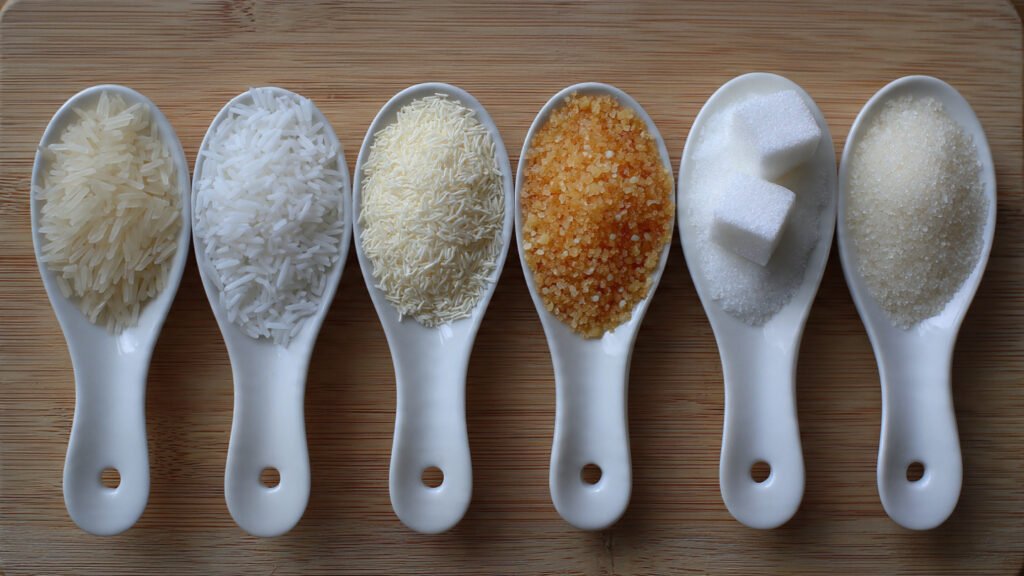
- Table sugar (sucrose) has a GI of ~65
- White rice can have a GI ranging from 70 to 89, depending on type and cooking method
This means:
- Some rice varieties raise blood sugar faster than sugar
- Rice does not taste sweet, but acts like sugar internally
This hidden effect is why rice is so dangerous—it does not trigger caution like desserts do.
5. Glycemic Index of Different Types of Rice
Not all rice behaves the same, but none are truly “safe” in large portions.
White Rice (Polished Rice)
- GI range: 70–89
- Almost no fiber
- Fast digestion
- Strong blood sugar spike
Brown Rice
- GI range: 65–75
- Slightly more fiber
- Slower than white rice, but still high
- Often overeaten due to “healthy” label
Basmati Rice
- GI range: 50–58
- Longer grains, less starch gelatinization
- Lower spike, but still problematic in large servings
Middle Eastern Rice (Short & Medium Grain)
Commonly used varieties:
- Egyptian rice
- Calrose-type rice
- Short-grain aromatic rice (GI range: 72–85)
- Sticky texture
- Very fast glucose release
Parboiled Rice
- GI range: 55–65
- Processing changes starch structure
- Better than white rice, but portion size still matters
6. Glycemic Load of Rice: The Real Danger (With Table)
The glycemic index tells speed, but glycemic load (GL) tells the total blood sugar impact.
Glycemic Load = (GI × Carbohydrates per serving) ÷ 100
This is where rice becomes extremely dangerous—because people eat it in large portions.
Carbohydrate Reference
- Cooked rice ≈ 28 g carbs per 100 g
Glycemic Load of Rice in Five Serving Sizes
| Serving Size (Cooked) | White Rice GL | Brown Rice GL | Basmati Rice GL | Middle Eastern Rice GL |
| 50 g | ~10 | ~9 | ~7 | ~10 |
| 100 g | ~20 | ~18 | ~14 | ~21 |
| 150 g | ~30 | ~27 | ~21 | ~32 |
| 200 g | ~40 | ~36 | ~28 | ~42 |
| 250 g (Typical Plate) | ~50 | ~45 | ~35 | ~53 |
How to Read This Table
- GL below 10: Low impact
- GL 11–19: Moderate
- GL 20+ : High and dangerous
A typical rice plate delivers a glycemic load similar to drinking sugar water.
For the glycemic index of wheat and the glycemic load of wheat, read this Post 3. The Glycemic Index of Wheat Explained: Why Your Daily Roti May Be Spiking Your Blood Sugar
7. Why Rice Spikes Blood Sugar Faster Than Sugar
Rice is one of the most commonly consumed foods in the world. For millions of people in South Asia, including Pakistan and India, rice is not just food—it is culture, comfort, and tradition. Yet, despite being considered a “simple and harmless staple,” rice can spike blood sugar levels faster and higher than table sugar. This fact surprises most people, especially those managing diabetes or prediabetes.
In this detailed guide, we will clearly explain why rice behaves like fast-acting sugar inside the body, how it compares with table sugar, and what this means for your blood glucose control. The goal is not fear—but awareness and smarter food choices. Several factors make rice extremely aggressive for blood glucose:
- Low fiber content (especially white rice)
- High starch gelatinization during cooking
- Large portion sizes
- Eaten without protein or fat
- Cultural habits of daily consumption
Unlike fruits, rice lacks:
- Protective fiber matrix
- Polyphenols
- Natural chewing resistance
This makes rice metabolically worse than many sweet foods.
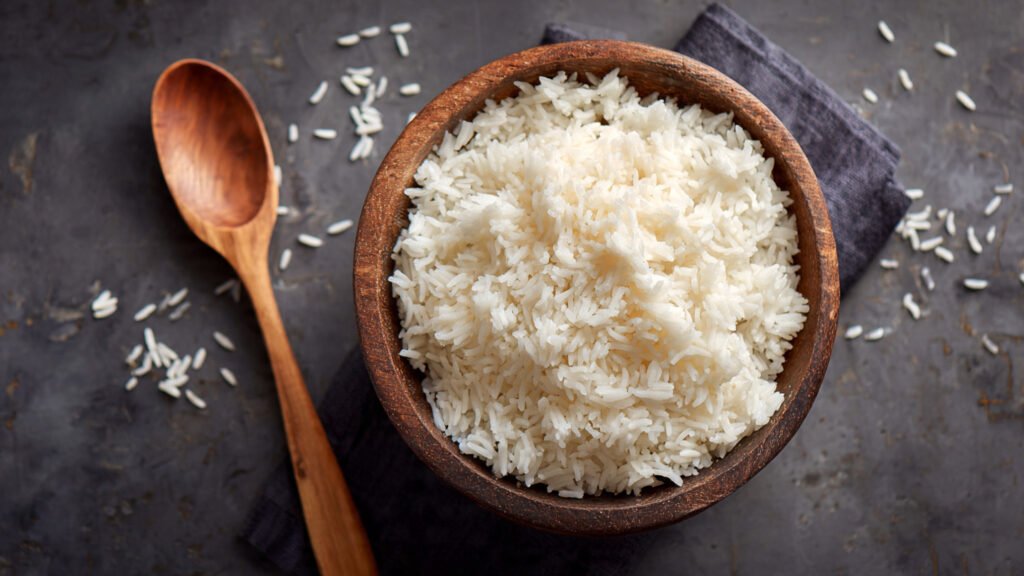
Rice Is Mostly Starch (Hidden Sugar)
Rice is made up of 70–80% carbohydrates, primarily starch. During digestion:
- Starch breaks down into glucose
- Glucose enters the bloodstream rapidly
- Blood sugar rises sharply
Sugar tastes sweet, but rice converts into sugar silently and aggressively.
Rice Has Very Little Fiber
Fiber slows down digestion and sugar absorption. Unfortunately:
- White rice is stripped of fiber
- Brown rice contains fiber, but still releases sugar relatively fast
- Fiber-free carbs = faster glucose spike
Sugar combined with fiber-rich foods rises slower than plain rice.
Rice Digests Extremely Fast
Rice is soft, refined, and easy to digest. Unlike whole grains or legumes:
- It requires minimal digestion
- Glucose is released quickly
- Insulin response becomes intense
This makes rice a high-risk food for blood sugar control.
Rice vs Sugar: A Direct Comparison
| Feature | Rice | Table Sugar |
|---|---|---|
| Glycemic Index | 70–90 | ~65 |
| Digestion Speed | Very fast | Fast |
| Fiber Content | Very low | Zero |
| Blood Sugar Spike | Very high | High |
| Satiety | Low | Very low |
Result: Rice can cause a stronger and faster spike than sugar.
8. Rice to Sugar Reality Calculator – Understand What Rice Really Does to Your Blood Sugar
Rice is one of the most commonly consumed foods, especially in Asian and Pakistani diets. Although rice does not taste sweet, it is rapidly converted into sugar (glucose) inside the body, which can significantly raise blood sugar levels. The Rice to Sugar Reality Calculator is designed to reveal this hidden impact in a simple, easy-to-understand way.
What Is the Rice to Sugar Reality Calculator?
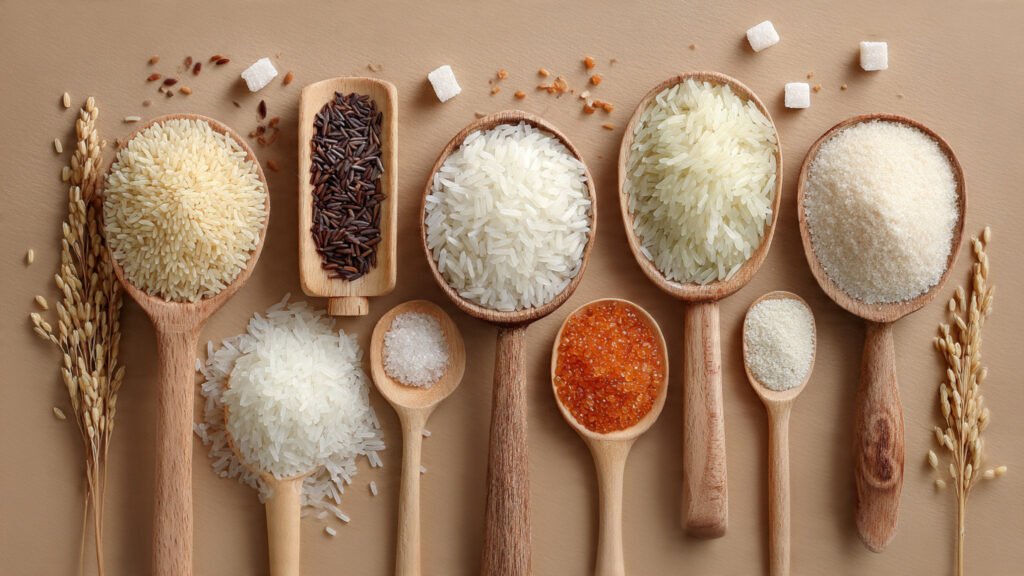
The Rice to Sugar Reality Calculator is an educational tool that converts the carbohydrate content of rice into its sugar equivalent. Instead of showing confusing numbers, it displays results in teaspoons or spoons of sugar, helping users clearly understand how much glucose their body receives from rice consumption.
This makes it especially useful for diabetics, pre-diabetics, and health-conscious individuals who want better control over blood sugar levels.
How the Calculator Works
The calculator works in three simple steps:
- Select the type of rice (white, basmati, brown, or others)
- Enter the portion size you consume
- The calculator converts total carbohydrates into sugar equivalents
The final result shows how much sugar your body effectively absorbs from that serving of rice.
Why Rice Affects Blood Sugar So Strongly
Rice is rich in starch, which is broken down into glucose during digestion. White rice, in particular, has:
- Low fiber
- High glycemic impact
- Rapid glucose release
This causes quick blood sugar spikes, similar to consuming table sugar.
Why Sugar-Equivalent Visualization Matters
Most people do not understand grams of carbohydrates. However, when rice intake is shown as spoons of sugar, the impact becomes immediately clear. This visual comparison helps users make better portion decisions and reduces overconsumption.
Who Should Use This Calculator?
- People with diabetes to prevent sugar spikes
- Pre-diabetics to avoid progression
- Weight-conscious individuals managing insulin levels
- Health-aware users improving dietary habits
Does This Mean Rice Is Bad?
No. Rice is not harmful by default. The real issue is portion size, frequency, and rice type. The calculator promotes awareness, not fear, helping users eat rice more mindfully.
🍚 Rice → Sugar Reality Calculator
Understand how rice converts into sugar inside your body.
Educational Disclaimer
This calculator is for educational purposes only. It does not replace medical advice, blood glucose testing, or professional dietary planning.
Conclusion
The Rice to Sugar Reality Calculator helps uncover the hidden sugar impact of rice by converting carbohydrates into easy-to-understand sugar equivalents. By visualizing how rice affects blood sugar, users can make smarter food choices, control portions, and protect long-term health—without eliminating rice from their diet.
9. Is Rice Safe for Diabetics? The Honest Answer
Rice is not forbidden, but it is not a daily food for diabetics.
Rice may be acceptable if:
- Portion is very small (≤100 g cooked)
- Eaten occasionally, not daily
- Combined with protein, fat, and vegetables
- Blood sugar is monitored afterward
Rice becomes harmful when:
- Eaten daily
- Combined with roti or bread
- Served in large plates
- Eaten at dinner or night
Rice is one of the most commonly eaten foods in the world. From South Asia to Southeast Asia, the Middle East, and even parts of Africa and Europe, rice is deeply rooted in culture, tradition, and daily meals. For many people, a meal feels incomplete without rice on the plate.
But if you are diabetic or prediabetic, one question often creates fear and confusion: Is rice safe for diabetics, or should it be completely avoided?
The honest answer is not a simple yes or no. Rice is not poison, but it is also not harmless for diabetics. The real truth lies in type, portion size, cooking method, and overall meal balance. In this detailed guide, we will break down everything you need to know in a clear, practical, and realistic way—without myths, exaggerations, or unnecessary fear.
Understanding Diabetes and Carbohydrates
Before we talk specifically about rice, it is important to understand how diabetes works.
Diabetes is a condition in which the body either:
- Does not produce enough insulin, or
- Cannot properly use insulin
Insulin is the hormone that helps glucose (sugar) enter cells for energy. When insulin does not work properly, blood sugar levels rise.
Carbohydrates are the primary source of glucose in our diet. Once consumed, carbohydrates break down into sugar and enter the bloodstream. This is why diabetics must be careful with carbohydrate-rich foods.
Rice is primarily a carbohydrate-based food, which is why it gets so much attention in diabetes discussions.
Why Rice Is Often Considered “Bad” for Diabetics
Rice has earned a bad reputation among diabetics, and there are valid reasons behind this.
1. High Carbohydrate Content
Cooked white rice contains approximately 28–30 grams of carbohydrates per 100 grams. This makes it a concentrated source of glucose.
2. High Glycemic Index (GI)
Most white rice varieties have a high glycemic index, meaning they raise blood sugar levels quickly after eating.
3. Easy to Overeat
Rice is soft, palatable, and easy to consume in large quantities, especially when eaten with gravies or curries.
Because of these factors, rice can cause rapid blood sugar spikes, especially when eaten alone or in large portions.
10. Rice in Pakistani, Indian & Middle Eastern Diets
In many cultures:
- Rice + roti is common
- Rice is served with potatoes and lentils
- Portion sizes exceed 250 g cooked
This leads to:
- Chronic hyperglycemia
- Rising diabetes rates
- Early insulin dependency
The issue is not tradition—it is quantity and frequency.
11. Better Alternatives to Rice for Blood Sugar Control
Healthier options include:
- Cauliflower rice
- Barley (controlled portions)
- Quinoa (small amounts)
- Lentils with vegetables
- Mixed vegetable pulao without rice base
These options provide:
- Lower glycemic load
- More fiber
- Better satiety
12. Common Myths About Rice and Diabetes
Myth 1: Brown rice is always safe
Reality: Portion size still makes it dangerous.
Myth 2: Rice is better than sugar
Reality: Rice can spike blood sugar faster.
Myth 3: Exercise cancels rice spikes
Reality: Damage still occurs with daily intake.
Myth 4: Rice water is healthy
Reality: It contains dissolved starch.
13. How Often Can You Eat Rice Safely?
For most people with blood sugar issues:
- 1–2 times per week max
- Prefer lunch over dinner
- Never combine with roti
- Keep serving ≤100–120 g cooked
People with uncontrolled diabetes should avoid rice completely until sugar stabilizes.
14. Practical Tips to Reduce Blood Sugar Spikes from Rice
- Choose basmati or parboiled rice
- Measure portions with a cup
- Add protein (chicken, fish, lentils)
- Add fat (olive oil, yogurt)
- Eat vegetables first
- Walk for 10–15 minutes after meals
15. Frequently Asked Questions
Is basmati rice good for diabetics?
Better than white rice, but still portion-sensitive.
Can diabetics eat rice daily?
No, daily rice keeps sugar uncontrolled.
Which rice is worst for blood sugar?
Sticky, short-grain, and instant rice.
Is brown rice better than white rice?
Slightly, but still risky in large servings.
16. Conclusion: Rice Is Sugar in Disguise
Rice may not taste sweet, but inside the body, it behaves like sugar—and often worse. Its high glycemic index, combined with large portion sizes, creates an enormous glycemic load that silently damages blood sugar control.
For diabetics, prediabetics, and anyone concerned about metabolic health, rice should be treated with respect, caution, and strict limits.
Understanding rice is not about fear—it is about informed choice. When you know how rice truly affects your body, you gain the power to protect your health, stabilize your blood sugar, and prevent long-term complications.
Knowledge is the first step toward control.
Use the Glycemic Load Calculator to know the glycemic load of different food items
Watch this video in urdu to know about the glycemic index of rice and glycemic load