
Managing diabetes is not just about avoiding sugar. It is about eating the right foods, in the right quantity, at the right time, consistently. For most people living with diabetes or prediabetes, this is where the real struggle begins. Confusing diet charts, conflicting advice on social media, and unrealistic meal plans make daily food decisions stressful and exhausting.
That is exactly why the 7-Day Diabetic Meal Plan Calculator was developed — to remove confusion, simplify decision-making, and provide a practical, repeatable, and blood-sugar–friendly weekly eating structure.
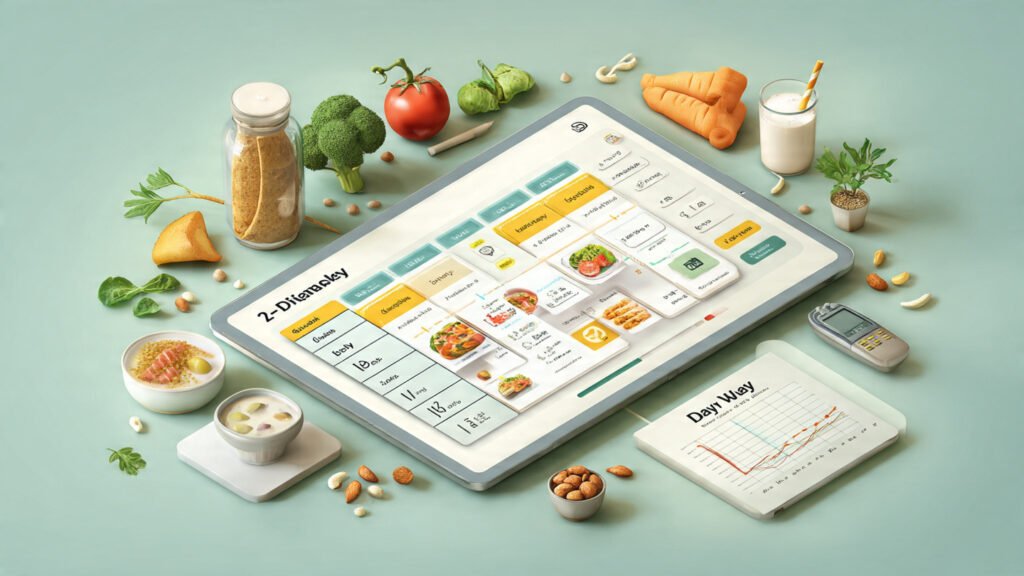
Unlike complex calculators that demand dozens of inputs, this calculator is intentionally designed with only one user input: day selection. Behind the scenes, all nutritional logic is already optimized for diabetics. The user simply selects the day, and the calculator delivers a balanced, portion-controlled, low glycemic load meal plan.
This article explains how the calculator works, why it is different, who should use it, and how it helps achieve long-term blood sugar control, all in clear, conversational language.
Table of Contents
Why Diabetics Need a Structured Weekly Meal Plan
One of the biggest mistakes people with diabetes make is focusing on individual meals instead of overall eating patterns.
You might eat a “healthy” breakfast, but:
- Overeat carbohydrates at lunch
- Skip protein at dinner
- Snack excessively at night
Blood sugar does not respond to one meal alone. It responds to patterns over days.
A 7-day structure:
- Reduces glucose fluctuations
- Improves insulin response
- Builds consistency
- Removes daily guesswork
The 7-Day Diabetic Meal Plan Calculator is designed around this exact principle.
What Is a 7-Day Diabetic Meal Plan Calculator?
A 7-Day Diabetic Meal Plan Calculator is a smart nutrition tool that provides:
- Daily meal plans for an entire week
- Balanced carbohydrates, protein, fat, and fiber
- Portion-controlled meals suitable for diabetes
Unlike traditional calculators that ask for:
- Age
- Gender
- Weight
- Height
- Medical history
This calculator simplifies everything.
Only One Input: Day Selection
The user selects:
- Day 1
- Day 2
- Day 3
- …
- Day 7
Each day is pre-designed using diabetic nutrition principles, ensuring:
- Controlled carbohydrate intake
- Low glycemic load meals
- Cultural compatibility with Pakistani foods
This simplicity is intentional — because complex systems reduce long-term adherence.
Why This Calculator Does NOT Require Age, Gender, or Weight Inputs
Most people assume personalization requires dozens of inputs. In reality, diabetes control depends more on food quality and portion control than demographic data.
This calculator is built on:
- Standard diabetic carbohydrate thresholds
- Balanced protein distribution
- Fiber-first meal composition
- Glycemic load optimization
Because of this:
- A 35-year-old and a 55-year-old diabetic benefit from the same meal structure
- A male and female both need stable glucose release, not extreme calorie restriction
- Lifestyle differences are addressed through portion logic, not excessive customization
This makes the calculator:
- Easier to use
- Safer for the general diabetic population
- More sustainable
Understanding the Logic Behind the Calculator
The strength of the 7-Day Diabetic Meal Plan Calculator lies in simple but scientifically sound nutrition logic. Instead of extreme dieting or food elimination, it follows four practical rules that work with the body — not against it.
These rules are designed for real-life diabetic living, where consistency matters more than perfection.
1. Controlled Carbohydrates, Not Zero Carbs
One of the biggest myths in diabetes management is that all carbohydrates are bad. This is not true.
Why Carbohydrates Are Necessary
Carbohydrates:
- Are the body’s main energy source
- Support brain function
- Prevent fatigue and weakness
- Help maintain metabolic balance
Completely eliminating carbohydrates can lead to:
- Weakness and dizziness
- Muscle loss
- Hormonal imbalance
- Poor long-term adherence
Why Carbohydrates Become Dangerous
Carbohydrates become a problem only when they are:
- Eaten in large portions
- Consumed too frequently
- Taken without protein or fiber
Uncontrolled carbs cause:
- Rapid glucose spikes
- High insulin demand
- Sugar crashes later in the day
How the Calculator Controls Carbohydrates
The calculator does not eliminate carbs — it controls them intelligently.
Each day includes:
- Measured carbohydrate portions
- Carbs spread evenly across meals
- No large carb load in a single meal
This approach:
- Prevents post-meal sugar spikes
- Reduces late-night hypoglycemia
- Keeps energy stable throughout the day
Instead of fear, the calculator teaches carbohydrate discipline.
2. Glycemic Load Over Glycemic Index
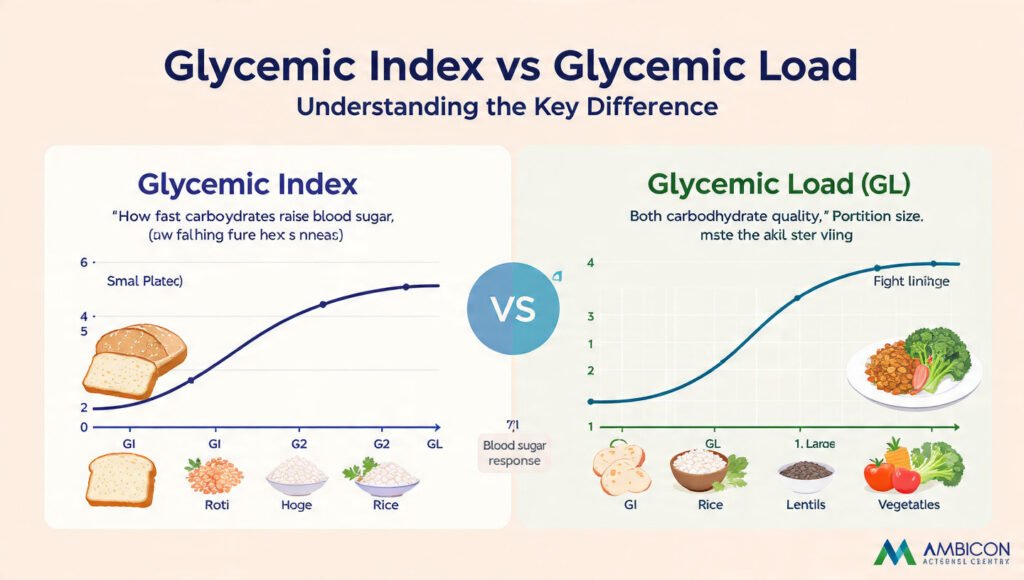
Many people focus only on Glycemic Index (GI), but GI alone does not tell the full story.
Why Glycemic Index Is Incomplete
Glycemic Index measures:
- How fast a food raises blood sugar
- Based on eating the food alone
In real life:
- Foods are eaten in combinations
- Portions vary
- Fiber and protein change glucose response
This is where Glycemic Load (GL) becomes more important.
What Glycemic Load Really Means
Glycemic Load considers:
- Quality of carbohydrates
- Quantity of carbohydrates
- Overall impact on blood sugar
A food with moderate GI can still have:
- Low glycemic load if eaten in the right portion and combination
How the Calculator Lowers Glycemic Load
Instead of banning foods, the calculator:
- Adjusts quantity
- Adjusts food combinations
For example:
- Small roti + protein + fiber
- Reduced rice portion + vegetables + lentils
Protein and fiber:
- Slow digestion
- Delay glucose absorption
- Reduce insulin spikes
This allows users to enjoy familiar foods without harming blood sugar control.
3. Protein at Every Major Meal
Protein is one of the most underused tools in diabetes management.
Why Protein Is Critical for Diabetics
Protein:
- Slows carbohydrate digestion
- Reduces blood sugar spikes
- Keeps you full longer
- Prevents muscle loss
- Stabilizes energy levels
Without enough protein:
- Hunger returns quickly
- Carb cravings increase
- Blood sugar fluctuates more
How the Calculator Uses Protein Strategically
Each day includes protein in:
- Breakfast
- Lunch
- Dinner
This ensures:
- Stable glucose release throughout the day
- Reduced snacking
- Better overnight blood sugar control
Protein sources may include:
- Eggs
- Lentils
- Yogurt
- Chicken
- Fish
- Beans
The calculator does not overload protein — it balances it.
4. Fiber as a Natural Blood Sugar Regulator
Fiber is one of the most powerful yet overlooked nutrients for diabetics.
How Fiber Helps Blood Sugar Control
Fiber:
- Slows digestion
- Delays glucose absorption
- Improves insulin sensitivity
- Feeds gut bacteria
- Reduces cholesterol absorption
High-fiber diets are strongly linked to:
- Better fasting sugar levels
- Lower post-meal glucose spikes
- Reduced insulin resistance
How the Calculator Integrates Fiber Naturally
Instead of adding fiber supplements, the calculator uses whole foods:
- Vegetables
- Lentils
- Seeds
- Whole grains
- Nuts
Fiber-rich foods are:
- Spread across the week
- Combined with carbs and protein
- Placed in meals where sugar spikes are most likely
This creates a natural buffering effect against glucose fluctuations.
Why These Four Rules Work Together
These rules are not isolated — they work as a system.
- Controlled carbs prevent overload
- Low glycemic load prevents spikes
- Protein stabilizes digestion
- Fiber smooths glucose release
Together, they:
- Reduce blood sugar variability
- Improve energy levels
- Lower cravings
- Support long-term adherence
This is why the 7-Day Diabetic Meal Plan Calculator works in real life, not just on paper.
How the 7-Day Diabetic Meal Plan Calculator Works (Step-by-Step)
Step 1: User Selects the Day
This is the only user input.
Example:
- Day 1
- Day 2
- Day 3
Each day is nutritionally unique but metabolically balanced.
Step 2: Pre-Built Diabetic Meal Logic Activates
Once a day is selected, the calculator automatically displays:
- Breakfast
- Lunch
- Dinner
- Snacks (if included)
Each meal is:
- Portion-controlled
- Low glycemic load
- Balanced with protein and fiber
Why a Day-Based Calculator Works Better Than “Personalized” Diet Charts
Many diet charts fail because they:
Overcomplicate nutrition
- Demand frequent recalculations
- Create mental fatigue
A day-based system:
- Builds routine
- Reduces decision stress
- Improves long-term compliance
Diabetes is not controlled by perfect meals, but by consistent patterns.
Key Features of the 7-Day Diabetic Meal Plan Calculator
- Single-click day selection
- No confusing inputs
- Balanced carbohydrate distribution
- Low glycemic load meals
- Pakistani food compatibility
- Sustainable for long-term use
- Beginner-friendly
- Elderly-friendly
These features make it ideal for real-world diabetic living, not textbook nutrition.

7-Day Diabetic Meal Plan Calculator
Select a day to view meals, serving sizes & daily glycemic load
| Meal | Food Item | Serving Size | Glycemic Load (GL) |
|---|
Total Daily GL: 0
Who Should Use This Calculator?
Type 2 Diabetics
- To stabilize fasting and post-meal glucose
- To reduce medication dependence (with doctor supervision)
Prediabetics
- To prevent progression to diabetes
- To normalize insulin response
People With Unstable Blood Sugar
- Frequent highs and lows
- Sugar spikes after meals
Busy Individuals
- No time to calculate nutrition
- Want clarity without complexity
Elderly Diabetics
- Simple structure
- No technical input required

Common Mistakes Diabetics Make Without a Weekly Meal Plan
Without a structured plan, people often:
- Eat too much roti or rice unintentionally
- Skip meals, then overeat
- Snack mindlessly
- Eat “healthy” but in excessive quantity
The calculator eliminates these mistakes by pre-defining structure.
Why This Calculator Focuses on Glycemic Load, Not Calories
Calories do not determine blood sugar response.
For example:
- 300 calories from lentils ≠ 300 calories from white rice
The calculator:
- Prioritizes glucose stability
- Uses portion logic
- Balances macronutrients
This is why users often see:
- Better sugar readings
- Reduced cravings
- Improved energy
Even without calorie counting.
How This Calculator Supports Weight Management (Without Dieting)
For people with diabetes, weight loss is often presented as a goal, but in reality, it is a result of better blood sugar control. The 7-Day Diabetic Meal Plan Calculator is not designed as a “weight-loss diet.” Instead, it focuses on metabolic stability, and weight management naturally follows.
This approach is safer, more sustainable, and far more effective in the long term.
Why Weight Loss Is Different for Diabetics
In people with diabetes, weight gain is closely linked to:
- High insulin levels
- Frequent blood sugar spikes
- Constant hunger and cravings
- Muscle loss due to poor nutrition
Traditional dieting often makes these problems worse by:
- Cutting carbohydrates too aggressively
- Reducing calories without nutrient balance
- Ignoring muscle preservation
The calculator avoids these mistakes completely.
1. Reduced Insulin Spikes Lead to Fat Loss
Insulin is a fat-storage hormone. When insulin levels remain high throughout the day, the body struggles to burn fat — even if calorie intake is reduced.
How the Calculator Helps
The calculator:
- Controls carbohydrate portions
- Spreads carbs evenly across meals
- Combines carbs with protein and fiber
This results in:
- Fewer insulin spikes
- More time spent in a fat-burning state
- Reduced fat storage over time
When insulin stabilizes, the body naturally begins to use stored fat for energy.
2. Hunger Stabilization Prevents Overeating
One of the biggest reasons people fail at weight loss is constant hunger.
Blood sugar crashes lead to:
- Strong cravings
- Emotional eating
- Late-night snacking
How the Calculator Prevents Hunger
The calculator includes:
- Protein at every major meal
- Fiber-rich foods spread throughout the day
- No long gaps between meals
Protein and fiber:
- Slow digestion
- Increase fullness
- Reduce appetite hormones
As a result:
- Hunger becomes predictable
- Cravings reduce naturally
- Portion control happens without force
You eat less without trying to eat less.
3. Muscle Mass Is Preserved, Not Sacrificed
Many diet plans cause weight loss by breaking down muscle instead of fat. This is especially dangerous for diabetics.
Loss of muscle leads to:
- Slower metabolism
- Poor glucose disposal
- Increased insulin resistance
How the Calculator Protects Muscle
The calculator:
- Includes adequate protein daily
- Avoids extreme calorie restriction
- Supports balanced nutrition
Preserving muscle means:
- Higher metabolic rate
- Better blood sugar control
- Healthier weight loss
This is why weight loss through the calculator feels stable, not draining.
Why the Calculator Avoids Extreme Carb Restriction
Extreme low-carb diets often:
- Cause fatigue
- Increase stress hormones
- Trigger rebound overeating
The calculator takes a smarter approach:
- Controlled carbohydrates, not zero carbs
- Measured portions instead of elimination
- Balanced meals instead of deprivation
This prevents:
- Metabolic slowdown
- Binges
- Long-term failure
Sustainable weight management requires metabolic balance, not punishment.
Protein Inclusion:
The Silent Weight-Loss Tool Protein plays a central role in weight management:
Protein:
- Reduces appetite
- Increases thermogenesis (calorie burn)
- Preserves lean mass
- Improves insulin response
By including protein in:
- Breakfast
- Lunch
- Dinner
The calculator ensures:
- Stable energy
- Fewer cravings
- Better body composition
Weight loss becomes a natural outcome, not a struggle.
Overeating Is Prevented Without Strict Rules
The calculator does not rely on:
- Calorie counting
- Food weighing
- Strict meal timing
Instead, it prevents overeating by:
- Structuring meals properly
- Balancing macronutrients
- Reducing blood sugar swings
When glucose is stable:
- Appetite self-regulates
- Portion sizes feel sufficient
- Emotional eating reduces
This is why users often say they feel in control, not restricted.
Weight Loss as a Side Effect, Not an Obsession
The most important difference is mindset.
The calculator focuses on:
- Blood sugar stability
- Energy balance
- Nutritional adequacy
Weight loss happens because:
- Insulin improves
- Hunger reduces
- Muscle is preserved
Not because:
- Food is restricted
- Calories are slashed
- Hunger is ignored
This shift makes results:
- Slower but sustainable
- Healthy instead of extreme
- Long-lasting instead of temporary
Frequently Asked Questions (FAQs)
Is this calculator suitable for Type 1 diabetes?
It can support meal consistency, but insulin adjustments must always be guided by a healthcare professional.
Does it completely eliminate rice and roti?
No. It focuses on controlled portions, not elimination.
Can I repeat the same 7-day plan every week?
Yes. Consistency is more important than variety for glucose control.
Is this calculator suitable for Pakistani foods?
Yes. It is designed specifically with Pakistani dietary habits in mind.
Does it require calorie counting?
No. The focus is on glycemic load and portion balance.
Is it safe for elderly diabetics?
Yes. The simplicity makes it ideal for elderly users.
Can prediabetics use this calculator for prevention?
Absolutely. It is highly effective for early intervention.
How This Calculator Is Different From Free Diet Charts Online
Free diet charts:
- Are static
- Ignore portion logic
- Do not consider glycemic load
This calculator:
- Uses structured weekly planning
- Applies diabetic nutrition science
- Works in real-life settings
It is not theoretical — it is practical.
Tips to Get the Best Results From the 7-Day Diabetic Meal Plan Calculator
- Follow portion sizes honestly
- Drink adequate water
- Avoid unnecessary snacking
- Monitor blood sugar response
- Stay consistent for at least 2–3 weeks
Small discipline brings big results.
Conclusion: A Simple Tool for Lifelong Blood Sugar Control
Diabetes management does not need to be overwhelming. It does not require complicated formulas, endless inputs, or extreme food restrictions. What it truly needs is clarity, consistency, and structure.
The 7-Day Diabetic Meal Plan Calculator delivers exactly that. By requiring only one simple input — day selection, it removes confusion and replaces it with a clear, balanced, and culturally appropriate weekly eating plan.
Whether you are managing diabetes, preventing it, or simply trying to stabilize blood sugar naturally, this calculator offers a realistic, sustainable, and human-centered solution.
Because in the end, the best meal plan is not the most complex one — it is the one you can actually follow, every single week.